

Rebellion’s British post‑apocalyptic new IP is heading to television before it has time to bed in. Atomfall’s rapid TV adaptation, led by Fleabag studio Two Brothers Pictures, hints at a new lane for mid‑budget game worlds in the streaming era.
Atomfall has not even finished establishing itself as a game series, yet Rebellion is already treating it as a cross‑media world.
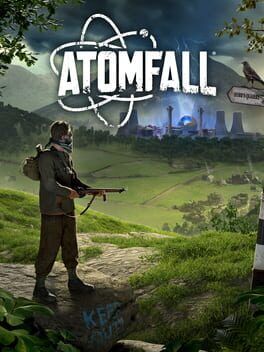
The British post apocalyptic survival game is being adapted for television by Two Brothers Pictures, the London studio behind Fleabag, The Missing, The Tourist and Angela Black. Written by Harry and Jack Williams and co produced with Rebellion, the Atomfall series will return to the same alternate history Britain that players will pick through in the game, trading guns and loot drops for character arcs, cliffhangers and weekly watercooler tension.
What makes Atomfall interesting is not just that it is the next game to follow Fallout and The Last of Us onto TV. It is how quickly it is doing it, and what that speed says about the changing role of mid tier game IP.
A new IP that never wanted to be just a game
Atomfall is technically a new IP, but Rebellion is treating it more like a franchise starter kit. Before launch, the studio has already locked in a television version with a respected British drama house, with Rebellion’s Jason and Chris Kingsley on board as executive producers.
In interviews around the announcement, Rebellion has been open about building Atomfall as a world first and a product second. The Windscale inspired nuclear catastrophe in northern England, the government quarantine response and the uneasy “new normal” in the countryside are all designed to support multiple perspectives and stories. A game can only show so many of those; television can do the rest.
This is a different route from older, slow burn adaptations where a game had to prove itself for a decade before Hollywood called. Tomb Raider and Resident Evil arrived at the cinema well after they were established hits. Even The Last of Us only made the jump once it was regarded as a modern classic. Atomfall, by contrast, is being positioned as transmedia IP from day one.
For a publisher of Rebellion’s size, this matters. It is not a platform holder with bottomless cash. It is a long running independent that has to squeeze as much value as it can from each new world it builds. If Atomfall can nurture a TV audience alongside its player base, the IP immediately feels bigger and more durable than its budget might suggest.
Why Atomfall’s British identity matters on television
The hook that makes Atomfall stand out in a crowded post apocalyptic field is not the disaster itself but that it is unmistakably, almost stubbornly, British.
The game imagines a fictional nuclear incident inspired by the 1957 Windscale fire and then asks what happens when the fallout hits rural Cumbria instead of an anonymous American city. The result is an irradiated Lake District full of country lanes, stone walls, village halls, corner shops and suspicious locals who fear each other as much as they fear the soldiers on the perimeter fence.
For television, that setting is a gift. It breaks from the American wasteland shorthand that dominates post apocalyptic fiction. Instead of desert highways and burned out strip malls, Atomfall can linger on misty hillsides, caravan parks, council estates and pubs where the jukebox still works even as Geiger counters crackle in the background.
There is also a very British tension at the heart of the premise. Officially, life outside the militarised quarantine zone continues more or less as normal. Inside, everything is wrong. That divide opens the door to stories about secrecy, bureaucracy, class and the uneasy trust between government, military and ordinary people.
The Williams brothers made their name with tightly wound, character driven thrillers set in recognisable parts of the UK. A fenced off chunk of the Lake District, where every lane hides either a military checkpoint, a cult compound or a frightened family, plays directly into their strengths. They do not need to lean on giant set pieces. The power comes from small scale drama, slowly revealed mysteries and the contrast between postcard landscapes and creeping dread.
Who are Two Brothers Pictures and why are they a fit?
Two Brothers Pictures might sound new to viewers outside the UK, but the studio is one of the country’s most consistently interesting drama outfits.
Founded by writers Harry and Jack Williams, the company has built a portfolio that ranges from the sharp, messy relationships of Fleabag to the twisty missing persons mysteries of The Missing and the fish out of water intrigue of The Tourist. Their shows share a few common traits: strong hooks, tight pacing, emotionally messy characters and a knack for running dark humour alongside serious stakes.
That DNA lines up neatly with what Atomfall offers. The game is not a straight faced wasteland simulator. Its trailers hint at conspiracy, cults, small town weirdness and the absurdity of people trying to cling to everyday routines inside a nuclear incident zone. Two Brothers have repeatedly shown they can balance those tones without losing sight of human consequences.
There is also a practical element. Two Brothers know how to get ambitious drama made on sensible budgets. British television rarely has the money for wall to wall spectacle, which is why its best series lean on character and mystery. A post apocalyptic show that swaps skyscrapers and armies of mutants for fields, villages and uneasy soldiers is a realistic prospect for a mid sized producer that already works comfortably with UK broadcasters and streamers.
For Rebellion, partnering with a British company it can collaborate with closely and share creative control alongside its executives is smarter than instantly chasing a huge American streamer deal. It keeps Atomfall’s identity anchored rather than sanding it down into generic, globalised apocalypse.
The streaming era is hungry for “middle weight” worlds
Atomfall is arriving at a moment when television is looking hard at game IP, but not only at the obvious blockbusters.
Fallout, The Last of Us and Arcane have shown that big games can generate prestige drama and subscriber spikes. Yet those brands are expensive, controlled by major publishers and hotly contested. Streamers and broadcasters need more than a handful of headline names. They need a pipeline of distinctive, reasonably budgeted shows that can attract specific audiences without breaking the bank.
That is where mid tier games come in. A project like Atomfall does not carry the weight of a billion dollar franchise, but it has something studios increasingly want: a fully imagined world, clear tone and built in niche community. It comes with concept art, lore documents, mission structures and a sense of how people already interact with the fiction. For a producer, that is cheaper and less risky than starting a new setting from scratch.
Rebellion, in turn, benefits from the validation and marketing boost that a show can bring. A BAFTA winning British game turning into a prime time drama tells players this is a universe worth investing in. It also helps the studio push beyond the mid tier ceiling that often caps independent developers. If Atomfall lands on a major platform, Rebellion suddenly looks less like the Sniper Elite studio and more like a cross media IP house.
Not just the next Fallout
It is tempting to file Atomfall under “the next Fallout or The Last of Us,” but that misses what is actually happening.
Those earlier adaptations were proofs of concept, showing that long running, big budget games can fuel prestige drama if handled with care. Atomfall is more of a field test for a different question: can a fresh, regionally specific, mid budget game world be treated as serious TV material from day one?
By moving so quickly, Rebellion and Two Brothers are betting that the value of a game IP is no longer measured only in copies sold or years on the market. It is measured in how vividly it can sustain stories across different mediums.
If Atomfall works, it gives cover for other mid tier games with strong identities to pitch themselves as transmedia platforms rather than one off releases. We might see more geographically distinct apocalypses, more local supernatural tales, more tightly focused sci fi worlds jumping to television without waiting for sequel numbers.
If it stumbles, it will probably not kill the trend. The appetite for game based drama is now too real for that. But it will be a warning that not every atmospheric open world can carry a series, and that speed is not a substitute for a clear creative vision.
Either way, Atomfall’s sprint from new IP to TV project is an inflection point. A once niche British disaster, reimagined as a Cumbrian quarantine thriller, is now a test case for whether the next generation of game worlds can grow sideways into television as naturally as they grow into sequels and DLC.
For Rebellion, that is the real endgame. Atomfall is not just another release date on a busy calendar. It is a statement that the future of mid tier games might lie as much in writers’ rooms as in code repositories.