
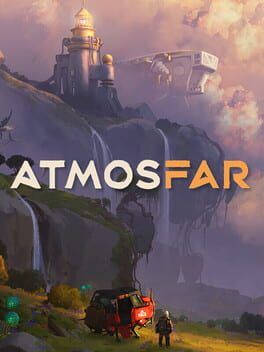

Atmosfar's new early access gameplay overview trailer shows a survival loop built around floating-island exploration, Wasp flight, repairs, fuel, and mobile crafting. Here is what is confirmed, what is still unclear, and who should jump in now.
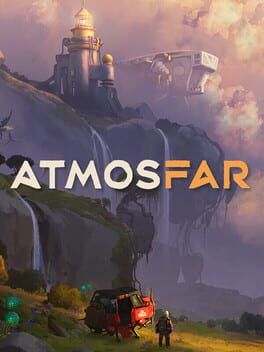
Image: IGDB
Store links: Atmosfar on Steam
Atmosfar is now in early access, and its trailer finally frames the loop
Atmosfar is available now in Early Access for PC via Steam, according to IGN’s listing for the Official Early Access Gameplay Overview Trailer. That is the concrete news: Apog Labs’ open-world action-adventure has moved from demo-era promise into a live early access release, and the new Atmosfar trailer is less about cinematic mood than about explaining how players survive on Tycos.
IGN describes Atmosfar as an open-world action-adventure game developed by Apog Labs, set on the planet of Tycos, where players explore floating islands, seek out adventure, and investigate the fate of humanity’s last outpost. The listed trailer runtime is 5:15, which matters for a survival audience because this kind of game lives or dies on systems clarity. A pretty skybox can sell the first screenshot. A working loop has to sell the tenth hour.
The immediate tension is familiar for early access survival games: the overview suggests a broad web of exploration, flight, repair, fuel, camp setup, and crafting, while the public guidance around the game still carries demo-era caveats. Atmosfar.org’s gameplay guide says early access is live on Steam, but it also notes that some repair, camp, and fuel advice applies to the March-April 2026 demo and that controls, recipes, and objectives may change. For players deciding whether to buy into Atmosfar early access now, that caveat is the useful part, not a footnote.
Exploration starts on foot, but the world is built around distance
The clearest identity in the Atmosfar gameplay overview is scale. Atmosfar.org summarizes the central action as exploring floating islands on foot, flying between them in Wasp aircraft, and keeping a mobile workshop supplied for the next expedition. That description gives the game a different rhythm from survival sandboxes that anchor you to one base and radiate outward.
Tycos is presented as a floating-island landscape, with the player moving across terrain on foot before using aircraft to reach the next stop. The guide’s advice to remember a landmark near the Wasp sounds small, but it says plenty about the intended friction. Exploration is not framed as a frictionless checklist of resource nodes. The route back matters. Terrain and hazards matter. The aircraft is your lifeline, and wandering too far without spatial awareness can turn a resource run into a recovery problem.
That is where Atmosfar’s exploration pitch has bite. The game is asking players to think in legs of travel rather than in circles around a cabin. A productive expedition, according to the official guide, begins with a purpose: identify what is needed at the next stop, collect it, turn it into supplies, and prepare the aircraft before leaving. For survival fans who enjoy planning, this is encouraging. For players who prefer loose harvesting and constant improvisation, Atmosfar may feel more deliberate than expected.
Crafting is tied to maintenance, not decoration
The Atmosfar crafting exploration loop described in the official guide is practical before it is ornamental. Materials are not simply fed into a generic tech tree. Reaching a new island gives access to materials, and those materials help keep the player moving. The guide connects travel, salvage, and maintenance as one chain: explore, gather, service, set up camp, refuel, and depart.
That structure is important because it makes crafting legible as survival logistics. Atmosfar.org says the extractor gathers materials, while the welder handles repairs. It also stresses that repairs depend on the specific part that is broken. Hull, propulsion, and hover systems require separate attention, so getting airborne does not automatically mean the aircraft is healthy. The guide even warns players to inspect beyond the first damaged part and to avoid spending the last needed components on optional equipment before repairs are complete.
This is the kind of detail survival players should pay attention to before assuming Atmosfar is a cozy sky-island builder. The confirmed loop, at least as explained by the public guide, leans into diagnosis and upkeep. A broken aircraft is not a single health bar waiting for generic scrap. It is a machine with separate systems, and the crafting table becomes a place where you work backward from a missing component. That may be catnip for players who like Subnautica-style expedition prep or the grounded satisfaction of making the right part at the right time. It may frustrate anyone looking for decorative base building as the primary hook.
Flight looks like freedom, but fuel turns it into survival math
The Wasp aircraft is the centerpiece of Atmosfar’s traversal pitch. The guide names two scales of travel: a small Wasp and a mobile airbase beyond it. It also describes the Utility Wasp as carrying a foldable camp, which lets players move their workshop between resource stops instead of repeatedly returning to the first island after every shortage.
That mobile-camp idea is one of the more promising design signals in the Atmosfar survival game pitch. It suggests that progression is less about building a single perfect settlement and more about extending range. You land, deploy a hub, craft or place machines, process what you need, then prepare for the next flight. The guide makes a point of separating deployment from crafting: deploying the hub and making a machine are separate actions, and if a refinery is missing, players are told to check the crafting table.
Fuel is also split from personal tool power. Atmosfar.org states that the extractor uses electricity from the backpack, while hydrogen powers the aircraft. A full Wasp tank will not recharge tools, and a charged backpack does not guarantee another flight. In the demo guidance, batteries, slow solar recharge, and certain plants can replenish personal power, while other plants can drain it. That creates a neat pressure point for traversal: clearing every scrap pile may be the wrong decision if it leaves too little power to finish the task or safely return.
For a discovery-driven survival game, that is exactly the sort of rule that can turn a pretty island chain into a meaningful place. The question for early access is how consistently those systems are tutorialized, balanced, and expanded beyond the demo-era framework.
Early access scope is clearer than the long-term roadmap
The confirmed early access facts are straightforward: IGN lists Atmosfar as available now in Early Access for PC via Steam, and Atmosfar.org says early access is live on Steam. IGN’s page dates the gameplay overview trailer to Oct. 29, 2026, and credits development to Apog Labs. The same IGN listing frames the trailer as a rundown of what to expect on Tycos.
What is less clear from the available source material is equally important for buyers. The cited listings and guides do not provide a price, detailed PC requirements, a final-release window, console plans, multiplayer details, or a public roadmap. The official guide’s caveat that demo-era controls, recipes, and objectives may change is normal for early access, but it means players should treat specific optimization routes and crafting habits as provisional.
There is also a source gap around the trailer itself. Sandboxer.org carries the trailer headline, while IGN provides the useful description, runtime, platform, date, and developer attribution. The YouTube pages surfaced in the provided material show video pages, but the extracted text does not include a meaningful description of the gameplay systems. That does not undermine the core availability claim, but it does mean the strongest reported details come from IGN’s listing and Atmosfar.org’s own gameplay guide rather than from a fully transcribed trailer.
Who should play Atmosfar now, and who should wait
Based on the confirmed systems, Atmosfar early access is best aimed at survival players who like preparation as much as discovery. If your favorite moments in the genre involve checking fuel, repairing a vehicle, packing supplies, and choosing the next destination with limited resources, the Atmosfar gameplay overview points toward that pleasure. The floating islands give the game visual lift, but the design interest sits in the handoff between walking, salvaging, crafting, repairing, and flying.
Players who want a polished final campaign should be more cautious. IGN mentions the fate of humanity’s last outpost, which suggests a narrative frame, but the provided sources do not outline story length, quest structure, ending state, or how much of that mystery is currently playable. Likewise, the guide confirms that objectives may change from the demo context, so early adopters should expect a moving target.
The practical guidance is simple: if Atmosfar crafting exploration sounds appealing because maintenance, fuel, and route planning are part of the fun, early access is the right time to watch or try it on Steam. If you need stable recipes, settled objectives, performance certainty, or a complete progression arc, waiting for more roadmap detail would be the safer call. Atmosfar’s new overview does its job by showing a survival game with a distinct travel-and-repair spine. Now early access has to prove that spine can carry the long trip.