

A deep look at Atelier Karia: The Night Kingdom & the Guide of Memories – dissecting the debut trailer, the new cast, and Gust’s big gameplay swings, plus what the jump to Switch 2 could mean for the series.
Atelier Karia: The Night Kingdom & the Guide of Memories is the first Gust RPG built with Nintendo’s Switch 2 firmly in mind, and you can feel that ambition in its very first trailer. Between the underground city bathed in artificial starlight, a protagonist who literally eats her way back to the past, and a heavier emphasis on environmental alchemy, this looks like the boldest shakeup for the series since Ryza.
Below is a breakdown of the debut trailer, how the story and cast set up this new era, and what Karia’s new systems might mean for Atelier’s future on more powerful hardware.
Trailer breakdown: a world that lives in perpetual night
The first trailer wastes no time distancing Karia from the sun-drenched fields we associate with earlier Atelier games. It opens on the "Night Kingdom," a sprawling settlement sealed beneath the surface, lit by a massive artificial sun suspended in a mechanical dome. The narration stresses that the world above has been swallowed by endless night, which gives Gust an excuse to lean harder into lighting and atmosphere than the series ever has.
Cuts between the industrial dome and quieter residential streets show a denser city layout than the usual small towns and farmyards. There are narrow alleys, tiered walkways, and a stronger sense of verticality. Short gameplay snippets follow Karia sprinting and vaulting through these spaces with a brisk movement speed closer to Ryza 3, but framed in environments that look more layered and interconnected.
Combat gets a brief but telling showcase. We see a turn-based party formation where characters act in sequence, but actions seem to trigger real-time follow‑ups and camera sweeps, suggesting Gust is iterating on the hybrid timeline systems from Ryza and Atelier Yumia. Particle-heavy spell effects, elaborate finishing moves, and larger monster models fill the screen, clearly targeting modern consoles and Switch 2 rather than scaling down from last gen.
The trailer’s standout moment, though, is Karia casually biting into a bomb she just synthesized, followed by a surreal flash of memories. That single shot is the clearest mission statement for this game: alchemy is no longer just a crafting menu, it is literally wired into the protagonist’s identity and progression.
Story setup: eating your way back to the past
Karia wakes up in the Night Kingdom with nothing but her name. She joins the Aladiss Pioneering Team for money, but soon discovers that the items she creates and consumes are keys to her missing past. The central hook is that alchemy has become a kind of memory grafting. Every potion, snack, and explosive you brew has the potential to trigger recollections, change how she looks, or alter how she fights and explores.
The official materials play coy with the details, but the core loop implied by the trailer and early info is compelling. Go out into the cavernous underworld, gather strange materials affected by the perpetual night, synthesize them into curiosities, then eat them to pull up fragments of your earlier life. Those fragments presumably unlock new story routes and also new recipes, linking narrative progression directly to experimentation.
The Night Kingdom itself sits atop deeper, more dangerous ruins. The Pioneering Team is tasked with investigating what lies beneath Aladiss, the same continent introduced in Atelier Yumia. Karia’s amnesia and the secrets under the city are almost certainly intertwined, and the trailer leans into that with shots of forbidden doors, glowing sigils in the dark, and Karia clutching her head as visions of the surface world flicker in.
This setup gives Gust an excuse to structure the game around multiple layers of mystery. There is the personal question of who Karia used to be, the civic question of what the Night Kingdom is hiding from its citizens, and the wider series lore about why the world above has fallen into endless night. For a franchise often content with small stakes, Karia has a more ominous, dungeon‑delving energy without abandoning Atelier’s warmth.
New characters: a party built around secrets
Early promo materials introduce four key characters, and the way they are framed already hints at a more secretive cast than usual. The official website even redacts parts of their profiles, signaling that hidden motives will be a bigger part of the storytelling.
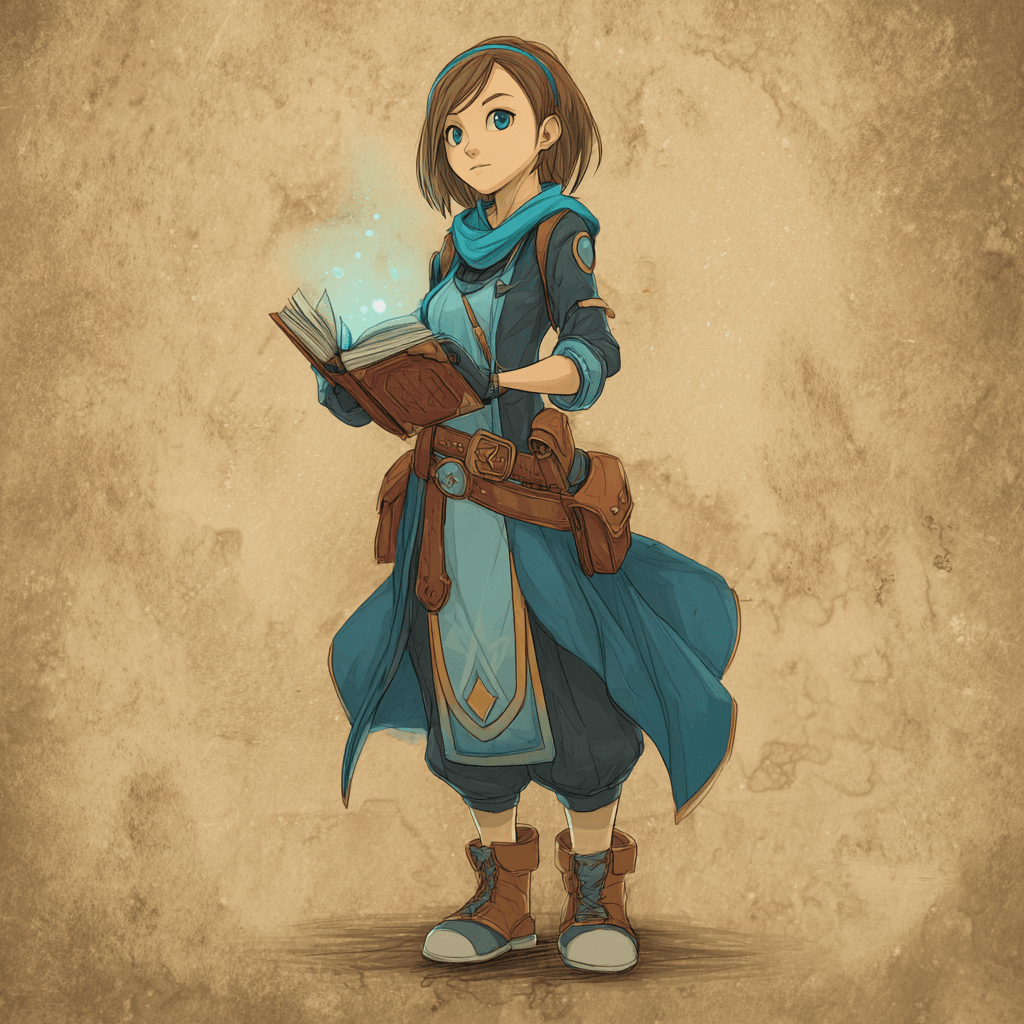
Karia herself is the twist on the traditional Atelier protagonist. She is still an upbeat, capable alchemist in the making, but her amnesia and mercenary reason for joining the Pioneering Team give her a more precarious starting point. She is not the small-town girl opening a shop from scratch, she is a stranger trying to buy her way into a future when she does not even understand her own past. Her unique ability to consume items and reshape herself makes her personality more fluid too, since the way you play can literally change how she looks and fights.
Yumia Liessfeldt returns from Atelier Yumia, now two years older and stepping into a mentor and partner role. In the trailer she appears more confident and composed, hinting at character growth since her own game. Rather than being replaced by a new heroine and fading into the background, she is actively involved in investigating the underground structures and guiding Karia through the alchemical side of things. That continuity is rare for the series and suggests Gust wants to build a more cohesive sub‑saga within the wider Atelier universe.
Fina Rozen is the group’s knight escort, a disciplined warrior whose assignment to the expedition is framed as a special order from her superiors. She carries herself like a classic honor‑bound guard, but the way her profile is partially censored implies her mission is not just to “keep everyone safe.” The trailer shows her in both frontline combat and quieter camp scenes, where she looks more relaxed and approachable, hinting that her professional façade may crack as the story progresses.
Servio Lektor rounds out the initial roster as a biologist with a suspiciously vague background. He studies the flora and fauna that have adapted to the endless night and the artificial sun, a role that dovetails nicely with Atelier’s focus on gathering and synthesis. Yet the materials repeatedly emphasize that he is hiding something. Trailer shots linger on him watching Karia from a distance or examining strange samples alone, setting him up as either an uneasy ally or someone whose goals clash with the rest of the team later on.
Together this cast feels more tightly woven into a central mystery than most Atelier parties. Every character has an explicit connection to the exploration of the underground world and an implicit secret that will probably come to light as Karia’s memories return.
Gameplay systems: alchemy as identity and traversal
The biggest evolution on display is how deeply alchemy is integrated into everything the player does, especially in the field. The core idea is that synthesized items no longer just sit in your inventory. They become tools, consumables, and even permanent modifiers that let you rewrite how Karia interacts with the world.
The eating mechanic is the most striking pillar. Crafted ingredients and items can be consumed to trigger a range of effects, from restoring memories to changing Karia’s hairstyle or outfit, or granting new exploration skills. Rather than unlocking abilities by hitting fixed story beats, you may gain a critical movement or combat tool by experimenting with a specific combination of reagents. That invites a more systemic, discovery‑driven approach to synthesis that fans of older, menu‑heavy Atelier entries have been asking to see in a modern format.
The trailer also shows field alchemy used for on‑the‑spot traversal. One sequence has Karia roll a huge snowball into existence, then climb it to reach a higher ledge. Another features throwable items that shatter parts of the environment, clearing blocked paths or exposing hidden veins of materials. These moments suggest that gathering will be less about mashing a button at a glowing node and more about thinking, “What can I craft right now that will let me cross this gap, melt that barrier, or manipulate this ecosystem?”
Combat, too, looks like it is leaning into more active resource management. Karia’s eatable items appear in battle as well, letting her temporarily alter her stats or attack properties mid‑fight. If Gust can tie that into a refined version of the timeline and support mechanics from Ryza and Yumia, we could see a system where pre‑battle preparation via alchemy genuinely matters from turn to turn. Crafting an item that both opens a new path in the field and unlocks a potent follow‑up attack in combat would fulfil a long‑standing fantasy of Atelier as a holistic alchemist simulator rather than parallel menus for gathering, fighting, and crafting.
All of this builds on the groundwork laid by Atelier Yumia’s memory‑themed systems. Where Yumia had you manipulating recollections to influence the world and recipes, Karia internalizes that concept: memories are no longer abstract cards or nodes, they live inside the protagonist and can be rewritten through what she creates and consumes.
How Atelier is evolving on Switch 2 and modern hardware
Atelier Karia is launching on PlayStation 5, Xbox Series, PC, and Nintendo Switch 2, which marks a clear break from Gust’s long stretch of designing around base PS4 and the original Switch. The trailer already hints at how the team is spending that extra budget and power.
Visually the Night Kingdom’s dome is a showcase arena for enhanced lighting, with the artificial sun casting softer shadows and a distinct glow that shifts between locations. Underground caverns and city districts use richer contrast and more particle effects than prior games, which were often limited by handheld‑friendly performance targets. If the Switch 2 version can keep solid frame rates with these effects intact, it will go a long way toward closing the gap between Atelier’s handheld and home console experiences.
Level design looks more ambitious as well. The environments shown have multiple layers, bridges, and moving machinery, all of which pair naturally with the new traversal‑focused alchemy items. Stronger hardware should make it easier for Gust to stream larger maps without long loading breaks, which in turn allows field puzzles that span several zones or vertical tiers instead of isolated arenas.
On the systems side, a unified platform baseline means Gust can push more complex simulations. More enemy types on screen, richer item interactions, and deeper crafting trees are all easier to support when you are not targeting decade‑old handheld silicon. That could translate into more reactive environments where multiple crafted items interact in chains, or larger, more intricate recipes that change properties in subtle ways depending on where and how you use them.
Performance improvements also matter for Atelier’s trademark downtime. A smoother experience in towns and menus lets Gust layer in more elaborate character animation during dialogue and more detailed workshop scenes without sacrificing portability. The trailer already hints at this, with more expressive facial work, better cloth physics on capes and skirts, and extra environmental detail sprinkled around interiors.
In short, Atelier Karia looks like Gust’s first real attempt to treat the series as a native resident of the PS5 and Switch 2 era instead of a cross‑gen holdover. Alchemy is being reframed as a tool for identity, traversal, and story progression all at once, while the Night Kingdom setting gives the artists and level designers room to show what they can do when they are not constrained by open countryside and tiny villages.
If the final game delivers on the promise of this first trailer, Karia could define what Atelier looks and plays like for the next generation of hardware: a cozier, character‑driven RPG that is unafraid to experiment with bold systems, stranger worlds, and more interconnected storytelling.