
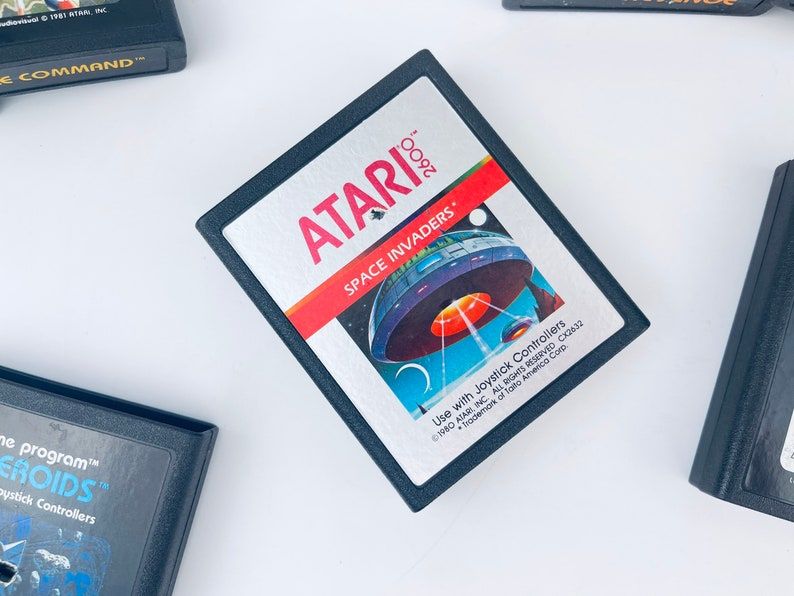

Atari and Activision are reissuing 39 Atari 2600 games as working physical cartridges, with standard editions, deluxe box sets, and a $999.96 complete collection aimed squarely at collectors.
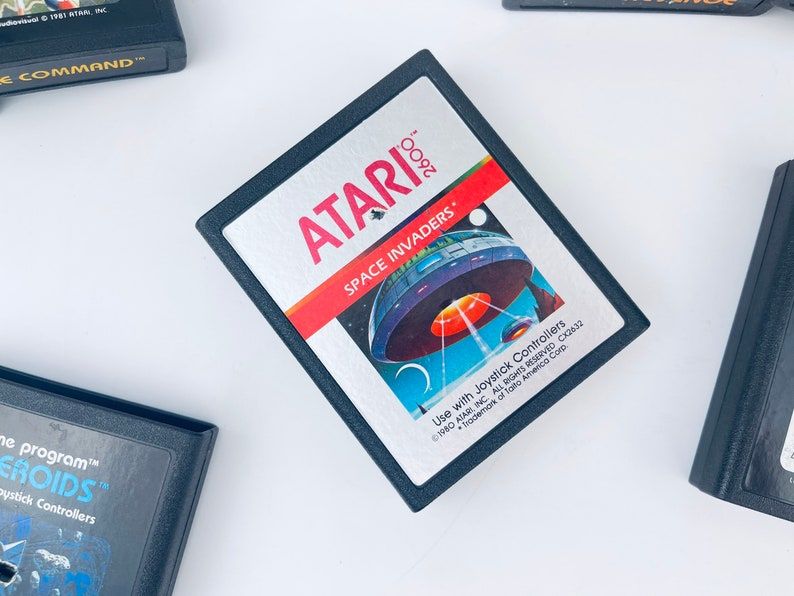
Image: etsy.com
Atari’s new Activision cartridges are real, playable, and priced for collectors
Atari and Activision have announced the Atari x Activision Collection, a physical Atari cartridge re-release project that will put 39 classic Activision Atari 2600 games back onto working cartridges. According to Atari’s August 26, 2026 press release carried by Games Press, pre-orders began the same day through atari.com, with the first products scheduled to ship in November 2026.
The immediate tension is price versus purpose. These are functional Atari 2600 cartridges, not a digital compilation dressed up as nostalgia, but the collection is also being sold in a way that clearly courts display-shelf collectors. Atari says a dozen Standard Edition cartridges will begin shipping in November at $34.99 each. The full 39-game lineup is spread across four Deluxe Box Sets priced at $249.99 each, and Atari is also offering a Complete Collection that includes all four Deluxe Sets plus a to-be-announced collectible item for $999.96.
Console Creatures reports Canadian pricing as $49.99 CAD for Standard Editions, $349.99 CAD for each Deluxe Set, and $1,399.99 CAD for the Complete Collection. IGN and Polygon both frame the top end plainly: anyone trying to own every cartridge through the collector route is looking at roughly $1,000 in the U.S.
For Atari 2600 cartridges, that price structure changes the conversation. The cheapest path is a single beloved game such as Pitfall!, River Raid, Kaboom!, H.E.R.O., or Keystone Kapers. The most expensive path is a preservation-minded collector object built across multiple shipments through 2027. Atari is selling playability, but it is packaging the set as heritage.
The confirmed release plan leaves some games affordable and the full set expensive
Atari’s announcement lays out three physical offerings. The Standard Edition line covers 12 Activision titles: Pitfall!, River Raid, Megamania, Enduro, Kaboom!, H.E.R.O., Pressure Cooker, Private Eye, River Raid II, Keystone Kapers, The Activision Decathlon, and Pitfall II: Lost Caverns. IGN notes that Atari says The Activision Decathlon and Pitfall II: Lost Caverns will ship later than the other Standard Edition titles.
The Standard Editions are the practical entry point. IGN reports that they include full packaging and a printed color manual inspired by the original releases, while The Escapist describes them as individual reproductions rather than multiple ROMs bundled onto one modern compilation cartridge. That distinction matters for collectors of physical Atari games because each title occupies its own object, label, manual, and box space.
The Deluxe Box Sets are where the Atari Activision Collection becomes a staged collector program. Atari’s press release names four themed sets: Treasure, Speed, Secrets, and Victory. The Treasure Collection ships first in late November 2026 and is described as a 10-game set featuring Pitfall!, River Raid, Megamania, Chopper Command, and Grand Prix. Speed follows in Spring 2027 with 10 titles including Enduro, H.E.R.O., The Activision Decathlon, and Laser Blast. Secrets arrives in Summer 2027 with nine classics featuring Kaboom!, Keystone Kapers, Private Eye, and Starmaster. Victory follows in Fall 2027 with 10 titles including Pitfall II: Lost Caverns, River Raid II, Pressure Cooker, and Beamrider.
Those “featuring” lists are important. The sources identify examples from each Deluxe Set, but the provided material does not list all 39 titles individually. Buyers chasing a complete checklist should verify the final product pages before committing to the $249.99 sets or the $999.96 Complete Collection.
Compatibility is Atari’s biggest promise, and it still needs real-world proof
Atari says the Atari x Activision Collection cartridges are compatible with the Atari 2600+ and Atari 7800+ consoles, as well as original Atari 2600 and Atari 7800 hardware. Console Creatures reports that compatibility statement directly, and IGN repeats it for the Standard Edition games. Polygon also describes the cartridges as functional on classic consoles and Atari’s modern plus-series systems.
That is the central practical promise of this release. A cartridge that works on original hardware is a different proposition from a plug-and-play novelty, a mini-console compilation, or a shelf ornament with a download code. It lets a buyer use an existing Atari 2600 or 7800, or buy into Atari’s current hardware line. Atari’s own 2600+ product page says the $129.99 Atari 2600+ plays both Atari 2600 and 7800 game cartridges, includes HDMI output for modern TVs, offers widescreen mode, and comes with a CX40+ Joystick and a 10-in-1 game cartridge.
Still, the compatibility question is not fully settled until cartridges are in players’ hands. The sources give Atari’s compatibility claim, but they do not provide independent testing across original console revisions, aging cartridge slots, controller setups, or the modern Atari 2600+ and 7800+ firmware environment. For collectors buying sealed copies to preserve, that may be enough. For players buying these to use every week, Atari’s statement is encouraging, but November shipments will be the first real test.
There is also a practical hardware split. If you own a working original Atari 2600 or 7800, Atari says these cartridges are intended for you. If you do not, the modern Atari 2600+ gives the release a current retail ecosystem. That helps explain why physical Atari games can still find an audience in 2026: the cartridges are being launched into a market where Atari is also selling new hardware that accepts cartridges.
The collector pitch is built into the packaging, not hidden behind nostalgia
Atari is not treating the Deluxe Sets as plain software bundles. The press release says each Deluxe Set includes a curated selection of Activision Atari 2600 cartridges, premium packaging, and exclusive collectibles. Console Creatures specifies custom achievement patches and collectible pins, and Time Extension describes woven patches and enamel pins.
That choice connects directly to Activision’s early history. Matt Burnett, Atari’s VP of Hardware, said in the announcement that in 1979 a group of Atari programmers set out to prove that great games could come from independent creators and “ended up changing the industry forever.” He added that the Atari x Activision Collection gives fans an opportunity to “experience, collect and preserve” the work of developers who helped establish a new model for the video game industry.
The phrasing is corporate, but the history behind it is unusually concrete. The Escapist reports that Activision was founded in 1979 by former Atari programmers David Crane, Larry Kaplan, Alan Miller, and Bob Whitehead after frustration over credit and reward for game creators, and that Atari initially responded with legal action. Polygon similarly notes that Activision began with former Atari employees and later became known for much larger modern franchises after decades of growth and Microsoft’s 2023 acquisition of Activision.
That makes the collector value different from a simple reprint. The Atari x Activision Collection is being sold under both names after nearly 50 years, centered on games that helped establish third-party console publishing. Whether that justifies $249.99 per Deluxe Set depends on the buyer, but Atari’s intended audience is easy to read: people who care about the physical object, the box, the manual, the sequence of releases, and the developer lineage behind those cartridges.
The games still make a strong case because small design survives the format
The strongest argument for working Atari 2600 cartridges in 2026 is that many of these games were built around immediate, readable ideas. Atari’s press release points to Pitfall!’s jungle exploration, River Raid’s aerial combat, Kaboom!’s fast-paced action, and H.E.R.O. as examples of games that pushed the Atari 2600 in new directions. Those are compact games by modern standards, but their identity rests on clear rules, sharp pressure, and fast feedback.
That is where this collection overlaps with the craft values that still drive indie and platformer audiences today. Pitfall! is frequently remembered because it made movement, timing, and route awareness feel adventurous on severely limited hardware. River Raid turns a simple forward push into constant fuel, threat, and spacing decisions. Kaboom! strips reaction play down until the player’s hands are the whole drama. The sources do not provide new hands-on impressions of these cartridges, so this is not a review of the reissues. It is a reminder that the games Atari selected are not interchangeable museum labels.
Atari’s own announcement leans into that design legacy, saying the collection brings together titles that made Activision stand out on the Atari 2600. For a modern player used to expansive save files and layered progression systems, these cartridges will ask for a different kind of attention: repeat attempts, cleaner execution, and an appetite for difficulty that arrives immediately rather than after a tutorial arc.
That may narrow the audience, but it also explains the demand. These physical Atari games offer a playable connection to design constraints that still influence small-game craft. A cartridge is a slow, tactile way to access that history, and that slowness is part of the appeal for the people Atari is trying to reach.
Who should pre-order now, and who should wait
The safest early purchase is a Standard Edition cartridge for a game you already know you want. At $34.99 in the U.S., the individual Atari 2600 cartridges keep the risk contained, and Atari says the first Standard Editions begin shipping in November 2026. For many readers, Pitfall!, River Raid, Kaboom!, H.E.R.O., Enduro, or Keystone Kapers will be the sensible route into the Atari Activision Collection without committing to a year-long box set schedule.
Collectors who want all 39 games have a tougher decision. The Deluxe Sets cost $249.99 each and roll out from November 2026 through Fall 2027. The Complete Collection costs $999.96 and includes all four Deluxe Sets plus a collectible item that Atari had not yet announced in the provided press materials. Anyone buying primarily for long-term collector value should be comfortable with that unknown and should confirm final contents through Atari’s listings before paying for the full bundle.
Players focused on usability should also wait for post-launch compatibility reports if they plan to use original hardware. Atari’s compatibility claim covers the original Atari 2600 and 7800 as well as the Atari 2600+ and 7800+, but independent testing is not part of the announcement material. If you are buying a modern Atari 2600+ specifically for this collection, Atari’s own store lists the console at $129.99 and says it plays 2600 and 7800 cartridges over HDMI, which makes it the clearest current-hardware path.
The re-release arrives during a period when major platform holders and publishers are increasingly debating the future of physical media. IGN explicitly frames Atari’s move against that bleak collector backdrop, while Polygon calls it a collaboration that bucks the wider trend. Atari’s bet is that a working cartridge can still create demand in 2026 because it answers a different desire than convenience. It gives players a thing to plug in, display, preserve, and pass around, with all the charm and inconvenience that physical media carries.