
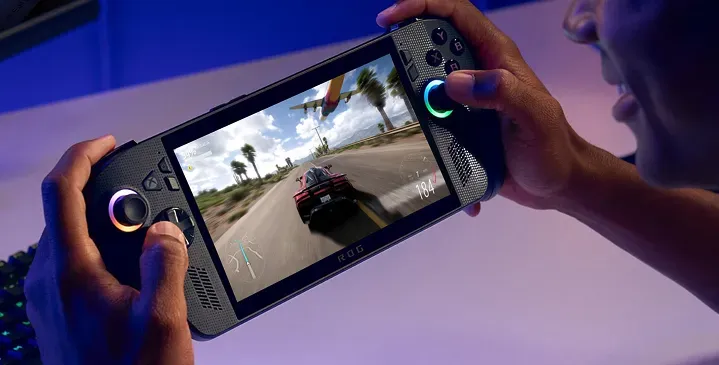

ASUS has opened ROG Xbox Ally X20 OLED preorders at $1,299.99, forcing a clearer read on Xbox’s premium PC handheld strategy, OLED demand, and buyer patience in 2026.
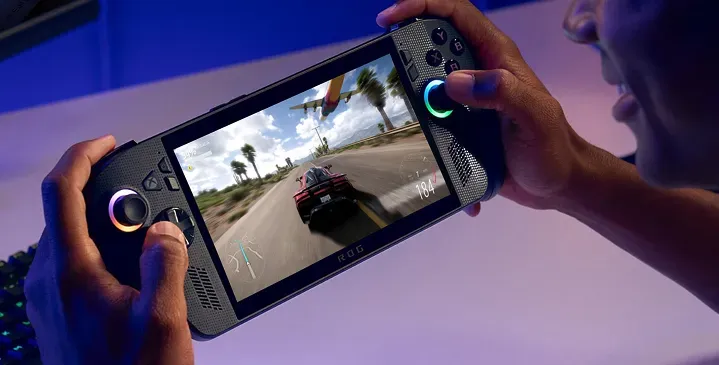
Image: rog.asus.com
ASUS sets a premium price for its OLED Xbox handheld
ASUS has opened preorders for the ASUS ROG Xbox Ally X20 OLED at $1,299.99, with an October 15 release date, according to Video Games Chronicle, GameSpot, Mashable, and OC3D. The immediate tension is simple: the new model costs $300 more than the $999.99 ROG Xbox Ally X released in October 2025, while keeping the same core performance class reported for the earlier premium unit.
The price also creates a much wider spread inside ASUS and Xbox’s handheld lineup. VGC reports that the original ROG Xbox Ally family launched in two versions: a white Xbox Ally at $599.99 and a black Xbox Ally X at $999.99. The ASUS ROG Xbox Ally X20 OLED now sits $700 above the entry model and $300 above the previous premium version. ASUS is also selling a bundle with AR glasses, a case, and other accessories for $2,499.99, according to VGC, GameSpot, Mashable, and OC3D.
That makes the Xbox Ally X20 price the clearest market test yet for Xbox’s PC handheld push. Microsoft’s Xbox branding is attached to a Windows 11 handheld ecosystem that still lives in the PC pricing world, where OLED panels, memory, storage, thermals, and premium accessories can push a portable device well beyond console territory. For buyers, this is no longer a question of whether an Xbox handheld OLED exists. It is a question of how much screen quality, ergonomics, and storefront flexibility are worth when the performance leap is less obvious than the display upgrade.
The $300 jump is built around the screen, not a new performance tier
The main confirmed upgrade is the display. VGC says the ASUS ROG Xbox Ally X20 OLED adds a Nebula HDR Display with Full HD resolution, a 120Hz refresh rate, FreeSync Premium Pro support, 1400 nits peak brightness, VESA DisplayHDR 1000 certification, and Corning Gorilla Glass with DXC that ASUS says cuts glare from unwanted light sources by 65%. Console Creatures describes the panel as a 7.4-inch OLED with 120Hz, FreeSync Premium Pro, up to 1400-nit peak HDR, Dolby Vision, Gorilla Glass Victus, and an anti-reflection coating. Mashable likewise identifies the headline upgrade as a slightly larger, much brighter 7.4-inch OLED screen.
There is a small specification wrinkle across reports. VGC quotes ASUS describing VESA DisplayHDR 1000 certification, while Console Creatures lists VESA DisplayHDR True Black 1000 in prose and its table also references True Black 1400. Those are not identical wordings, so buyers should check the final ASUS product page in their region if HDR certification is a deciding factor. What is consistent across the sources is the larger OLED panel, 1080p resolution class, 120Hz refresh, VRR support, and 1400-nit peak HDR claim.
The performance story is less dramatic. VGC says the internals remain the same compared with the previous version. Mashable reports that the X20 uses the same chip as the standard Ally X version and carries the same 24GB of memory and 1TB SSD storage. GameSpot identifies the processor as AMD Ryzen AI Z2 Extreme and lists an 80Wh battery, 1TB storage, 24GB of DDR5 RAM, and Wi-Fi 6. Console Creatures lists Windows 11 Home, an AMD Ryzen AI Z2 Extreme processor, 24GB LPDDR5X-8000 memory, a 1TB M.2 2280 SSD, Wi-Fi 6E, Bluetooth 5.4, and an 80Wh battery.
From a strategy perspective, that matters. ASUS is asking buyers to treat the OLED panel, chassis changes, controls, and cooling work as the upgrade path, rather than a new chip generation promising a clean frame-rate break from the Ally X. That can be a sensible premium tier for people who already know handheld gaming is their main way to play. It is a harder sell for anyone waiting for a clear performance-per-dollar jump in the PC gaming handheld 2026 cycle.
ASUS is charging for comfort, durability, and display confidence
The X20 is not only a screen swap, according to the available reports. VGC says ASUS has improved the thumbsticks with TMR sensor technology, described by ASUS as offering “pinpoint precision, smoother tracking, and longer-lasting performance” and designed to eliminate stick drift with more precision than Hall Effect sensors. Mashable also reports TMR joysticks, flatter face buttons, rubberized handgrips, and a transforming D-pad that can switch between four-way and eight-way controls. Console Creatures lists Xbox-inspired ergonomics, impulse triggers, ABXY buttons, a transforming D-pad, assignable back buttons, HD haptics, and a six-axis IMU.
Those details are easy to underrate in a spec-sheet argument, but handhelds are balance problems. A high-refresh OLED panel stresses battery expectations, thermal design, and grip comfort because the device is meant to be held under load for long sessions. Mashable notes that ASUS reworked the X20 thermal system because, as ASUS said in its June announcement, OLED panels are more sensitive to heat than traditional LCD displays. GameSpot also reports a redesigned layout intended to improve airflow and thermal efficiency, while OC3D says the translucent black exterior gives users a view of ASUS’ revamped cooling system.
The practical question is whether these refinements add up to $300 over the existing Ally X. On paper, the X20 addresses several day-one buyer requests and long-term ownership worries: OLED contrast, HDR brightness, glare reduction, stick durability, and heat management around the new panel. What the sources do not yet provide is independent testing on battery drain, sustained performance, fan noise, panel behavior under heat, or whether the new cooling changes materially affect real game sessions. Until reviews land, the confirmed value is in features and materials rather than measured gains.
Xbox’s handheld push is still a Windows PC play
The ROG Xbox Ally line is important because it shows how Xbox is approaching handheld hardware without turning it into a traditional console box. Console Creatures says the new Xbox Mode, running on Windows 11, brings a user’s game library together in a single controller-ready, full-screen experience. GameSpot reports that recent updates have smoothed out earlier software problems and that the Xbox app works well as a platform for launching games from Microsoft’s store, Steam, and more.
That storefront flexibility is the strongest argument for the higher price. VGC’s review of the ROG Xbox Ally X called that device “a premium product with a premium price point to match” and praised its exceptional performance and easy access to multiple app stores, while also warning that cheaper alternatives exist for more specific needs. This is the same strategic shape as the X20: Xbox gains presence in the portable PC space, ASUS sells high-end hardware, and the buyer gets a device that is less locked down than a console but also less price-protected than one.
The risk is that the Xbox name creates console-adjacent expectations while the pricing behaves like enthusiast PC hardware. A $599.99 entry Xbox Ally can be read as a mainstream handheld lane. A $999.99 Ally X is already premium. A $1,299.99 ASUS ROG Xbox Ally X20 OLED moves into a tier where buyers will compare every compromise against laptops, desktops, consoles, and cheaper handhelds. For Xbox’s ecosystem strategy, the X20 can validate a premium PC handheld segment. It can also expose how narrow that segment is if many players like the idea but wait for discounts, bundles, or a later chip upgrade.
The bundle and regional pricing show how expensive the halo tier gets
The standalone ROG Xbox Ally preorder is only half of the launch plan. ASUS is also offering a $2,499.99 bundle in the United States, according to VGC, GameSpot, Mashable, and OC3D. OC3D reports that the Ultimate bundle includes ROG XREAL R1 Edition 20 gaming AR glasses, a custom dbrand Killswitch case, and a custom Pelican travel case. GameSpot says the bundle includes the handheld, ROG XReal X1 glasses, a Dbrand Killswitch protective case set, and a Pelican case. VGC describes the package as including a case, AR glasses, and more.
The AR glasses are the clearest attempt to turn the X20 into a portable luxury setup rather than a single handheld purchase. OC3D reports that the ROG XREAL R1 Edition 20 glasses connect over USB-C, provide a 177-inch virtual screen, support 1080p at 240Hz through a micro OLED panel, weigh less than 100 grams, and include Bose audio. Console Creatures reports a Canadian bundle with ROG XREAL R1 Edition 20 AR glasses that project a 171-inch virtual screen, plus a dbrand Killswitch, custom Pelican case, and 68W charger. The reported virtual screen size differs between those outlets, so it is worth treating the exact number as listing-dependent until ASUS’s regional pages are checked directly.
Canada shows the same premium curve in local terms. Console Creatures reports that the standalone ASUS ROG Xbox Ally X20 is available for preorder at Best Buy for C$1,899, with ASUS Store availability on September 24, and that a C$3,499 bundle is also set for preorder through the ASUS Store starting September 24. Console Creatures says both begin shipping on October 15. That regional timing differs from the broader U.S.-focused reporting that preorders are live now through ASUS and Best Buy, so availability should be checked by country rather than assumed from one store listing.
For buyers, the bundle is a very specific purchase. It makes sense only if the AR glasses, protective hardware, and travel case are part of the actual use case. Otherwise, the already expensive standalone model is the cleaner comparison against the $999.99 Ally X and $599.99 Xbox Ally.
Buyer expectations were set by OLED demand, but price may reset the upgrade path
The OLED screen was expected because ASUS says it had been requested from the start. VGC quotes ASUS saying that the feature had been “a common request since day one,” but the company wanted a “truly gaming-focused” display with the right specifications. That statement tells us ASUS is not guessing at demand. It is responding to early adopters who wanted the premium Ally experience to catch up with OLED expectations already common in the handheld conversation.
Mashable adds an important business context: ASUS was initially planning to sell the Xbox Ally X20 only as part of the AR glasses bundle, then changed course over the summer and made the standalone model available. That change suggests ASUS recognized a different buyer expectation from the one implied by a $2,499.99 package. Some customers want the best handheld panel and controls without buying into the full AR travel kit.
The hard part is that the standalone price still lands high. GameSpot connects the broader handheld pricing environment to a global memory shortage driven by AI demand, noting that component prices have risen and that AyaNeo suspended preorders and early-bird sales of its Next 2 handheld in response to rapidly rising costs. GameSpot also notes that the $1,000 Xbox ROG Ally X and $600 sibling had not increased in price at the time of its report. If those older models stay at their launch prices, the X20’s $300 premium becomes an explicit OLED tax. If the broader component market keeps squeezing hardware makers, today’s premium may look less unusual later in the PC gaming handheld 2026 market.
The safest buying advice from the confirmed information is straightforward. Preorder the ASUS ROG Xbox Ally X20 OLED if the 7.4-inch OLED HDR display, TMR sticks, refreshed ergonomics, and October 15 availability are worth paying enthusiast pricing now. Consider the existing Ally X if performance, app access, and Windows handheld flexibility matter more than the OLED panel. Wait for independent reviews if battery life, thermals, fan noise, HDR behavior, or sustained frame rates will decide the purchase. ASUS has answered the OLED request, but the $1,299.99 price asks buyers to be as committed to the form factor as ASUS and Xbox now appear to be.