
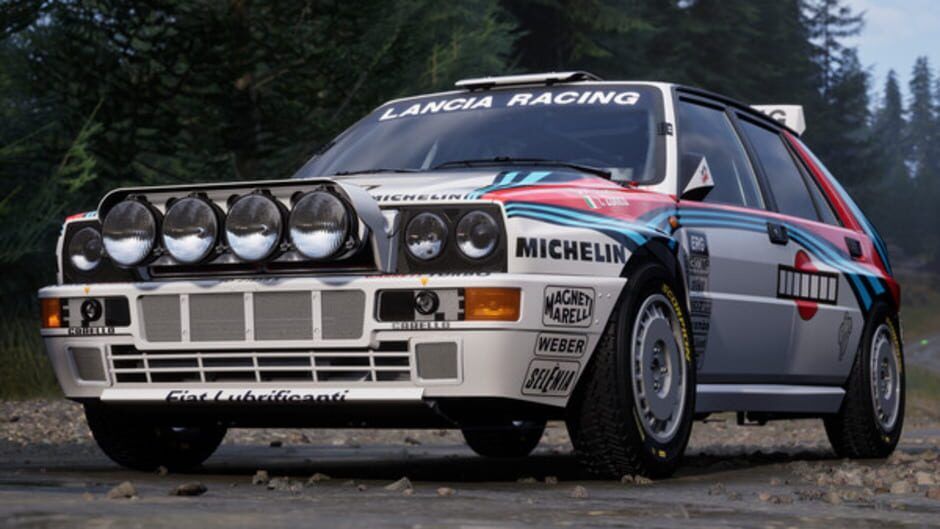
Laser‑scanned Col de Turini, evolving snow and a sharper tire model push Assetto Corsa Rally closer to must‑own status for hardcore rally fans – but how does it really feel next to EA WRC and Dirt in 2026?
Assetto Corsa Rally’s 0.3 update is the sort of drop that turns a promising Early Access sim into something people build evenings around. Two laser‑scanned Monte‑Carlo stages, a fully dynamic snow system and a round of physics/input tweaks all land at once, and the result feels less like a routine patch and more like a statement of intent about where this sim is headed.
Monte‑Carlo versus the existing stages
Before 0.3, AC Rally’s stages already had a reputation for fidelity, but they also felt a bit “test track” in character. Livigno’s ice facility and the earlier gravel roads communicated grip well, yet they lacked the specific sense of place you get from the absolute top tier of rally sims.
Monte‑Carlo is different the moment you roll away.
Col de Turini’s 18 km ribbon, broken into multiple sections for events, is narrow, steep and relentlessly technical. Hairpins stack on off‑camber corners, the road crowns and falls away under you, and the camber changes mid‑corner in ways that make weight transfer the real boss fight. Compared to the existing asphalt, there is a much stronger feeling of verticality and of the car constantly working over broken surface instead of gliding along a smooth spline.
Sisteron, the shorter 13 km route, is still challenging but flows more, with wider radius corners and longer sightlines. Where earlier AC Rally tarmac sometimes felt like a high‑grip circuit layered onto a rally backdrop, these Monte‑Carlo stretches feel properly “lived in”. Edges of snow banks, rock faces tight to the road and subtle surface changes sell the illusion of a real place rather than a generic alpine road.
Visually and atmospherically, this is the best work the sim has produced so far. Night runs up Turini with flares and fireworks firing off in the distance finally give AC Rally that “event weekend” buzz the other stages only hinted at.
Dynamic snow that actually changes how you drive
Snow arrived in 0.2, but 0.3 makes it the centerpiece. The new Monte‑Carlo system is not just a cosmetic layer, it is tied to temperature, elevation and precipitation. Start a stage near sea level and you can be on dry or damp tarmac, only to run into falling snow and increasingly white shoulders as you climb.
Crucially, this is not split into pre‑scripted zones. If the temperature drops below freezing and it is raining, that rain becomes snow anywhere on the stage. Run later in the road order and you will see heavier accumulation and less predictable grip than an early car. That alone pushes AC Rally closer to rally’s real strategic heart, where tire choice and commitment into blind corners are gambles, not solved equations.
On the road, the way that snow layers onto tarmac is convincing. You can feel the transition from wet asphalt to a dusting, then to proper compacted coverage. The car starts to float a little more, then a lot more, and pacenotes suddenly feel less like information and more like lifelines, especially in the blinding flurries the update can now generate at night.
Some seasoned sim drivers argue that the low‑μ side of the model is a touch too slippery compared with modern stud technology, and that is fair. You need to be measured even on studded compounds where in real life top WRC machinery can lean on those tires more aggressively. But the behavior is consistent: once you adapt to the speed window the game clearly wants you to drive in, the feedback loop is satisfying and predictable.
One caveat is that the much‑teased “black ice” is not actually a distinct surface in Monte‑Carlo yet. Despite the marketing language, current builds do not appear to generate specific ice patches there, something the developers have openly acknowledged as a planned future layer rather than a present one.
Tire model and snow physics for wheel players
With a wheel, 0.3 is a noticeable step up from earlier versions. KUNOS and Supernova reworked the combined grip and force‑feedback model, retuned surface grip and pushed out more realistic steering ratios along with new default setups.
On clear asphalt, some long‑time Richard Burns Rally and Dirt Rally players still describe AC Rally’s tarmac as nervous and “light” around center. There is strong initial bite when you turn in, then a slightly abrupt slide when you exceed the limit, instead of the long, elastic build‑up of slip you feel in RBR or the better EA WRC stages. Suspension can feel soft and a little bouncy, which encourages a tidy, almost circuit‑style line rather than the looser, weight‑flinging style some prefer.
On snow, though, the physics click into place much more convincingly. Through a direct‑drive wheel or a belt‑drive unit, you feel the car yaw into oversteer gradually, the steering goes light as the front starts to wash out, and then loads back up as the studs bite and you catch the slide. Gentle throttle modulation and faint steering corrections are rewarded, and the system now communicates when you are riding on the tops of the lugs versus when you are digging through into the tarmac underneath.
New winter compounds, including studded Monte‑Carlo‑specific tires, help sell that difference. Switching from regular winter tarmac to full studs is immediately obvious: the wheel goes less floaty mid‑corner, braking zones shorten, and you get more precision in uphill hairpins. Some drivers are experimenting with “crossed” setups, diagonal mixes of studded and non‑studded rubber, and the sim is willing to model the resulting weirdness in balance, which is a good sign for depth.
If you come from EA SPORTS WRC on a wheel, AC Rally’s overall force‑feedback detail is already more surgical, especially over small bumps and camber changes, though WRC arguably still has the edge in a natural feeling of mass on tarmac. Against Dirt Rally 2.0, AC Rally now holds its own in low‑grip nuance, but Codemasters’ older title remains more forgiving near the limit.
Gamepad handling and accessibility
0.3 is the first build where pad players are not second‑class citizens. The update introduces new steering filters for controllers, removes the forced deadzone and adds per‑user tuning that finally allows for straight‑line stability without strangling steering precision.
On snow this matters a lot. On previous versions, modest steering input on a pad could snap the car into oversteer too quickly, which made icy conditions feel like driving on polished glass. With the new filters, the first half of the stick range is much calmer and the ramp‑up into full lock is smoother, making it possible to hold a shallow Scandinavian flick without pendulum‑ing off into the trees.
Compared to EA WRC, AC Rally still demands more finesse from a pad. WRC’s default assists and input curves do a better job of hiding the rough edges of low‑grip physics for casual players. Against Dirt Rally 2.0, which many still consider the gold standard for pad feel, AC Rally has caught up enough that experienced players can be competitive and consistent without cranking traction aids. It is not as plug‑and‑play, but it no longer feels hostile.
Performance and VR under heavier conditions
With the weather system now throwing thick snow and complex lighting at Monte‑Carlo, the performance question looms large, especially with Unreal Engine still fresh in sim‑racing memory after EA WRC’s shaky launch.
The good news is that 0.3 performs far better than you might expect. On respectable but not exotic hardware, players report holding high frame rates at high or ultra presets at 1440p ultrawide, with less of the hitching and shader stutter that plague some competing rally titles. The new Monte‑Carlo skybox and lighting do not appear to be a performance trap, and effects like window snow and improved raindrops are well‑behaved.
The heavier conditions do of course eat into headroom. Cranked up blizzards and night stages in crowded spectator sections will dip you lower than dry daytime runs, but they stay within what most PC sim rigs that already handle ACC or EA WRC can manage.
VR is the story’s weak point right now. There are signs of improvement, with community reports that 0.3 feels smoother than earlier builds in headsets, but full official VR support and optimization are still limited compared with where serious VR users want them to be. Where Dirt Rally 2.0 has had years of tweaking and mod support for headsets, and EA WRC has settled into a solid VR groove after a rocky start, AC Rally is not yet at that “fire‑and‑forget” stage. If your primary use case is a high‑resolution headset with everything on ultra, you are still early.
How the community is stacking AC Rally against WRC and Dirt in 2026
Among sim‑racing regulars, 0.3 is being treated as the first update where AC Rally legitimately belongs in the same conversation as EA SPORTS WRC and Dirt Rally 2.0, rather than as a niche curiosity.
In the hardcore crowd that lives in RBR and mods, the laser‑scanned Monte‑Carlo is the headline. Having an officially licensed, 3D‑scanned modern Monte with current‑era road furniture, spectators and elevation changes gives AC Rally an authenticity that stands out even next to the generically impressive but less precisely matched roads in other titles. For this segment, the question is no longer whether AC Rally is “serious” enough, but whether it can refine the tarmac physics to match its stage quality.
In the broader sim audience, the story is EA WRC versus AC Rally. WRC still wins on breadth of content, official licensing and narrative framing of a championship season. AC Rally responds with sharper stage detail, more transparent physics and a clear commitment to iterative handling work that many feel Codemasters’ series has slowed down on.
Dirt Rally 2.0 remains the fallback for those who prioritize stability, VR maturity and an enormous library of stages, but its age is showing. AC Rally’s Monte‑Carlo looks and feels more modern, and once the snow system is fully fleshed out with ice and further tire refinements, it will offer a depth of winter rallying the older game cannot match without heavy modding.
Is Assetto Corsa Rally now a must‑own for serious rally fans?
If you are a dedicated rally sim fan with a wheel, 0.3 moves AC Rally very close to “must‑own” territory, with a couple of clear asterisks.
On the plus side, the new Monte‑Carlo stages are outstanding, easily among the best rally environments available in any sim right now. Dynamic snow finally gives the game a mechanic where conditions evolve mid‑stage in meaningful, not canned, ways. Snow and winter tire behavior are convincing enough that you can practice real‑world techniques and feel the difference between compounds. Force feedback has taken a tangible step forward.
On the negative side, asphalt still lacks the weighty, progressive feel that long‑time RBR or Dirt fans crave, black ice is missing in action for now, and VR support is not yet where high‑end headset owners will want it. Pad players are better served than before but will likely find EA WRC and Dirt Rally 2.0 more immediately comfortable.
Taken as a whole, though, the Monte‑Carlo update is the first time AC Rally feels like it has its own clear identity in a crowded rally field. It is not trying to be a campaign‑driven mass‑market title. It is aiming to be the place you go when you want laser‑accurate stages, evolving winter weather and a physics model that is still being openly pushed, prodded and improved.
If you are the type of player who happily spends an evening grinding one Monte‑Carlo stage, refining a snow setup and shaving tenths in changing conditions, Assetto Corsa Rally’s 0.3 build is no longer just “one to watch”. It is already one to drive, hard, with the expectation that it will only get sharper from here.