
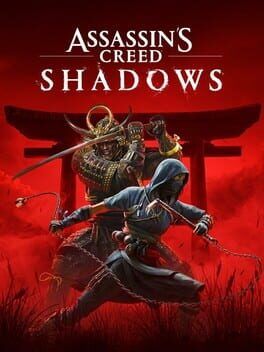
Players are calling Assassin’s Creed Shadows “unplayable” on Switch 2 after repeated crashes. Here’s how widespread the issues are, how they compare to other platforms and critic reviews, and what Ubisoft is promising to fix for handheld performance.
Assassin’s Creed Shadows has arrived on Nintendo’s Switch 2 as one of the system’s biggest third‑party showcases, but early owners are finding a very different kind of drama than Ubisoft intended. Across Reddit, comment sections, and community forums, a growing number of players are calling the port “unplayable” after repeated crashes, particularly in docked play, while critics largely saw a technically ambitious and often impressive handheld experience.
This is a breakdown of what players are running into, how it lines up with critic testing and the PS5 / Xbox Series / PC versions, and what Ubisoft is saying it will do to stabilize the game, especially for handheld sessions.
What players are reporting on Switch 2
Nintendo Life’s report on launch‑week issues pulled together accounts from its own readers and Reddit’s Switch 2 community, and they paint a picture that goes well beyond the occasional stumble. Multiple players describe hard crashes so frequent that progression becomes impossible. In some cases the game falls over within minutes of loading a save, in others it fails on specific missions or regions, leading to loops of crash, reload, and crash again.
One player says the Senri Hills region consistently triggers a crash after a short time spent exploring. Another mentions a seemingly simple “add a building” town mission that repeatedly kills the game. There are stories of crashes when recruiting the blacksmith, or when boarding certain boats at sea. For some, it happens so quickly that they barely clear a loading screen before being dumped back to the Switch 2 home menu.
The severity is not universal. A noticeable slice of the community has managed multi‑hour sessions without a single failure. The split often appears along hardware‑usage lines. People playing primarily in handheld are more likely to report relatively smooth sessions, while those docked to a TV describe the worst instability. A few even say the game is almost fine in portable play but can’t survive long on the big screen.
That inconsistency is part of the frustration. Players check performance impressions from outlets and other users, see praise for the port’s visuals and stability in handheld mode, and then run smack into crash loops themselves. At least one player who contacted Ubisoft support claims the company suggested the issue was with their console rather than the game, despite no similar problems with other titles installed on the same system.
Community workarounds and theories
Without an official fix yet, Switch 2 owners have started their own troubleshooting. None of these steps are guaranteed and many have only scattered anecdotal support, but they show how far players are willing to go just to keep the game running.
Some users say they crash less when running Shadows purely in handheld mode, with others reporting the opposite, only finding stability when they stay docked. A common experiment is to move the install from a microSD card to the console’s internal storage. A few players report that this reduces or eliminates crashes, suggesting a possible streaming or IO issue, though others see no improvement.
A handful of anecdotal “rituals” have surfaced. One popular suggestion is to start the game undocked, load into the world and play through the first couple of minutes, then dock the console after everything has settled. Another is to fully power down the Switch 2 rather than relying on sleep mode, rebooting before each play session. Some owners, suspecting a heat or memory‑leak related problem, even point external fans at the dock while they play.
On the settings side, a few players have tried disabling HDR on compatible TVs and lowering the system’s resolution, hoping to ease whatever strain is tipping the port over. A couple report marginal improvements, but many see crashes regardless of any visual compromise.
The pattern that emerges is simple but not very satisfying. Assassin’s Creed Shadows on Switch 2 can behave perfectly for hours for some users, yet crumble around others in repeatable ways. That kind of split often points to particular combinations of save‑file history, progression flags, or asset‑streaming paths that only some players hit, instead of a single always‑on bug.
How critic reviews and tech breakdowns saw it
The biggest discrepancy between launch‑week reality and pre‑release expectation comes from critic reviews and technical analyses. Outlets that went hands‑on with the Switch 2 version ahead of public release generally agreed on one thing. From a raw tech perspective, this is an ambitious port.
Digital Foundry’s deep dive described Assassin’s Creed Shadows on Switch 2 as impressive in handheld play, with a 30 fps target, Nvidia DLSS reconstruction, and carefully tuned foliage, lighting, and geometry cuts relative to PS5 and Xbox Series S. They were far more critical of docked mode, citing uneven frame‑times and judder that undercut the cinematic look Ubisoft was aiming for on a TV. Crucially, though, they did not encounter constant crashing during their tests.
Other reviewers echoed a similar sentiment. TheSixthAxis and Nintendo World Report noted crashes as a real problem but framed them as occasional interruptions or a series of discrete incidents rather than a constant, game‑stopping plague. Nintendo Life’s own review flagged Shadows as an imperfect but technically impressive Switch 2 debut, again mentioning some stability issues yet still awarding the game a positive score based on its visuals and handheld performance.
Outside of crashes, critics largely focused on trade‑offs. Reviews and tech analyses highlight that both docked and handheld modes aim for 30 fps, with VRR support helping smooth out fluctuations on supported screens. Handheld drops image quality, draw distance, and some detail levels to stay closer to target, while docked mode pushes resolution and effects a little higher at the cost of more frequent dips and inconsistent pacing.
Stacked against PS5, Xbox Series X and high‑end PC, the Switch 2 version is clearly a step down. Texture resolution, shadow quality, volumetrics, and ray‑tracing are pared back, and there is no performance mode offering 60 fps. But the consensus among early critics was that, judged as a portable rendition, Shadows is far more in line with successful big‑game ports like The Witcher 3 or Doom 2016 than a compromised curiosity.
That makes the severity and volume of crash reports that arrived once the wider audience got its hands on the game so striking. Critics saw a rough yet workable experience. Many regular players are seeing brick walls.
Comparing Switch 2 stability to other platforms
It is important to contextualize these issues against Shadows on other platforms. On PS5, Xbox Series X|S and PC, Assassin’s Creed Shadows certainly had its own teething problems at launch. Texture pop‑in, occasional crashes, streaming hiccups in dense cities, AI oddities and CPU‑limited stutters have all been documented, and Ubisoft has already shipped several updates on those systems.
However, the scale appears different. While other platforms saw scattered reports of crashes and bugs, they did not spark the same concentrated narrative of the game becoming flatly unplayable for certain players. Most console reviews and user impressions on PS5 and Series X focus on performance‑mode frame drops and visual quirks rather than systemic stability.
On Switch 2, by contrast, the instability stories stand alongside a very different set of strengths. Owners who dodge the worst bugs often describe the version as a minor miracle, offering essentially the same world design, mission structure and stealth‑combat sandbox as the “full fat” consoles in handheld form. Some praise the way VRR and DLSS combine to make 30 fps feel smoother during portable play than it might on a fixed‑refresh TV.
Cross‑progression complicates the perception further. Ubisoft Connect support means many Switch 2 owners are double‑dipping, continuing existing PS5 or PC campaigns on the go. For that crowd, the Switch 2 version is less a primary home and more an on‑the‑go complement. Crashes in that context become particularly irritating. Instead of seamless cross‑save, you risk losing progress when you squeeze in a quick mission during a commute or before bed.
The bottom line across reports is that Ubisoft managed to replicate the visual ambition and systemic density of Shadows in portable form, but the stability foundation on Switch 2 is significantly weaker than on rival consoles right now.
Ubisoft’s statements and the promised patches
Although Ubisoft has yet to publish a dedicated “Switch 2 stability” blog post, hints of its patch roadmap are already circulating. A technical breakdown from YouTube channel What’s It Like?, cited by Nintendo Life and other outlets, mentions that Ubisoft support told them a Switch 2 patch aimed at addressing technical problems is scheduled for mid December. The language was cautious, promising to tackle “some” of the issues currently affecting the port rather than framing it as a cure‑all.
Players watching Ubisoft’s recent handling of Star Wars Outlaws on Switch 2 are understandably hopeful. Outlaws launched with its own share of performance and bug complaints, but has since received a steady flow of patches that smoothed frame rates and cleaned up stability. GoNintendo and other sites specifically point to that track record as a reason to expect similar post‑launch care for Assassin’s Creed.
Ahead of launch, Ubisoft had already framed the Switch 2 version as the result of deep collaboration with Nintendo. Official tech breakdowns talk about rebuilt LOD rules, reworked asset streaming, DLSS‑assisted reconstruction and VRR support to keep its 30 fps target plausible in both docked and portable configurations. That level of engineering investment suggests Ubisoft is not treating the port as a one‑and‑done side project.
If the reported December patch lands on schedule, it will likely prioritize the issues both critics and players agree on. Uneven frame‑times in docked mode are an obvious candidate, as is whatever underlying instability is generating broadly similar crash stories across specific missions and areas. Subsequent updates could focus on more subtle optimizations, possibly reclaiming some visual headroom or further tightening handheld performance once the worst bugs are fixed.
What this means if you are considering the Switch 2 version
For anyone looking at Assassin’s Creed Shadows on Switch 2 right now, the situation is a mix of real promise and equally real risk. On paper, and in many technical breakdowns, this is one of the most ambitious open‑world conversions the platform has seen. Handheld players who avoid the worst problem spots describe a stable 30 fps, striking visuals for portable hardware, and the full breadth of the game’s stealth and samurai combat systems intact.
In practice, enough players are hitting repeated crashes and progression‑blocking bugs that it is hard to recommend jumping in without caveats. If portability is your top priority and you are comfortable with the possibility of waiting on patches, the port can be worth watching, especially once Ubisoft’s first big post‑launch update arrives. Cross‑progression with PS5, Xbox and PC also makes Switch 2 a compelling secondary platform, provided stability improves.
If you only plan to own Shadows on one system and are sensitive to technical issues, other platforms are safer right now. PS5, Xbox Series X|S and a properly specced PC all deliver higher frame rates, sharper visuals and, at present, fewer reports of game‑breaking instability.
The story of Assassin’s Creed Shadows on Switch 2 is still being written. The launch window has exposed a fragile side to what is otherwise a technically impressive port, and Ubisoft’s patch work over the coming weeks will determine whether it joins the list of great handheld conversions or becomes another cautionary tale about shipping too close to the edge. Until then, players are left with crossed fingers, community workarounds, and a portable Japan that is as unstable for some as it is beautiful for others.