
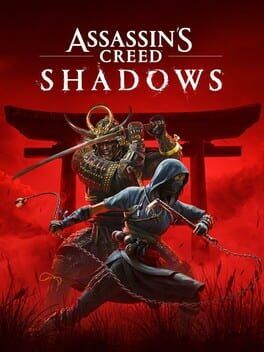
Title Update 1.1.10 quietly turns the Nintendo Switch 2 version of Assassin’s Creed Shadows into a control playground with full mouse-and-keyboard support, while a broad slate of fixes and PS5 Pro’s new PSSR 2 upscaling keep Ubisoft’s shinobi sandbox evolving post-launch.
Ubisoft’s latest update for Assassin’s Creed Shadows is less about flashy new content and more about how you actually inhabit Naoe and Yasuke. Title Update 1.1.10, rolling out across all platforms, is another sign that Ubisoft is still tuning core systems instead of simply stabilizing and moving on. The clearest example is on Nintendo Switch 2, where the game now supports full mouse-and-keyboard controls, a first for the series on a Nintendo system and a change that meaningfully alters how stealth and combat feel.
Mouse and keyboard on Switch 2 changes the rhythm of stealth
On paper, adding mouse and keyboard support to the Switch 2 version looks like a minor bullet point. In practice it reshapes how you read and react to spaces, especially when playing Naoe as a pure stealth operative.
With a mouse, camera adjustments become quicker and more granular. Lining up a shuriken or bow shot on a rooftop target is no longer a small fight with an analog stick’s dead zone. The twitchier response makes snap decisions, like canceling a planned route when a guard unexpectedly turns, feel more like a PC stealth game than a traditional console Assassin’s Creed.
The benefit carries into close quarters as well. Naoe’s quick step-dodges and stance shifts rely on precise timing and angle control. Mapping movement to WASD and camera to the mouse gives more confidence to weave through tight patrol patterns or execute last second counters without over-correcting the stick and exposing yourself. It is the kind of control scheme that rewards players who want to manual aim every tool instead of leaning on lock-ons and generous aim assist.
Yasuke feels different too. His heavier samurai toolkit is all about intentional commitments, and mouse input for camera and target swapping makes it easier to track multiple foes in the chaos of a courtyard fight. Fast camera flicks to mark archers, then re-center on the primary duelist, helps the combat pacing lean closer to a character action game while still retaining Assassin’s Creed’s methodical tempo.
The Switch 2 itself plays an important role here. Mouse and keyboard on handheld hardware only really works if the system can keep up with stable responsiveness, and Shadows on Switch 2 already targets higher, more consistent performance than prior Nintendo hardware. Patch 1.1.10 doubles down on that by polishing technical hitches that would have undercut precise inputs.
Why this control option matters for the broader series
Historically, the PC versions of Assassin’s Creed have been the only way to enjoy native mouse-and-keyboard play. Bringing that scheme into the living room on Nintendo’s latest machine nudges the franchise toward a more platform-agnostic approach to control philosophy. It invites players who prefer PC-style input but want the flexibility of a console or hybrid.
For stealth design, this opens doors in future updates and entries. Designers can start assuming that a slice of the audience has pinpoint aim and ultra-fast camera reorientation, which makes higher-difficulty infiltrations more viable on consoles without feeling unfair. Optional challenges that ask for risky long-range assassinations or intricate, non-lethal runs make more sense when the primary stumbling block is no longer analog stick precision.
It also helps accessibility. Players who struggle with thumbstick micro-movements or traditional gamepad layouts now have another way to experience the game on Switch 2 without shifting to a different platform. That kind of flexibility, especially this early in the system’s life, suggests Ubisoft is thinking past simple parity ports.
Combat and stealth feel after the patch on Switch 2
Once you plug in a mouse and keyboard, small mechanical details of Shadows suddenly stand out. Guard cones that felt fuzzy at long range are easier to read because you can fine tune your camera angle and lean into slight height advantages. A rooftop infiltration in Kyoto that previously devolved into accidental alerts becomes a deliberate puzzle of timing and marksmanship.
In melee, crowd management tightens up. Instead of circling the analog stick and hoping the camera keeps everyone framed, a quick mouse sweep can keep peripheral threats in view. This makes stance-based play more rewarding, since you can cleanly track which enemy you have staggered, which one is winding up a heavy blow, and where the next opportunity for a takedown will appear.
The result is not that Shadows becomes easier. Rather, your failures feel more honest. Miss a headshot or mistime a parry now, and it is clearer that the mistake was strategic rather than a fight with the controls. That alone is enough to give the Switch 2 version a distinct identity within the console lineup.
Bo staff access finally aligns with how players actually fight
Patch 1.1.10 is not just about controls. Across platforms, one of the most tangible gameplay shifts is how the team handles Bo weapons. Previously, non-legendary Bo staves were tightly gated around the Claws of Awaji expansion. Now, once you have secured at least one unique Bo, regular versions begin to drop from enemies, appear in chests, and show up at merchants regardless of whether you own the DLC.
This matters because the Bo is one of the most expressive, crowd-control focused weapons in the game. Its range and sweeping arcs make it ideal for Yasuke players who want to corral groups rather than methodically duel. By letting the weapon show up naturally in the loot ecosystem, Ubisoft is acknowledging how often players lean on that moveset for open-world skirmishes.
The change also removes a strange disconnect between the fantasy the game sells and the tools it actually gives you. If you experiment with the Bo once and fall in love with it, the game no longer quietly nudges you into a specific add-on path just to see more variety. Instead, it trusts the core sandbox to support that preference through standard progression.
The fixes that quietly improve every playthrough
Beneath the headline changes sits a long list of fixes that smooth rough edges across all versions. Fast travel points that refused to register are now behaving properly, which makes the late game loop of bouncing between contracts, side stories, and resource runs less tedious. If you were stuck in a strange limbo of partially unlocked shrines and outposts, 1.1.10 is designed to clean that up.
Enemy afflictions are another subtle but important tweak. The patch allows foes to suffer up to five simultaneous debuffs, which finally lets hybrid builds breathe. Players combining poison, fire, bleeding, and other status effects can fully lean into the fantasy of layering tools without watching new effects overwrite old ones too quickly. It rewards experimentation instead of forcing you into a narrow meta.
Several fixes address long standing stat and damage issues. Ration visibility has been corrected so you are less likely to get blindsided by a lack of healing mid-mission. Unarmed damage bonuses and stat caps that previously stopped scaling properly past the +100 percent mark now function as the UI suggests, meaning intricate builds that stack multiple sources of power finally deliver the numbers theorycrafters expected.
Quest stability gets attention too. Missions like Brothers In Arms, Lost and Found, and The Winter Raiders have had progression blockers ironed out. For anyone returning after a break, this patch is a reassuring sign that your quest log is less likely to be held hostage by scripting bugs.
UI, perks and progression clean up the meta
The update’s user interface and progression fixes are easy to overlook but matter if you care about min-maxing or just understanding what your build actually does. A crash tied to checking add-on content has been resolved, which should make diving into DLC menus or cosmetics less nerve-racking.
The notorious completion percentage bug that left players marooned at 97.89 percent is also addressed. For completionists, that is more than an annoyance fix; it restores confidence that the game will correctly recognize the hours spent chasing every collectible and contract.
Detailed stat sheets have been made clearer and more accurate. That connects directly with a broader pass on perks and abilities. Several upgrades that simply did not function have been corrected, while perk descriptions like Oni’s Rage and Yasuke’s Defensive Break Level 3 now better reflect their actual behavior and damage values. Localization tweaks, such as more explicit wording for the Hurricane Stance on the Naginata, help players in every language properly understand what they are slotting into their builds.
There is also a fix for a “Missing Content” error that could cause players to lose Claws of Awaji gear. That bug undercut the incentive to engage deeply with expansion content, and its removal restores faith that the time you pour into side material will not vanish due to backend confusion.
PS5 Pro’s PSSR 2 upgrade rounds out the technical work
While the Switch 2’s newfound mouse-and-keyboard support is the clear headline, PS5 Pro owners are not left out. Patch 1.1.10 introduces support for Sony’s newer PSSR 2 upscaling solution on the Pro model. Ubisoft’s goal is to squeeze sharper image quality and more stable performance out of the same hardware budget, smoothing edges and foliage detail in the dense Japanese landscapes without dragging down frame rate.
It is a more subtle change than a new graphics mode, but for players bouncing between platforms it helps narrow the visual gap with high end PCs while maintaining the plug-and-play ease of a console. In combination with the systemic fixes elsewhere in the patch, it underscores the studio’s continued effort to keep tuning the technical foundation rather than only focusing on headline content drops.
A post-launch roadmap built on feel, not just features
Taken together, Title Update 1.1.10 reads less like a simple stability pass and more like a statement about how Ubisoft intends to support Assassin’s Creed Shadows. Mouse-and-keyboard input on Switch 2 rethinks how a handheld console version can be played. Bo staff access and affliction stacking reshape core combat expression. Quest, UI, and progression fixes respect the time of players still working through the main story or mopping up the map.
This is the kind of patch that invites lapsed players to reinstall just to see how different the game feels in their hands, especially on Nintendo’s new hardware. If Ubisoft continues down this path, future updates will likely focus less on one-off cosmetics and more on systems that alter how you plan a raid, stalk a fortress, or improvise your way out of a failed infiltration. For a game built on the twin fantasies of the precise shinobi and the unstoppable samurai, that is exactly the kind of post-launch evolution it needs.