
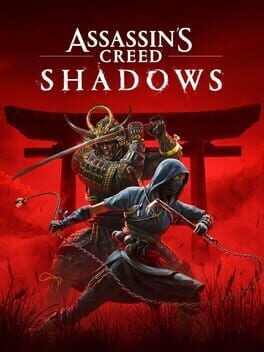

Ubisoft’s last major title update for Assassin’s Creed Shadows delivers a true ending, a new Domains endgame mode, and a crossover bridge to Assassin’s Creed Black Flag Resynced. Here’s how it all fits together and what it says about the game’s post-launch support.
Black Tides: Giving Shadows Its “Real” Ending
Assassin’s Creed Shadows launched with a complete story, but its finale left space for a more decisive confrontation with the Templars. The final major update, Title Update 1.1.11, delivers that missing chapter through a new quest called Black Tides.
Black Tides picks up after the events of the Claws of Awaji expansion and functions as a true epilogue for both Naoe and Yasuke. Where earlier content leaned more heavily on Naoe’s perspective, this mission finally gives Yasuke the focused resolution he was missing, centering him in the pursuit of a new, more shadowy Templar threat that has been working behind the scenes of the Sengoku conflict.
Structurally, Black Tides is designed as a compact but high‑stakes finale. It sends Naoe and Yasuke into some of the most fortified locations in the game, combining infiltration setups that reward a fully specced shinobi with large‑scale clashes that lean into Yasuke’s heavier combat kit. The update uses your late‑game build rather than resetting or heavily constraining it, so the quest plays like a showcase of the systems players have been tuning over dozens of hours.
Narratively, the mission delivers several key payoffs. The Templar antagonists are positioned as a hinge between Shadows and the wider series, with their plans tied to Animus‑era research and data that will later surface in Assassin’s Creed Black Flag Resynced. Modern‑day and Animus‑framework scenes are limited, but there is enough new VO and rift‑style connective tissue to pull Shadows more firmly into the ongoing Assassin’s Creed metanarrative rather than leaving it as a self‑contained historical detour.
The result is a finale that feels closer to Origins’ Hidden Ones add‑on or Valhalla’s Last Chapter: a deliberate, curtain‑call style send‑off that lets you say a proper goodbye to the setting and its dual leads.
Domains: Shadows’ Late‑Game Answer To Buildcrafting
Alongside the story conclusion, the headline gameplay addition is Domains, a new endgame mode that essentially functions as Animus simulation gauntlets. These are described as replayability‑focused challenges built to push players out of their comfort zone and force a rethink of established loadouts.
Each Domain is framed as a discrete simulation with its own modifiers and enemy compositions. Instead of simply recycling open‑world outposts or bandit camps, Ubisoft has pulled together arena‑style layouts tailored to specific playstyles and weaknesses. One Domain might emphasize detection pressure and tight patrol patterns that punish sloppy stealth, while another leans into wave‑based duels that test stamina management, parries, and gear synergy for Yasuke‑style bruiser builds.
The evolving modifiers are what make Domains feel like a genuine endgame system rather than a one‑and‑done challenge. Enemy damage scaling, detection cones, environmental restrictions, and gear constraints all shift between runs. That pushes you to experiment with weapon perks, armor sets, and skill allocations instead of sticking with the single optimal setup that carried you through the campaign.
Rewards tie directly into that loop. Domains pay out exclusive endgame gear, including pieces that nod to legacy Assassin’s Creed loadouts. For players who enjoy min‑maxing, this gives Shadows a clearer destination after the credits roll: tuning builds specifically for Domains’ harsher rule sets, rather than just cleaning up side content on an overpowered character.
In practice, Domains stop short of being a full live‑service pillar the way something like Valhalla’s ever‑evolving River Raids were. There are five main simulations, each tuned around high‑level characters, and the mode is intended as a capstone activity instead of a seasonal treadmill. Still, for a game that launched with a more traditional single‑player focus, it is a meaningful final hook for combat‑driven players.
Black Flag Resynced Connections And Crossover Rewards
The final update is also tasked with pointing the fanbase toward Ubisoft’s next big Assassin’s Creed release, Black Flag Resynced. Rather than just throwing in a menu ad, Ubisoft has woven several small but tangible crossover threads into Shadows.
The most visible are cosmetics. Naoe can now equip Edward Kenway’s Assassin robes, an immediately recognizable silhouette that contrasts with her shinobi gear but still reads as part of the Assassin lineage. Yasuke, meanwhile, gets a Blackbeard‑inspired outfit, leaning into his role as a larger‑than‑life warrior and subtly foreshadowing the era and tone of Resynced’s pirate‑heavy setting.
More interesting from a systems and lore standpoint are the new Animus projects. These function as short, focused simulations that experiment with the data structures and UI language you will see in Black Flag Resynced, and Ubisoft has confirmed that progress and key unlocked items can carry across once the remake launches. It is not a full save‑transfer ecosystem, but it turns Shadows into a kind of prologue client where diehard fans can start preparing their profile and collecting crossover rewards ahead of time.
Finally, Black Tides itself contains narrative beats that bridge directly to the Black Flag era. References to specific artifacts, research strands, and animus anomalies line up with what Ubisoft has already teased about Resynced’s framing story. The intention is clear: when you roll credits on Shadows’ finale, you are pointed toward a recognizable next chapter rather than just drifting away from the franchise.
How Ubisoft Is Closing Out Post‑Launch Support
Taken as a whole, Title Update 1.1.11 feels like a tidy, finite conclusion to Assassin’s Creed Shadows rather than the beginning of an ongoing service tail. Ubisoft had already signaled that Shadows would receive a more compact post‑launch roadmap compared with Odyssey or Valhalla, topping out at a single substantial expansion and a final major patch. This update fulfills that plan and then deliberately closes the book.
The choice to frame Black Tides as a free quest is a notable part of that strategy. Instead of locking the “real” ending behind another paid DLC, Ubisoft folds it into the base experience for anyone who still has Shadows installed. That reads as a response to criticism of sprawling, fragmented support in some previous series entries, where important character resolutions and lore beats were scattered across multiple add‑ons and seasons.
Domains underscores the same philosophy. It is a self‑contained endgame layer with meaningful rewards, but it does not depend on future balancing passes, seasonal rotations, or new maps to stay relevant. If you finish Shadows in six months or two years, the mode will still be there, fully intact and tuned as intended.
The Black Flag Resynced crossover is the most overtly commercial element, but it is also handled with a light touch. The wearable outfits are effectively fan‑service skins, and the Animus projects double as lore bridges rather than mere marketing stubs. It is clear that Ubisoft wants Shadows to feed interest into the next product, yet it also seems aware of the fatigue players have expressed around aggressive in‑client advertising.
From a broader franchise perspective, this final update positions Shadows as a distinct, self‑contained chapter in Assassin’s Creed history. It delivers:
A complete, character‑focused ending that fixes lingering narrative gaps.
A challenging but finite post‑game activity suite through Domains.
A direct handoff to the next flagship release in the form of Black Flag Resynced tie‑ins.
What it does not do is commit Shadows to the kind of years‑long live‑service tail that defined Valhalla. For some fans that will feel like a missed opportunity, especially for a setting as long‑requested as Sengoku Japan. For others it is a welcome return to a more traditional model where an Assassin’s Creed entry arrives, tells its story, offers a clear endgame arc, and then gracefully steps aside for what comes next.
In that sense, Ubisoft’s farewell to Assassin’s Creed Shadows is measured and quietly confident. The final patch does not transform the game, but it does refine its shape, tighten its conclusion, and give dedicated players a reason to return one last time before their Animus session shifts to the Caribbean.