
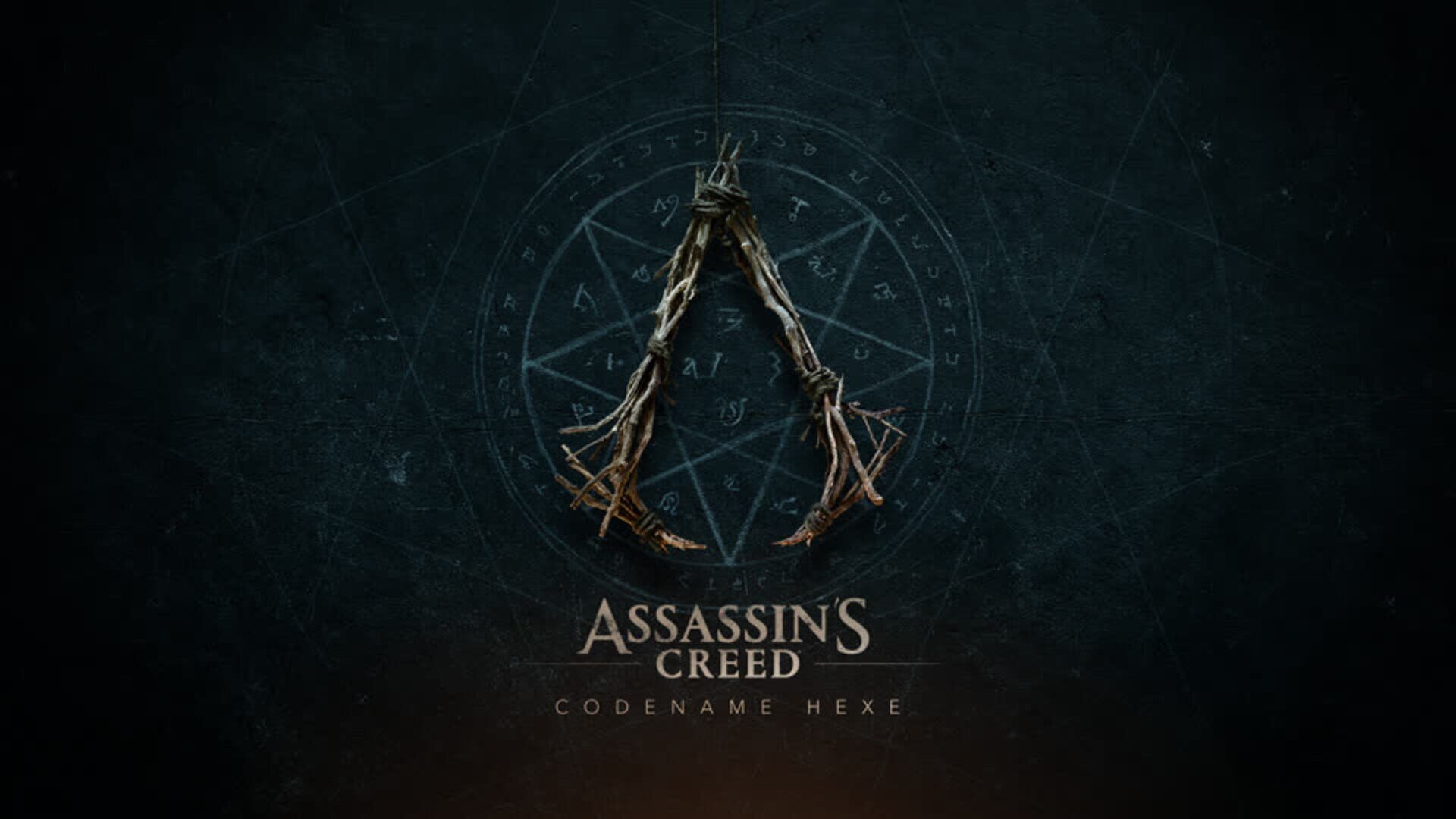

With Assassin’s Creed Hexe losing yet another key director, where does that leave Ubisoft’s darkest AC project, and what should fans realistically expect from a game still largely under wraps?
Assassin’s Creed Hexe was pitched from day one as the strange one. A darker, more experimental Assassin’s Creed, rumored to be built around witch trials in the Holy Roman Empire and slotted into the broader Assassin’s Creed Infinity platform as the unsettling counterpoint to the more familiar Assassin’s Creed Red. Now, after losing its original creative director Clint Hocking, it looks like Hexe has also lost its game director, long-time Ubisoft veteran Benoit Richer.
For a project we have barely seen outside of a teaser, that is a lot of change at the very top. It is easy to jump straight to doom and gloom, but big AAA projects often survive, and sometimes improve, through leadership turnover. The real question for fans is not "Is Hexe cancelled?" so much as "What does this mean for the game’s tone, structure, and timeline inside Ubisoft’s Assassin’s Creed roadmap?"
Another director exits a very secretive project
Reports from outlets like Rock Paper Shotgun and Kotaku highlight that Benoit Richer, credited across multiple Assassin’s Creed games as a senior designer and director, has joined a new studio called Servo Games as game director and apparent co-founder. He did not issue a formal statement about leaving Ubisoft or Hexe, but stepping into a new full-time director role almost certainly means he is no longer steering Hexe.
This comes after Clint Hocking, the high-profile creative lead known for Far Cry 2 and Watch Dogs Legion, departed earlier, with Assassin’s Creed veteran Jean Guesdon stepping in as the new creative director. In practical terms, that is two major leadership chairs swapped out on a project that has never shown gameplay, never had a release date, and only exists publicly as a logo, a short teaser, and a handful of cryptic comments from Ubisoft.
Within Ubisoft’s current Assassin’s Creed slate, Hexe has always been framed as a later, more experimental entry inside the Infinity hub, arriving after the more traditional, open-world RPG approach of Assassin’s Creed Red. So far, nothing about these departures suggests that Hexe is being shelved. It does, however, heavily imply turbulence behind the scenes that could slow the project down and reshape its priorities.
How leadership changes can reshape tone
Assassin’s Creed games live and die on tone. Origins and Odyssey leaned into sweeping historical epics, Valhalla blended myth with grounded drama, and Mirage pulled things back into a tighter, stealth-focused homage to the early series. Hexe has been described by Ubisoft as a "very different type of Assassin’s Creed" and a "darker, narrative-driven" experience. Early rumors and trademark teases pointed to paranoia, witch hunts, and possibly even light horror elements.
Directors are the people who decide how far a pitch like that can go. Under Clint Hocking’s creative direction, fans reasonably expected something systemic and experimental, with strong themes and offbeat structure. Benoit Richer, as game director, would have been the one turning that creative vision into actual missions, mechanics, and pacing.
Swapping both of those leaders midstream does not automatically erase the original concept, especially if core pillars were already locked in, but it often softens extremes. Ubisoft may keep Hexe’s witch trial setting and darker atmosphere, while a new leadership duo nudges the project back toward more familiar Assassin’s Creed rhythms for accessibility, budget, and scheduling reasons.
What fans should expect is a Hexe that still looks and feels distinct within the series, but not necessarily a complete reinvention of the franchise’s DNA. The horror angle, for example, may settle into an oppressive mood, superstitious NPC systems, and more grounded supernatural ambiguity rather than overt genre mechanics that would alienate long-time fans of the series.
Structure inside the Infinity era
Hexe is not just another boxed Assassin’s Creed release. It is part of Assassin’s Creed Infinity, Ubisoft’s attempt to turn the series into a long-running platform that can host multiple historical campaigns. Translated into production terms, that means Hexe has to fit a shared technology stack, shared services, and a shared live roadmap.
Leadership turnover becomes especially critical in that context. A director who pushes for highly bespoke systems, for instance, can cause friction with Infinity’s platform goals. A new director may be encouraged to reuse more from Red and future Infinity components, which can make development more predictable but may flatten some of Hexe’s oddest design aspirations.
Fans should not expect a tiny experimental spin-off. Ubisoft has repeatedly framed Hexe as a mainline-level experience, just delivered within the Infinity structure. At the same time, the weight of that platform means structural experimentation is likely to be constrained. Think of Hexe less as a small side project and more as an Infinity "pillar" that adds a distinct flavor, with its own protagonist and historical arc, while still sharing a backbone of traversal, stealth, combat, and progression under the hood.
Leadership changes could influence how much Hexe diverges from this template. A new game director tasked with stabilizing production is likely to focus on clear mission design patterns, reliable stealth and combat loops, and a scope that fits comfortably alongside Red and whatever follows, rather than chasing radical, unproven structures.
Timelines and realistic expectations
Assassin’s Creed Hexe was first revealed back in 2022 as part of Ubisoft’s big Assassin’s Creed roadmap, and even then it was positioned as something for "later". Since then, Ubisoft has been clear that Red is coming first. With both a creative director and game director changed during production, it is realistic to expect Hexe to remain further out than many fans would like.
Major leadership swaps almost always trigger a period of reassessment. New leads review what exists, decide what to keep, what to cut, and what needs to be rebuilt. Sometimes they narrow scope and ship sooner in a more conservative form. Other times they stretch schedules to align the game more closely with their vision. From the outside, neither scenario looks glamorous, but both are common.
For fans, the most honest expectation right now is simple. Do not expect detailed gameplay blowouts or near-term release dates. Ubisoft is likely to keep Hexe quiet until its new leadership is confident in a stable vertical slice that matches both the Infinity framework and the company’s broader risk calculations in a tighter AAA market.
It is also worth remembering that the Infinity approach lets Ubisoft stagger big beats. Red can anchor the platform in the nearer term, giving Hexe more runway to settle on a solid direction without having to carry the full weight of the franchise alone.
What might actually survive all this change
Despite the uncertainty, several elements of Hexe still seem more durable than others. The witch trial setting has been woven into the branding from the beginning, and there is little incentive to walk away from such a clear hook after years of teasing. The darker tone, too, fits neatly into a broader strategy of offering different flavors of Assassin’s Creed inside Infinity, making it likely that Ubisoft will preserve that contrast with Red rather than homogenize everything.
Where fans should be cautious is in expecting especially avant-garde systems. Under Hocking’s name, it was easy to picture Hexe as something like a systemic paranoia simulator wearing an Assassin’s Creed hood. With new leads in place and a long development cycle under scrutiny, the final game may express those ideas through more traditional stealth, investigation, and social stealth layers rather than full-blown genre reinvention.
That does not have to be a disappointment. Ubisoft has shown, with games like Mirage, that a focused scope and strong atmosphere can restore some of what fans have missed, even when the underlying structure remains familiar. Hexe could occupy a similar space, using a condensed map, more intimate stakes, and an emphasis on fear and suspicion to stand apart without discarding what makes Assassin’s Creed recognizably itself.
How fans should read the silence
The instinct when you hear "another director has left" is to assume disaster. In practice, big franchises that span console generations often rotate leadership, sometimes quietly. The difference with Hexe is that we had a rare early look at its original leadership team, then watched them change before we ever saw gameplay.
That visibility makes the turbulence feel more dramatic than it might have in previous generations, but it does not automatically mean Hexe is in worse shape than other unannounced AAA projects at a similar stage. It does mean expectations should be recalibrated.
Fans should expect Hexe to stay mysterious for a while longer. Expect Ubisoft to talk about it mainly in broad strokes, as a darker Infinity entry with a witch trial setting, without committing too hard to experimental buzzwords until the new leadership is fully locked in. Expect its place on the release slate to remain flexible around the performance of Red and other Ubisoft projects.
What you probably should not expect is a radical, genre-breaking horror game that throws out the series rulebook. At this point, the safer bet is a distinctive but still fundamentally Assassin’s Creed experience that wears its witch-hunt theme on its sleeve, uses Infinity to justify its existence in the long-term franchise plan, and reflects a compromise between early bold ideas and the realities of a shifting AAA landscape.
Until Ubisoft is ready to show Hexe in detail, that measured outlook is the most realistic way to follow a project that has already weathered more leadership change than most fans ever see.