
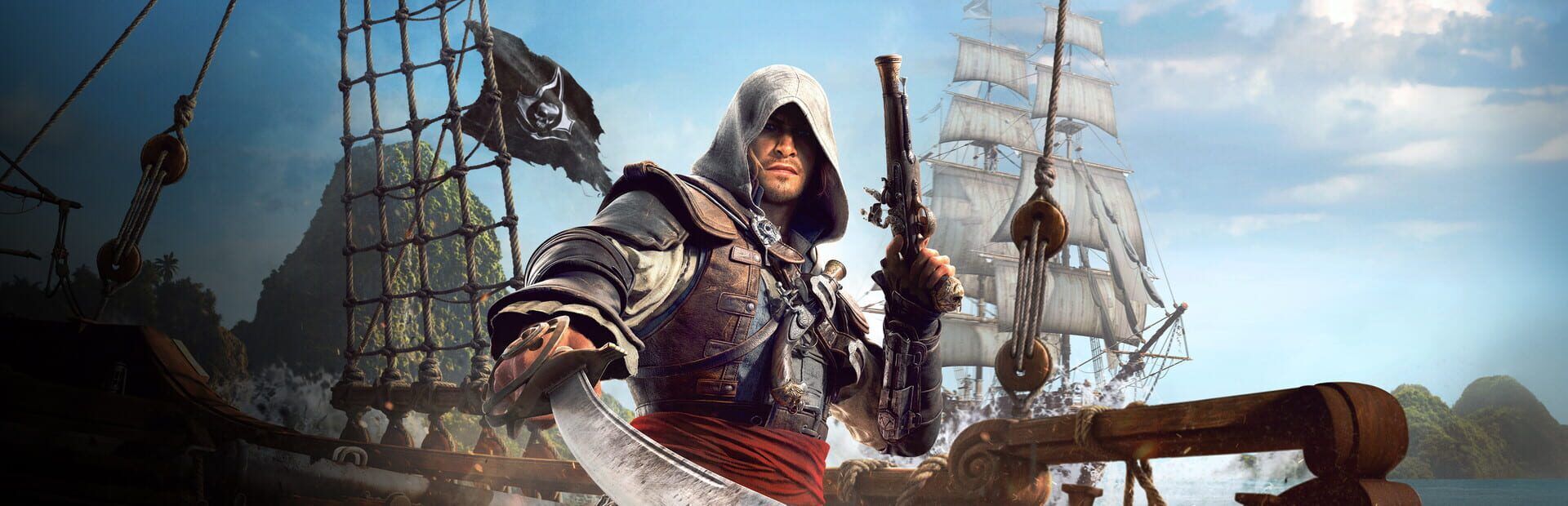

Ubisoft has buried a real pirate chest worth half a million dollars for Assassin’s Creed Black Flag Resynced. Here is how the Gold & Crystal treasure hunt works, why pirate fantasy is such powerful marketing fuel, and whether this kind of alternate reality stunt can really boost engagement ahead of launch.
Ubisoft is not just reviving Assassin’s Creed IV with Black Flag Resynced. It is reviving the fantasy at the heart of the series with a real Caribbean treasure chest, $500,000 on the line and a years-long global puzzle hunt that blurs the line between game and reality.
The promotion, Gold & Crystal – The Lost Treasure of Edward Kenway, might be the loudest example yet of how publishers are experimenting with alternate reality style campaigns to make franchise revivals feel like events instead of just remasters.
How the Assassin’s Creed Black Flag Resynced treasure hunt actually works
Gold & Crystal is structured less like a typical sweepstakes and more like a commercial ARG. Ubisoft has partnered with Unsolved Hunts, a company that specializes in long-form treasure hunts, to run the contest in parallel with Black Flag Resynced’s launch.
Players are given a chain of 15 puzzles themed around Edward Kenway, the Animus and the wider Black Flag Resynced fiction. The puzzles arrive as letters, documents and other physical style artifacts, and solving them is how participants triangulate the final location of the prize.
Some key details from Ubisoft’s announcement and partner sites:
The grand prize is a single chest hidden somewhere in the Caribbean. Inside is about $350,000 worth of specially minted solid gold coins bearing the Assassin’s Creed Black Flag Resynced logo, plus a rock crystal skull with a red opal, valued at a further $150,000. The skull is a physical callback to Black Flag’s mysterious First Civilization relics, designed by French lapidary artist Hervé Obligi, and the whole thing sits inside a handcrafted replica of the game’s in-universe chest.
Ubisoft and Unsolved Hunts expect the full hunt to last anywhere from two to five years. That is an enormous window by normal marketing standards and underlines how different this is from a normal prelaunch promo. This is a slow-burn project that, if it catches on, could keep Black Flag Resynced in the conversation long after its July 9 launch on PC, PlayStation 5 and Xbox Series X|S.
Access is also structured more like a premium puzzle product than a free giveaway. A teaser puzzle is already live online. Ten people who solve that correctly will be randomly selected for free digital access to the full hunt when it starts later this year. Everyone else is expected to buy into the experience through Gold & Crystal packages that start around the cost of a mid-range game and rise with optional physical extras. Ubisoft has stressed that prior knowledge of Assassin’s Creed is not required, but every part of the experience is built to reinforce its fiction.
Why pirate fantasy is perfect fuel for an alternate reality campaign
On paper, Gold & Crystal reads like marketing copy brought to life: a pirate chest in a secret Caribbean location, gold coins, a cursed-looking skull and a race of would-be treasure hunters trying to outwit each other across years. In practice, it works because Assassin’s Creed Black Flag has always been about that specific fantasy.
Back in 2013, Black Flag became a breakout hit partly because it let players do the things they imagined when they thought about pirates. You captained a ship, sang shanties with your crew, scanned the horizon for fat merchant targets and dove into storm-tossed seas for wrecked treasure. The game’s modern-day sci-fi framing stayed, but the emotional hook was pure swashbuckling adventure.
Gold & Crystal translates that into reality. Instead of simply role-playing a pirate on screen, participants are chasing a very real hoard, deciphering clues over months, forming crews online and debating which Caribbean island hides Edward Kenway’s last score. The genre’s usual fantasy of charts, hidden coves and buried chests suddenly has a concrete anchor.
That makes pirate fiction a more natural fit for this sort of campaign than many other IPs. A similar contest for a cyberpunk game or a grounded military shooter would struggle to justify sending someone to dig in the Caribbean. For Black Flag Resynced, it feels like an extension of what the game already promises: piracy as a lifestyle, not just a level theme.
The half‑million dollar hook: what the $500,000 prize really buys Ubisoft
The headline number is hard to ignore. Half a million dollars in value gets people outside the usual gaming bubble to pay attention. Mainstream outlets, finance sites and social media users who would not normally care about a remaster now have a reason to mention Assassin’s Creed Black Flag Resynced by name.
In raw marketing terms, that price tag buys Ubisoft several things.
First, it guarantees a burst of earned media. Any story that combines Ubisoft, Assassin’s Creed, a buried chest and $500,000 will circulate well beyond core gaming press, especially when the prize includes photogenic elements like a crystal skull and gleaming gold coins. For a remake of a decade‑old game, that is valuable oxygen.
Second, it creates a sense of myth around the campaign. Traditional pre-order bonuses rarely feel memorable. A chest buried in the Caribbean with gold minted specifically for this hunt can. Years from now, only one person or team will physically dig that box up, but the story of the hunt itself is what Ubisoft is really buying. If the puzzle trail is well designed and the community around it is lively, you get a living legend attached to Black Flag Resynced.
Third, the size of the prize changes the way some players engage. ARG veterans and puzzle enthusiasts are used to intangible rewards, community kudos or small payouts. With $500,000 on the line, the hunt suddenly looks like a semi-serious competition. That could attract a different audience entirely, from math and cryptography hobbyists to YouTubers and Twitch streamers who see content potential in documenting the chase.
The flip side is that once a dollar value is attached, expectations change. Players will scrutinize puzzle quality, the fairness of clue distribution and legal fine print. A $500,000 carrot invites real-world stakes, and any perception of unfairness could damage the brand more than a smaller-scale, lower-risk promo would.
Alternate reality marketing is back in fashion for big franchises
Gold & Crystal fits into a longer trend of publishers using ARG style campaigns to turn launches into multi-month events. The industry has been here before. Halo 2’s I Love Bees, the alternate reality trails for games like Nine Inch Nails’ Year Zero or even early Assassin’s Creed web puzzles all experimented with blending fiction and real world clues.
The difference now is reach and monetization. Social platforms, Discord and dedicated puzzle communities make it far easier to spread clues and build organized efforts. At the same time, companies are less shy about charging for participation or bundling access with premium editions.
Ubisoft is effectively doing both. Gold & Crystal is attached to a known franchise revival and uses a prize too large to ignore, but it also positions the hunt itself as a product, not just marketing overhead. You can see echoes of other modern stunts, such as:
Premium community hunts where buying physical kits or special editions is part of the fun.
Transmedia launches where story beats unfold across comics, web videos and live events.
Influencer‑first reveals where streamers get early access to clues or themed packages.
In that sense, Gold & Crystal feels like a hybrid. It is part traditional ARG and part collectible puzzle line, backed by a triple‑A marketing budget.
The ethical wrinkle: paying to chase buried treasure
One detail that has drawn criticism is the cost of entry. Reports suggest you effectively pay around the price of a new game for digital access to the hunt, with higher tiers that include physical notebooks, artifacts or board games themed around the search. Some of those more expensive packages do not even include a copy of Black Flag Resynced itself.
For puzzle fans, that is not unusual. Companies like Unsolved Hunts routinely charge for complex, multi-year experiences. For Ubisoft, though, this looks different from a free community event. When participation is gated behind a paywall and the grand prize is so large, it edges closer to a commercial lottery in the eyes of some players, even if it is structured as a skill-based contest rather than a random draw.
There is also a geographic fairness question. The treasure is somewhere in the Caribbean, and although anyone may be able to help crack the clues, the eventual winner will need to travel to claim the chest. Ubisoft has said that the first player to correctly identify the location will be flown out to dig it up, which helps, but it still raises issues of accessibility and inclusivity that a straightforward in-game event would not.
How much those concerns stick will depend on execution. Clear rules, transparent puzzle design and visible support for the broader community, not just the eventual winner, will all matter.
Can this kind of stunt really boost engagement before release?
From a pure metrics perspective, campaigns like Gold & Crystal are less about direct conversion and more about keeping a game in the air for as long as possible. A traditional marketing cycle spikes around reveal trailers, previews and launch reviews, then drops off. A rolling treasure hunt creates new story beats every time a major puzzle is solved, a community cracks a clue or Ubisoft drops a hint.
In practical terms, this can help Black Flag Resynced in a few ways.
It differentiates the remake from a simple resolution bump. Lots of remasters rely on nostalgia alone. By tying a long-term event to the game, Ubisoft is arguing that Resynced is a fresh platform for Assassin’s Creed’s pirate era, not just a one‑and‑done port.
It gives content creators something to latch onto. Every difficult puzzle, community theory or perceived breakthrough can be spun into streams, videos and social threads. That extends the game’s footprint on YouTube and Twitch well beyond story walkthroughs or graphics comparisons.
It deepens the perception of world-building. When a franchise’s fiction seeps into the real world, even temporarily, it can make the universe feel bigger and more alive. If the hunt references in-game locations, characters and lore in clever ways, it reinforces the sense that Black Flag’s Caribbean is a place worth revisiting.
Whether that translates into significantly higher sales is harder to prove. ARGs and alternate reality campaigns tend to attract a relatively small but extremely engaged subset of the audience. The vast majority of Black Flag Resynced buyers will never touch Gold & Crystal. The real payoff is in cultural presence, not instant unit numbers.
Where alternate reality marketing could go next
If Gold & Crystal succeeds, it will serve as a template for how other big franchises approach their own revivals. You can imagine similar stunts for:
Horror series, with hidden real‑world escape room style experiences.
Racing or sports games, with time-limited real circuit events or city-wide scavenger runs.
Sci-fi epics, with satellite website networks and physical artifacts mailed to community figures.
The risk, as always, is overreach. Not every IP needs or deserves a years-long treasure hunt, and not every publisher can absorb the cost of a poorly received campaign. But Assassin’s Creed has the advantage of a strong thematic fit, a huge existing fanbase and a publisher that clearly wants Black Flag Resynced to be more than a nostalgia play.
That makes the Gold & Crystal promotion less of a gimmick and more of a test case. If Ubisoft can turn a buried chest and some golden coins into years of conversation, it may prove that alternate reality marketing still has plenty of life left in it, especially when you give players something tangible to chase.
For now, somewhere in the Caribbean, a chest sits under the sand, waiting for someone to decode fifteen riddles and turn a decade-old pirate adventure into one of the strangest success stories in modern game marketing.