
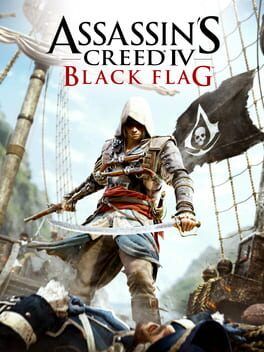

A PEGI 18 rating has quietly confirmed Assassin’s Creed Black Flag Resynced, and fans of Ubisoft’s pirate epic are already debating how far this “resync” should go in modernizing combat, ships and its still-unequaled open-world Caribbean.
The siren song of Assassin’s Creed IV: Black Flag has been getting louder for years, but a new PEGI listing has finally given it shape. Under the title Assassin’s Creed Black Flag Resynced, Europe’s ratings board has registered an 18 certificate for a project Ubisoft still hasn’t officially announced, all but confirming that one of the series’ most beloved entries is about to sail again.
PEGI’s page is light on specifics. There are tags for violence, bad language and in-game purchases, but no platform list, no release window and no detailed description. The timing is the important part. With The Game Awards sitting right next to the rating’s appearance, it looks very much like Ubisoft is clearing the last bits of bureaucracy ahead of a splashy reveal.
That alone would be notable, but Black Flag is not just another Assassin’s Creed. It is the game that turned a stealth-focused series into a full-blown pirate fantasy, and the way Ubisoft chooses to “resync” it will say a lot about how the publisher wants to revisit its back catalogue.
Why Black Flag Still Matters
Released in 2013, Assassin’s Creed IV: Black Flag arrived at a crossroads for the series and for consoles. It bridged the PS3 / Xbox 360 generation with PS4 and Xbox One, and it did the same thing narratively, taking the social stealth of Assassin’s Creed II and Brotherhood and dropping it into an open Caribbean that felt closer to a systemic sandbox.
Players stepped into the boots of Edward Kenway, a Welsh privateer turned pirate who becomes an Assassin almost by accident. That shift in perspective was central to why Black Flag resonated so strongly. Edward began as a selfish, often reckless opportunist rather than a pious assassin acolyte, and his gradual collision with the Creed gave the story an arc that felt grounded in the series’ larger lore without being consumed by it.
The true star, though, was the ocean itself. Black Flag’s Caribbean remains one of Ubisoft’s most cohesive open worlds. There was a rhythm to island-hopping that few games have matched: spot a plume of smoke, mark a fort, swing past a shipwreck, hear your crew roll into a sea shanty as a storm rolled in. Naval combat with the Jackdaw was simple by modern standards, but the cadence of broadsides, swivels and boarding actions made sea battles feel cinematic without being fussy.
On land, Black Flag was the culmination of the “classic” AC formula. Social stealth, rooftop chases and counter-based melee were still the core, and missions swung between pure assassination, heists, tail-and-eavesdrop sequences and freeform exploration. Its modern-day sections, framed as a first-person tour through Abstergo Entertainment’s offices, were divisive but quietly important for fans who followed the meta-plot.
Put simply, Black Flag is the game many fans cite when they talk about Assassin’s Creed at its most joyful. That gives Assassin’s Creed Black Flag Resynced a different kind of pressure than a routine remaster.
Ubisoft’s Recent Remakes And “Modernization” Push
Ubisoft has not treated its back catalogue as museum pieces. When CEO Yves Guillemot talked about being “excited about some remakes” that would modernize classic Assassin’s Creed titles, it signaled that the publisher sees older entries as raw material to be reshaped, not just upscaled.
The clearest template is Assassin’s Creed Mirage and the way it recontextualized the modern trilogy’s tech. Mirage itself is not a remake, but it selectively dialed back the RPG bloat of Origins, Odyssey and Valhalla, tightened its map and restored older-style stealth while still leaning on recent animation and combat infrastructure. Outside Assassin’s Creed, Prince of Persia: The Sands of Time’s long-delayed remake shows how willing Ubisoft is to tear a project down and rebuild it when a “simple” remaster no longer feels sufficient.
Black Flag Resynced looks set to follow that modernization route. Reports out of French outlet Jeux Vidéo Magazine, citing Ubisoft sources, suggest Ubi is not just repainting textures but reworking structure and systems. The modern-day Abstergo segments are allegedly being reduced or replaced entirely by extra pirate-era content, and around four hours of new material, including a Mary Read sequence cut from the 2013 release, are rumored to be back on deck.
Layered on top of that are claims that the remake folds in more RPG-style mechanics in line with Origins through Valhalla, particularly in inventory, loot and gear stats. The PEGI listing’s nod to in-game purchases also points to the series’ familiar cosmetic and resource-boost microtransactions making a return.
If that all holds true, Black Flag Resynced will sit somewhere between remake and reimagining, tuned for players who came in with the RPG era without entirely abandoning what made the original sing.
The PEGI Listing And What It Confirms
For now, PEGI itself has only confirmed a handful of hard facts: the title, the rating and the existence of in-game purchases. The absence of platforms has not stopped speculation, though, and Ubisoft’s current strategy makes some safe bets.
Given where the series lives today, PlayStation 5, Xbox Series X|S and PC look guaranteed. Ubisoft has been bullish on Ubisoft+ and its PC ecosystem, and every major Assassin’s Creed since Origins has treated those platforms as the baseline. Whether last-generation consoles or Nintendo Switch receive a cloud or scaled-down version will likely come down to technical scope and whether Black Flag Resynced is building directly on the original’s foundations or borrowing tech from newer projects like Skull and Bones.
The “Resynced” subtitle leans hard on Animus branding, hinting this is more than a visual facelift. It also leaves room for Ubisoft to justify structural changes via the fiction of a newly processed memory stream. That matters if the studio is genuinely trimming or removing modern-day sequences, which some lore fans might otherwise resist.
What Fans Want From A Modern Black Flag
With the rating effectively confirming the project’s existence, attention has shifted to a different question: what should a 2020s Black Flag feel like?
At a fundamental level, players want the same core fantasy, just sharper. A stable 60 frames per second is at the top of most wishlists, along with high-resolution assets that can bring the Caribbean’s storms, sunsets and underwater wrecks closer to the lavish vistas of Assassin’s Creed Origins and Valhalla. The original’s sea still looks striking, but water simulation, skyboxes and foliage density have all moved on, and fans expect Resynced’s ocean to feel properly next-gen.
Under the hood, combat is where opinions really diverge. The counter-heavy dueling of 2013 is visually stylish but mechanically shallow compared to later entries. Many long-time fans would prefer Ubisoft keep that cinematic flow and simply deepen enemy variety, reaction animations and timing windows. Players who arrived with Origins, on the other hand, are more at home with light/heavy attacks, hitboxes and gear-driven builds. The reported shift toward RPG systems suggests Ubisoft will try to bridge those camps, potentially by layering stagger, armor and weapon types onto a still-readable, animation-first melee system.
Ship handling is another focal point. The Jackdaw’s controls remain responsive and readable, but they were designed for older consoles and smaller crowds. Community wishlists often mention denser shipping lanes, more verticality in naval encounters and smarter enemy captains. Features like seamless boarding without hard cuts, more granular sail control and deeper upgrade paths for hulls, sails and crew tools are all being floated in fan discussions as ways to keep the Jackdaw at the heart of the experience without turning battles into stat-check slogs.
World density is the third pillar. Black Flag’s map is large, but its islands can feel sparsely populated by today’s standards. Fans talk about wanting towns that feel closer to Assassin’s Creed Unity in complexity, jungle interiors that hide systemic wildlife and bandit encounters, and more dynamic events at sea. Random storms, shipwreck rescues, emergent rival pirate crews and faction clashes between Templars, Assassins and colonial powers are all the kinds of encounters players imagine when they picture a 2025 revisit.
Perhaps the most controversial rumored change is the trimming of modern-day content. Many players happily admit they will not miss first-person office corridors and unskippable audio logs, especially if the trade-off is more time as Edward. For lore-focused fans, though, those sequences helped situate Black Flag within the wider Assassin’s Creed meta-story. If Ubisoft is restructuring them, the hope is for optional codex-style storytelling or limited, tightly written interludes rather than a full erasure.
A Balancing Act On The Horizon
Assassin’s Creed Black Flag Resynced arrives at a delicate moment for the series. Mirage showed there is still real appetite for smaller, stealth-focused adventures, while the mainline roadmap with Assassin’s Creed Shadows and beyond is committed to the RPG template. Black Flag sits at the point where those identities overlap, and the remake’s design decisions will send a clear message about which way Ubisoft wants to lean.
The PEGI rating is not a reveal trailer, but it is a line in the sand. Black Flag Resynced is real, it is close enough to need an age rating, and the phrase “in-game purchases” guarantees Ubisoft will expect it to be a live product rather than a one-and-done nostalgia piece. For fans who still hum sea shanties a decade later, the question is not whether they will return to the Jackdaw, but whether the changes waiting on deck will feel like a thoughtful refit or an unfamiliar ship carrying a familiar flag.
Until Ubisoft hoists its own colors with an official announcement, that tension is part of the excitement. Black Flag is one of the rare open-world games that people talk about in terms of memories rather than checklists. If Resynced can preserve that feeling while giving its naval battles, hand-to-hand combat and Caribbean sandbox the fidelity they deserve, this rating will mark the start of a voyage worth taking all over again.