
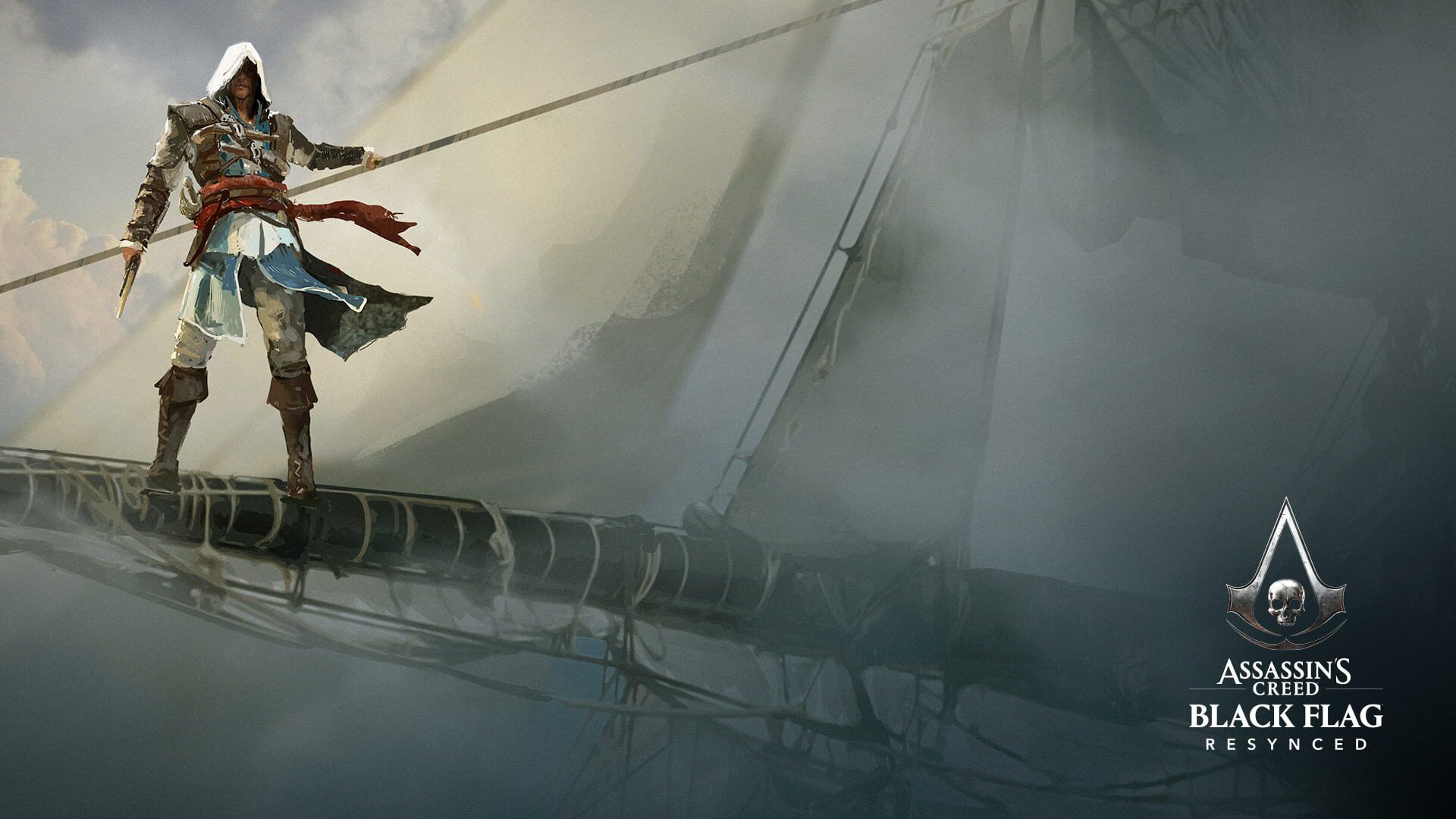

Reports point to a July 2026 launch for Assassin’s Creed: Black Flag Resynced, but Ubisoft is still silent. Here’s what’s actually been reported so far, what remains unconfirmed, and how a modern remake could update one of the series’ most beloved pirate adventures without losing what made it special.
Rumors have been circling Assassin’s Creed: Black Flag Resynced for months, but the past few weeks have turned quiet speculation into a much clearer picture of what Ubisoft is planning next for its most beloved pirate-era Assassin’s Creed.
Multiple reports now point to a specific launch window, outline broad design changes, and suggest Ubisoft is preparing a full reveal. At the same time, Ubisoft itself still has not officially acknowledged the game in public, which leaves a big gap between what has been reported and what is actually confirmed.
This is where things stand on Black Flag Resynced, why the July timing matters, and what a remake can realistically change without breaking the ship that fans still love.
What’s actually been reported about Black Flag Resynced
The current wave of Black Flag Resynced coverage traces back to reporting from Insider Gaming’s Tom Henderson, which has since been echoed and expanded on by outlets like IGN, GameSpot and DualShockers.
According to those reports, Ubisoft recently showed a roughly 30 minute presentation of Assassin’s Creed: Black Flag Resynced to select media and creators. That behind-closed-doors demo is said to have laid out the project as a full remake of Assassin’s Creed IV: Black Flag, rebuilt on an updated version of the Anvil engine for current generation platforms.
The same reporting pins a planned release date of July 9, 2026. Some articles note that the game was once targeting an earlier slot in 2026, then shifted as Ubisoft reshuffled its slate and delayed several projects. Taken together, the stories paint Resynced as a game that is well into production with a firm internal date, even if Ubisoft has yet to put that date on a public trailer.
Crucially, the reporting also describes several broad design decisions. Resynced is described as staying closer to the original Black Flag’s character focused structure instead of adopting the heavier RPG progression systems that defined Origins, Odyssey and Valhalla. Combat is reportedly influenced by the upcoming Assassin’s Creed Shadows, while the Caribbean world is being refreshed with more dynamic weather and new systemic touches. Several pieces also mention that the modern day storyline could be removed entirely, leaving the focus purely on Edward Kenway’s pirate and Assassin journey.
All of that comes from unnamed sources and internal presentations rather than any on the record statement from Ubisoft. It is detailed enough to sketch a coherent vision, but still falls under the umbrella of reporting rather than confirmation.
What Ubisoft has and has not confirmed
On the record, Ubisoft has been cautious. Executives, including CEO Yves Guillemot, have acknowledged in broad terms that multiple Assassin’s Creed remakes are in development. They have also talked publicly about wanting to revisit classic entries with modern tech and design principles. That is as close as Ubisoft has come to admitting that Black Flag Resynced exists.
The company has not officially announced Assassin’s Creed: Black Flag Resynced by name, has not dated it, and has not confirmed platforms, features or any of the specific design shifts that recent reports describe. There has been no key art or logo shared through Ubisoft’s official channels, no blog breakdown of direction, and no teaser trailer.
What fans have instead are a series of smaller signposts pointing in the same direction. A temporary ratings listing, actor comments from Edward Kenway’s performer Matt Ryan, and references in Ubisoft’s own launcher and back end have all surfaced over the last couple of years, typically disappearing quickly once noticed. None of those individually confirm the current July window or the exact scope of the remake, but they do line up with the idea that Black Flag Resynced has been in active production for some time.
Until Ubisoft puts its own stamp on the project, everything from the subtitle Resynced to the combat changes should be treated as reported information rather than settled fact.
How firm is the reported July 9, 2026 release window?
The specific July 9, 2026 date has been consistent across several pieces that all cite the same core reporting. Those stories describe July as an internal target, with July 9 presented as the current plan rather than a placeholder.
Historically, dates at this stage can shift. Ubisoft has delayed multiple Assassin’s Creed projects over the last decade and publicly pushed entire roadmaps back when internal milestones slipped. The reporting on Resynced even notes that it was once expected earlier in 2026 before moving to July, which suggests there is already at least one change on the schedule behind the scenes.
It is reasonable to read the July timing as a strong indicator of Ubisoft’s current intention for Black Flag Resynced rather than as a guaranteed arrival. Until a trailer with a date is out in the world, the game is still in the familiar pre announcement gray zone where internal calendars can move in response to production realities or broader portfolio strategy.
What a Black Flag remake could realistically change
With no official feature list, it is easy for discussion around Resynced to drift into blue sky wishlists. The reporting already available paints a picture of upgrades that are ambitious but still grounded in what a modern remake can reasonably tackle.
The most obvious layer is visual. A 2013 game being rebuilt for PlayStation 5, Xbox Series X|S and modern PC hardware invites expectations of higher fidelity models, denser cities and islands, longer draw distances at sea and more convincing lighting and water. Reports of more dynamic weather imply a Caribbean that shifts more dramatically under storms, squalls and clear skies, with rougher seas that have a real impact on visibility and navigation.
Combat is another area where a remake can evolve significantly without tearing up the foundations. If Resynced is really borrowing ideas from Assassin’s Creed Shadows, that suggests crisper animations, more readable enemy behavior and a greater emphasis on timing, spacing and stealth planning. Black Flag’s original combat leaned on flowing counters and chain kills. A modern take can refine that into something that still feels swashbuckling but is less reliant on auto win counter windows.
The naval systems that defined Black Flag are the trickiest part to touch. Small refinements are likely, such as smoother transitions between ship and on foot sequences, more nuanced boarding encounters and a less fiddly upgrade path for the Jackdaw. Completely overhauling the core loop of spotting, chasing and shelling ships would be far more disruptive and runs against the reports that frame Resynced as faithful to Black Flag’s original spirit.
Quality of life is where a remake can make the biggest difference without changing what the game is. Streamlined menus, better quest tracking, more generous fast travel and improved stealth feedback can all sit comfortably inside Black Flag’s established structure. Even tweaks to collectibles and side activities can focus on surfacing the best content faster rather than bloating the map with new distractions.
The reported removal of the modern day storyline, if accurate, would be the boldest structural change. Black Flag used its present day segments as a meta riff on Ubisoft itself, playing with player and developer perspectives through Abstergo Entertainment. Cutting that layer would tighten the focus on Edward Kenway’s story, but it would also remove the series framing device that connects each historical era. How Ubisoft balances that trade off, or whether the reports are overstating the degree of removal, remains an open question.
What remains unconfirmed about Resynced’s design
Beyond the high level reports of combat changes and modern day cuts, large parts of Black Flag Resynced’s design are still unknown. There is no clear information on whether the world map has been significantly altered, whether new story content has been added, or how deeply systems like ship customization and crafting have been reworked.
The question of progression is especially important. Sources say Resynced is not leaning into the RPG style of recent Assassin’s Creed entries, but there is plenty of room between Black Flag’s original approach and the freeform builds of Odyssey or Valhalla. Until Ubisoft shows menus, skill trees or lack thereof, it is guesswork to pin down how much room there will be to shape Edward’s capabilities.
Multiplayer is another blank space. The original Black Flag launched in an era when competitive Assassin’s Creed multiplayer was still part of the package. Ubisoft has since shifted toward separate multiplayer initiatives and live service projects. None of the current reporting commits either way on Black Flag Resynced, which makes it safer to assume a single player focus until proven otherwise.
Even smaller questions, like how much of the original voice work is being reused, whether cut missions are being restored, or how Ubisoft is handling accessibility features, remain unanswered. These are the kinds of details that typically show up in deep dive trailers and preview coverage that only follow a formal reveal.
Why Black Flag still matters enough to revisit
Assassin’s Creed IV: Black Flag occupies a particular place in the series’ history. Launched in 2013 just after Assassin’s Creed III, it took the naval experiments of that game and expanded them into a full open sea framework. It pushed the concept of Assassin fantasy to the edges of the Caribbean, with a protagonist in Edward Kenway who starts as a self interested pirate and gradually collides with the Assassin and Templar conflict.
What made Black Flag stand out was the way all of its pieces contributed to a clear fantasy. Sailing into the wind, spotting sails on the horizon, ordering broadsides, hearing sea shanties rise from the crew and then diving into a harbor town for stalking contracts created a seamless loop of piracy and stealth. It felt looser and more playful than some of its predecessors without losing the series’ focus on historical tourism and conspiratorial plotting.
In retrospect, Black Flag also marks one of the last mainline entries before Assassin’s Creed shifted fully toward RPG scale and structure. It is a snapshot of a particular design philosophy where authored missions, tightly paced stories and clearly bounded maps were the priority. That is part of why it is such a tempting candidate for a remake: it lets Ubisoft hold up an older style of Assassin’s Creed while modernizing the parts that have aged most obviously.
The game’s influence lingers in places beyond its own sequel hooks. Later entries kept elements of its freer movement between stealth and open combat. Ubisoft’s broader experiments with naval games, including Skull and Bones, trace a line back to the work done to make the Jackdaw and its systems feel convincing. For many players, Black Flag is the shorthand answer when asked which Assassin’s Creed they would most like to replay with modern polish.
A remake taps into that legacy not by rewriting what Black Flag was, but by making it easier to recommend in 2026 than a 2013 release can be on its own.
The line between expectation and reality
As the July reports gain traction, the biggest challenge for Assassin’s Creed: Black Flag Resynced is not technical. It is managing expectations around a game that sits in a particularly nostalgic corner of the franchise.
The reporting points toward a focused remake that respects the structure and tone of the original while layering in visual upgrades, refined combat and systemic improvements. There is little to suggest that Ubisoft is turning Black Flag into a massive loot driven RPG or a live service platform. At the same time, nothing is truly settled until the studio speaks for itself and shows gameplay.
For now, the safest reading is that Black Flag Resynced is real, is targeting July 2026 internally, and aims to update a fan favorite without pulling it apart. Everything else from the exact scope of its changes to the fate of its modern day story sits in the realm of credible but unconfirmed reporting.
Until Ubisoft steps onto the deck with an official reveal, Black Flag’s return remains a rumor driven story about one of the series’ most enduring voyages, sailing toward a date that is set in pencil rather than carved into the mast.