
A reported look at the attention around Assassin's Creed Mirage backwards PC searches, what is actually sourced, and why Mirage's stealth-first design would suit a challenge run.
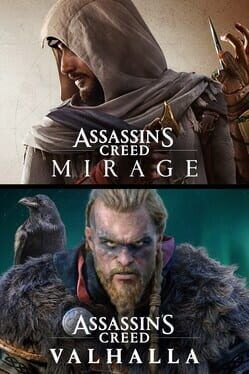
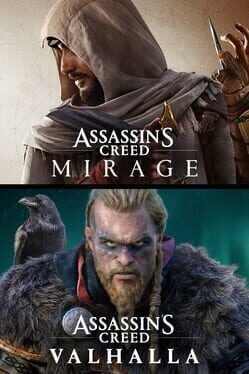
Image: IGDB
Store links: Assassin's Creed Mirage: Master Assassin Pack on Steam, Assassin’s Creed Mirage: Master Assassin Edition on Steam
The search term is real, but the run is not verified in the supplied record
The strongest concrete development around Assassin's Creed Mirage backwards PC is also the source of the confusion: a Last Word on Gaming article dated July 31, 2026 uses the phrase to discuss PC access and Ubisoft Connect entitlements, not a documented player completing Baghdad in reverse. That creates an awkward tension for anyone arriving through search expecting an AC Mirage challenge run. The phrase reads like the setup for a strange PC stunt, but the available source material does not provide a runner name, video, ruleset, completion time, route, or community verification for a backwards playthrough.
That distinction matters because Assassin's Creed challenge culture tends to live or die on proof. A no-damage run, no-kill stealth route, HUD-less contract chain, or reverse-route campaign needs visible constraints and repeatable rules before it becomes a reported achievement rather than a catchy search phrase. In the provided sources, the confirmed story is narrower. Last Word on Gaming says Assassin's Creed Mirage is available to certain Xbox owners as a free PC digital copy through Ubisoft Connect, alongside other Ubisoft titles. Wikipedia and PCGamingWiki list Mirage as a Windows release from October 5, 2023, developed by Ubisoft Bordeaux and published by Ubisoft. IGN and Game8 maintain walkthrough and map resources for the game.
So this piece should be read in two lanes. The confirmed lane is about PC availability, platform listings, and Mirage's structure. The interpretive lane is about why the game would be a strong candidate for a backwards or reverse-order challenge if players are attempting one on PC. What is not confirmed here is the viral status of a specific run.
What the sources actually say about Assassin's Creed Mirage on PC
Last Word on Gaming frames Assassin's Creed Mirage as backwards compatible on PC, then explains that players who own certain Ubisoft games on Xbox can claim PC digital copies through Ubisoft Connect. The outlet includes Assassin's Creed Mirage in that group, along with Assassin's Creed Valhalla, Avatar: Frontiers of Pandora, Far Cry 6, Prince of Persia: The Lost Crown, Skull and Bones, Watch Dogs Legion, and other Ubisoft releases. The article's wording uses backwards compatibility in a broad way. It does not describe a new gameplay mode, a performance patch, a backwards input mod, or a challenge-run feature inside Mirage.
The platform facts are easier to pin down. PCGamingWiki lists Assassin's Creed Mirage's Windows release date as October 5, 2023. Wikipedia lists the same date for PlayStation 4, PlayStation 5, Windows, Xbox One, and Xbox Series X/S, then lists iOS and iPadOS releases on June 6, 2024. IGN's guide page identifies Ubisoft Bordeaux as developer and Ubisoft as publisher, and it lists the console and iPhone 15 Pro platforms in its guide header. The Steam listing supplied in the source material confirms there is a Steam store page for Assassin's Creed Mirage, although the provided scrape is mostly age-check and site-navigation text rather than pricing, requirements, or user-review data.
For readers asking a practical question, the sourced answer is this: Assassin's Creed Mirage PC access exists through Windows, a Steam listing exists, and Last Word on Gaming reports a Ubisoft Connect path tied to ownership of certain Ubisoft games on Xbox. The supplied material does not establish current price, PC system requirements, Steam Deck status, save-transfer details, or whether every region has the same entitlement terms.
Why Mirage is unusually well suited to self-imposed routes
Even without a verified backwards PC run in the record, Mirage is exactly the sort of Assassin's Creed entry that invites players to impose strange rules on themselves. Wikipedia describes Mirage as a smaller-scale game than recent predecessors, built around a return to stealth, parkour, and assassinations over the heavier role-playing systems that defined later entries such as Assassin's Creed Valhalla. That design choice changes the rhythm of a challenge run. Instead of optimizing a sprawling RPG map full of level gates and gear checks, a Mirage route can focus on line of sight, patrol timing, tool use, rooftop flow, and how cleanly Basim can enter and exit a hostile space.
That is fertile ground for a backwards concept. A reverse-order challenge in a stealth game is not as simple as walking backward through missions. It can mean tackling available investigations in an unnatural order, routing the city from late-game districts back toward earlier ones, or entering spaces from escape routes rather than intended approaches. Mirage's emphasis on urban navigation gives that idea a cinematic charge. Baghdad is not merely a backdrop in the way an empty overworld can be. Its rooftops, alleys, courtyards, haybales, and guarded interiors are part of the pacing machine.
IGN's walkthrough description reinforces that structure. The guide frames Basim's journey as a rise from street thief to contract killer and says players will rely on stealthy assassinations, opportunities inside objectives, and the series' familiar haybale escapes. Game8's guide hub points to main quests, contract missions, outfits, tools, skills, cosmetics, and beginner guides. Those categories suggest the kind of variables challenge runners tend to manipulate: which tools are allowed, how much gear progression is permitted, whether contracts can be used for resources, and how strictly a route avoids open combat.
The appeal comes from Mirage's tension between control and improvisation
A good Assassin's Creed challenge run needs the player to feel cornered without the game becoming unreadable. Mirage has that balance on paper because its fantasy is built around preparation followed by a decisive strike. In a normal playthrough, the player studies a location, finds access points, uses tools, chooses a line through guards, and vanishes after the kill. Reverse constraints disrupt that clean rhythm. They can force Basim to approach an objective from a poor angle, delay upgrades that would normally smooth out a mission, or cross Baghdad in routes that feel inefficient but dramatic.
That is where Mirage's smaller scale becomes an advantage. A massive RPG installment can turn self-imposed rules into long stretches of travel, stat management, and attrition. Mirage's reported design philosophy, as summarized by Wikipedia, leans back toward older Assassin's Creed priorities. Stealth and parkour are the center of the experience. For a viewer, that means the interesting part of the challenge can happen moment by moment: a guard almost turning, a rooftop jump barely landing, a tool spent too early, an assassination window closing because the runner entered from the wrong side.
Dante Rossi's action-adventure lens is useful here because Mirage's set-pieces are smaller but sharper than the imperial-scale battles of some modern open-world games. The spectacle is not only in the size of the arena. It is in the cut from rooftop silence to sudden pursuit, the second when Basim drops into a restricted zone, and the way a planned escape can collapse into hand-to-hand survival. If players are drawn to the phrase Assassin's Creed Mirage gameplay in relation to challenge runs, that is likely the hook: the game can make a simple rule feel like a scene.
Guides and maps make the idea easier to test, but they do not prove the run
The supplied guide sources show that Mirage has the documentation infrastructure players usually need to formalize a stunt. IGN maintains an Assassin's Creed Mirage guide with interactive maps for Baghdad and AlUla, checklist categories for enigmas, historical sites, lost books, artifacts, mysterious shards, main missions, side quests, weapons, outfits, cosmetics, collectibles, gear chests, achievements, and trophies. IGN also says its walkthrough covers main missions and offers strategies for difficult foes and objective opportunities.
Game8's Mirage wiki similarly organizes the game around main quests, contract missions, outfits, tools, skills, cosmetics, beginner guides, and mission lists. Its visible mission breakdown starts with prologue missions such as The Master Thief of Anbar and A New Beginning, then moves into assassination arcs. That kind of structure is useful for routing because it helps players identify what the game treats as sequential, what can be delayed, and what resources are tied to progression.
But guide availability is not proof of a community achievement. A player can use IGN or Game8 to plan an AC Mirage challenge run, and a reverse route could become easier to define with those maps and checklists. The provided sources still do not confirm that a specific backwards run has gained attention, nor do they show social posts, livestreams, speedrun.com categories, Reddit threads, YouTube uploads, or Twitch clips. The safe reading is that Mirage has the right ingredients and the search phrase has an obvious pull, while the documented evidence stops short of confirming the stunt as a reported event.
The PC angle matters because access and routing tools shape experimentation
Assassin's Creed Mirage PC is an important part of the discussion because PC is often where challenge formats become easiest to capture, compare, and refine. The supplied sources do not provide mod support, frame-rate data, input-latency measurements, or performance benchmarks, so those details cannot be claimed here. What can be said is that Mirage has a Windows version listed by PCGamingWiki and Wikipedia, and the Steam page exists in the supplied material. Last Word on Gaming also reports a Ubisoft Connect PC-copy path for some Xbox owners of listed Ubisoft games.
That access question is practical. If someone saw Assassin's Creed Mirage backwards PC and wondered whether they need to rebuy the game to try a challenge route, Last Word on Gaming says some Xbox owners may be able to claim a free PC digital copy through Ubisoft Connect if they meet the conditions described by the outlet. Because the source material does not include Ubisoft's own support page or full terms, players should verify eligibility inside Ubisoft Connect before treating that as guaranteed.
The bigger point is that availability can turn a joke into a project. A player who already owns Mirage on console but gains PC access has a lower barrier to recording attempts, studying routes alongside interactive maps, and iterating on mission order. That does not make the backwards run confirmed. It does explain why a phrase blending PC access and reverse-play challenge energy would travel among Assassin's Creed fans who enjoy testing the seams of a stealth sandbox.
For now, treat the backwards run as an idea to verify, not a finished record
There is a strong article to be written once a specific Assassin's Creed Mirage backwards PC run is documented with a video, ruleset, route notes, and community response. The current supplied sources do not contain that evidence. They support a different but related story: Mirage is available on PC, Last Word on Gaming reports a Ubisoft Connect cross-ownership path for certain Xbox owners, and the game itself is built around the compact stealth, parkour, and assassination design that makes self-imposed challenges appealing.
That leaves fans with a useful checklist of questions. Is the backwards run about mission order, movement direction, map routing, or progression restrictions? Are tools allowed? Are deaths permitted? Does the runner use New Game Plus, a fresh save, or a completed equipment setup? Are guide maps allowed, or is routing done blind? None of those rules appear in the provided material, and without them the phrase remains too loose to evaluate.
Still, the fascination is understandable. Mirage places Basim in a dense city where timing, approach, and escape define the drama. Its return-to-roots structure gives players enough clarity to bend the rules without losing the thread. If a verified backwards route does emerge, Assassin's Creed fans will not be watching because the premise is silly. They will be watching to see whether Baghdad's carefully arranged rooftops, contracts, and assassination spaces can hold together when the intended rhythm is played in reverse.