
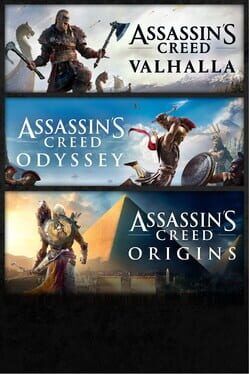
Eric Baptizat, director of Assassin's Creed Valhalla, has returned to Ubisoft as game director for the Assassin's Creed brand after work at EA Motive.
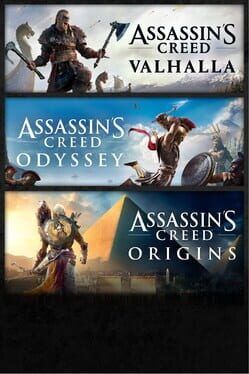
Image: IGDB
A Valhalla lead is back at the top of Assassin's Creed game direction
Eric Baptizat has returned to Ubisoft as game director for the Assassin's Creed brand, according to a LinkedIn announcement from Assassin's Creed head of content Jean Guesdon cited by VGC, Eurogamer and GamingBolt. The confirmed development is simple, but the tension around it is larger: Ubisoft is bringing back a senior creative figure from one of the series' biggest modern entries at a moment when the company is reorganizing how its marquee franchises are steered.
Guesdon described Baptizat as coming back to the Assassin's Creed family after a career that included 16 years at Ubisoft and a stint at EA Motive, where he led the Dead Space remake. In the post quoted by multiple outlets, Guesdon said Baptizat is returning as the brand's new game director and pointed to his work on Black Flag, Origins and Valhalla as evidence of his connection to the series.
That title matters because this is not being described as a single-project hire. VGC reports that Baptizat will lead game direction for the series going forward. GamingBolt similarly says he will take on the role of the franchise's game director. Ubisoft has not, in the provided source material, detailed exactly how much authority the role gives Baptizat over individual studios, production schedules or specific upcoming games. The public wording still points toward a broader creative seat than a standard project assignment.
Baptizat's Assassin's Creed record spans the series' biggest pivots
The strongest reason this return reads as consolidation is Baptizat's history inside Assassin's Creed. VGC reports that he joined Ubisoft in 2005 and stayed for 16 years. During that run, he was lead game designer on Assassin's Creed Black Flag, senior game designer on Assassin's Creed Unity, project lead on game design for Assassin's Creed Origins and game director on Assassin's Creed Valhalla.
Those credits cover several different versions of Assassin's Creed. Black Flag is remembered for turning naval movement, exploration and pirate fantasy into the game's dominant rhythm. Unity pushed dense urban traversal and crowd-heavy city design. Origins rebuilt the series around RPG progression, open-world regions and a heavier combat model. Valhalla extended that direction into a long-form Viking saga built around raids, settlement progression and large regional arcs.
That does not prove what Baptizat will push next. It does explain why Ubisoft would bring back this particular Assassin's Creed director for a brand-level role. His resume sits across the franchise's swings between stealth, parkour, naval spectacle, RPG systems and open-world scale. If Ubisoft wants future Ubisoft Assassin's Creed games to feel less like separate experiments and more like chapters directed by a single creative hand, Baptizat is one of the few returning veterans whose credits touch most of the modern formula's load-bearing beams.
His EA Motive chapter adds a different kind of credibility
Baptizat's time away from Ubisoft is also part of the story. VGC says that after leaving Ubisoft, he joined EA's Motive Studio, where he was game director on the Dead Space remake and one of the game design directors on Battlefield 6. Eurogamer also reports that he directed the Dead Space remake and worked as a game director on Battlefield 6, while GamingBolt says he worked on games including the Dead Space remake and Battlefield 6 before returning.
The outlets differ slightly in how they phrase his Battlefield credit, with VGC specifying one of the game design directors and Eurogamer using game director. They agree on the broader point: Baptizat did not leave Assassin's Creed and disappear into consultancy or a quiet support role. He went to Motive, helped lead a high-profile remake and worked on another major EA franchise.
The Dead Space remake credit is especially relevant to an action-adventure audience because it is a lesson in controlled reconstruction. That project had to respect the shape of an established classic while rebuilding its feel, pacing and technical presentation for a modern audience. Assassin's Creed faces a different problem, but a related one: how to keep a long-running series recognizable while preventing each entry from feeling like it is trapped by old expectations. Guesdon's LinkedIn message, as quoted by VGC and Eurogamer, emphasizes Baptizat's gameplay craft, rigor and collaborative spirit. Those are corporate-friendly words, but they are also the exact qualities a franchise lead needs when multiple studios, settings and systems are in motion.
The return lands during a wider Ubisoft reshuffle
Eurogamer places Baptizat's return in the context of a changed Ubisoft. The outlet notes that he rejoins after the company split into Ubisoft and Vantage Studios through a partnership with Tencent, with Vantage Studios set to lead development for the Assassin's Creed, Far Cry and Rainbow Six franchises. That context changes how the appointment reads. This is not merely a veteran coming back to a familiar building. It comes as Ubisoft is putting clearer walls and leadership structures around its biggest brands.
GamesRadar frames the move as Ubisoft bringing back another Assassin's Creed veteran to help stabilize the series while the company tries to reverse its fortunes. That is an interpretation, not a formal Ubisoft statement, but it fits the broader pattern described in the sources: a major franchise, a returning senior creative, and a publisher reorganizing around its most bankable properties.
For players, the immediate question is whether this will affect the feel of future Assassin's Creed games. The honest answer is that no outlet in the provided material has confirmed a design mandate. Baptizat's appointment does not confirm smaller maps, larger worlds, a return to classic stealth, heavier RPG systems or a new combat model. It does, however, suggest Ubisoft wants recognizable creative oversight at the brand level, especially after years in which Assassin's Creed has moved from Origins' RPG rebuild to Valhalla's sprawl, Mirage-style classic callbacks, and newer reported projects with different ambitions.
Hexe and Jade remain the obvious questions, but most details are still unannounced
The sources connect Baptizat's new role to future Assassin's Creed games, but Ubisoft has not provided a full public roadmap in the material supplied. GamingBolt says Ubisoft has confirmed Codename Hexe and Codename Jade are in the works. The same outlet describes Hexe as believed to be a major PC and console game and a likely candidate for the next big release, but that portion is presented as expectation rather than a dated Ubisoft announcement.
GamingBolt also cites rumors about Codename Hexe, including claims of a large-scale but comparatively linear map, more fluid movement, mystical elements, a German Witch Trials theme, a protagonist named Anika and a darker visual style. Those claims should be treated as rumor and leak reporting. They are not confirmed design pillars in the provided source material, and readers should not take Baptizat's return as verification of any of them.
Eurogamer similarly notes that Hexe is on the horizon but says little is known beyond an insider claim that it is at least one year away. Again, that timing is not presented as an official release date. There are no confirmed prices, final platforms, editions, upgrade paths or performance details in the supplied sources. If you are waiting for the next major Assassin's Creed, the practical guidance is to watch for Ubisoft's own reveal beats rather than reading too much into a personnel announcement, even one as significant as this.
Black Flag's renewed presence gives the appointment extra texture
Baptizat's return also lands as Black Flag is back in the conversation. VGC describes Baptizat as lead game designer on Assassin's Creed Black Flag and says the latest release in the series, Assassin's Creed Black Flag Resynced, is a remake of the game he originally worked on. GamingBolt likewise refers to Black Flag Resynced as a remake of 2013's Assassin's Creed 4: Black Flag, released on PC, PS5 and Xbox Series X/S, with post-launch patches following release. Eurogamer reports that Resynced surpassed its annual sales goals in roughly 14 days.
Those details matter because Black Flag remains one of the cleanest examples of Assassin's Creed finding a strong fantasy and building every layer around it. Sailing, boarding, island exploration, sea shanties and Edward Kenway's personal arc worked in concert. The series has often been at its best when traversal, combat rhythm and narrative stakes are aligned around a specific promise rather than spread thin across every possible open-world feature.
That is where Baptizat's old work and new job intersect. A brand-level Assassin's Creed game director cannot personally solve every mission structure, animation system or release calendar. But the role can influence the questions each project must answer early: what fantasy drives the player forward, how does movement support it, how often does combat interrupt or amplify it, and where do set pieces land in the overall pace. For a franchise with multiple teams and multiple eras in play, those questions are the difference between scale and direction.
A clear signal, but not a finished roadmap
The confirmed story is that Eric Baptizat is back at Ubisoft as game director for the Assassin's Creed brand, announced by Jean Guesdon on LinkedIn and reported by VGC, Eurogamer and GamingBolt. His Ubisoft past includes Black Flag, Unity, Origins and Valhalla. His time away includes the Dead Space remake at EA Motive and work connected to Battlefield 6, with some variation in how outlets describe that Battlefield role.
The interpretation is that Ubisoft is tightening creative control around Assassin's Creed as the company reorganizes and prepares future entries. That reading is supported by the breadth of the new title and by Eurogamer's context around Vantage Studios and Tencent, but the specific results are still unknown. No source here confirms that Baptizat is redesigning Hexe, changing Jade, setting release windows or reversing the franchise's current direction.
For now, this is a personnel move with real creative weight rather than a content reveal. It tells players who Ubisoft trusts to help steer Assassin's Creed's next stretch. It does not yet tell them what those games will cost, when they will arrive, how they will perform or which version of Assassin's Creed they will resemble. In a series built on leaps across centuries, the next jump is still hidden. Ubisoft has simply shown who will be closer to the edge when it happens.