
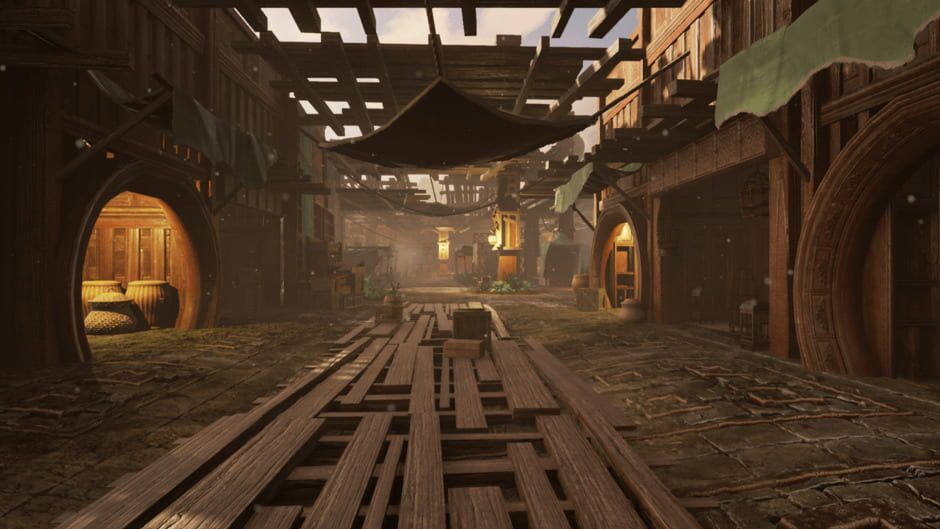

Ashes of Creation’s Early Access launch has been a patience test, but beneath the queues, rubberbanding, and harsh XP debt, there is already a glimpse of the ambitious systems that could eventually set it apart.
Ashes of Creation has finally landed on Steam in Early Access, and the first week has made one thing painfully clear: this is not a soft launch, it is very much an alpha build the public has paid to help test. If you walk in expecting a nearly finished theme park MMO where Early Access just means a few missing raids, you are going to bounce off hard.
If you go in understanding that this is a long term experiment, with wipes ahead and systems still half bolted onto the chassis, there is something worth paying attention to beneath the instability.
Queues, Servers, And The Patience Tax
The headline experience for a lot of players in week one has not been heroic adventure through Verra so much as staring at a queue number that barely moves. At peak hours, servers have been hard capped to preserve stability, which means login times can stretch well past an hour for popular regions.
Community reports and coverage line up on the pattern. The first moments after launch were chaotic, with some players sitting in apparently frozen queues and others slipping through quickly depending on time of day and server choice. Over the week, things have improved slightly but long waits remain common during prime time.
The design here is intentional rather than simply neglectful. Ashes is simulating complex node growth, heavy player counts in small starter regions, and a combat system that leans on accurate positioning. Intrepid has chosen to throttle population rather than let performance completely crater. For players on the outside looking in, though, that nuance does not matter much. They bought a ticket and are still stuck outside the park.
Performance: Gorgeous, Until It Is Not
Once you are in, the next hurdle is performance. On powerful PCs, with everything cranked up, Ashes of Creation can look spectacular. Forests feel dense, lighting sells the mood, and the early node settlements have enough detail to avoid that flat, placeholder alpha vibe. Even the character creator, while missing some hair variety, sets a decent baseline for what full release can reach.
The problem is how often the game falls apart under load. Rubberbanding is a frequent complaint, especially in heavily farmed quest hubs. Combat can swing from responsive and snappy to slideshow in seconds when too many players pile into the same space or when the server decides it has had enough. NPCs and enemies sometimes teleport or delay their animations just enough to make careful ability timing feel pointless.
There is also a layer of friction in the controls and UX that makes all of this feel rougher than it should. Interact is bound to one key on foot and another on mounts. You cannot talk to NPCs while mounted, which turns every hand in into a mount and dismount ritual. Mount sprint uses an ability while your character sprint uses a modifier key. None of this is game breaking, but together it contributes to that unmistakable alpha feel.
For a title that sells the fantasy of large scale sieges, caravan ambushes, and sprawling node wars, the current network stability and responsiveness are not there yet. That matters for players invested in PvP especially, where a mistimed dodge because the server hiccuped can be the difference between a victory clip and a death recap.
Death, XP Debt, And Old School Pain
One of the most divisive pieces of Ashes of Creation’s design has already surfaced in Early Access: the experience debt system. When you die, a chunk of progress is clawed back in the form of a debt that must be worked off before you start moving forward again.
For players who grew up on Ultima Online or Final Fantasy XI, the idea of punishing death with lost progression might feel like a nostalgic return to risk. For a lot of modern MMO players, especially those juggling families and limited time, it feels like a direct attack on their schedule. Time spent climbing a level bar just to slide backward after a few unlucky pulls or a lag spike is a bitter pill.
The criticism here is not about having consequences at all. Games like EVE Online have proved you can create brutal, high stakes loss through gear, ships, and territory without literally reaching back in time and erasing character progression. In Ashes, that line is crossed immediately in Early Access, before players have any attachment to the world or any reason to embrace that risk beyond curiosity.
Combined with bugs and performance issues, XP debt amplifies frustration. When a death feels like it stemmed from rubberbanding or a UI bug, the penalty feels unfair, and that sentiment has fueled a lot of early negative impressions.
Combat And Classes: A Glimpse Of The Good Stuff
Underneath the technical mess, Ashes of Creation’s combat system shows why so many people were excited in the first place. Archetypes feel flexible rather than locked into cliché. A Rogue is not just a stealth ambusher. It can be specced into bleeds and damage over time, controlling fights through attrition instead of short burst windows.
The blend of tab targeting and positional play creates moments where your choices matter. Skills that reward flanking, or that grant bonuses based on where you engage from, make movement more than just an animation. When servers settle down, dodging, blocking, and weaving combos together feels surprisingly satisfying.
There are annoyances. Auto attack behavior is not as intuitive as it should be, and animation timing sometimes fights the camera. But across multiple archetypes, you can already see the bones of a system that could flourish in PvP and challenging PvE if Intrepid can solve the underlying latency and performance issues.
Content And Systems: What Is Playable Right Now
The other major first week reality check comes from how content is structured. Early levels lean heavily on quests, familiar MMO fare to ease players into the basics of combat, travel, and crafting. Those story threads run decently through the early teens, but coverage and player reports note that they thin out surprisingly quickly compared to a traditional theme park.
That is by design, not just a matter of incomplete content. Ashes of Creation wants players to pivot from linear quest chains to systems driven progression as they move deeper into Early Access. Gathering, crafting, running commissions, world events, and most importantly contributing to node development are supposed to carry much of the weight.
Node mechanics, which sit at the heart of the game’s identity, are online in a foundational way. Zones start as wilderness, then level up as players kill mobs, complete nearby tasks, and generally spend time there. As a node advances, vendors appear, services unlock, and the area visually transforms into a small settlement. Competing nodes can be starved of experience and fall behind, setting up the political and economic rivalries that Ashes has been pitching for years.
What is missing is the full chain of consequences that system promises. Node sieges, meaningful political offices, long term trade routes that reshape entire regions, and the high level social gameplay that comes with mayorships and city building are not in their final forms. You can see proto versions, but you cannot yet live the fantasy of being the power behind a metropolis or the terror that burns one down.
Artisan systems, like gathering and processing, are similarly in a partial state. You can harvest, refine, and craft, and those loops already give you something to do once the quest log dries up, but the depth and specialization Intrepid has outlined in past reveals are not fully here. As of this Early Access window, they feel more like a scaffolding than the deep economic networks long term fans are expecting.
The Ambition Gap: What Is Still Aspirational
For people watching Ashes of Creation from a distance, the big question is how much of its bullet list vision has made it into the first publicly purchasable build. The answer is that the core pillars are present in outline, but not yet integrated into a cohesive experience.
The dynamic node system exists, but the cascading regional politics and wars it is supposed to trigger are mostly theoretical. Caravans, PvP flagging, and corruption mechanics can be tested, but they are not yet playing out at the scale where reputation, trade, and risk all intersect to form a living sandbox. Naval content and large siege warfare, both heavily marketed features, are either absent or only accessible in scheduled test formats.
On the other hand, enough pieces are live that long term watchers can start to judge more than just a design document. You can feel how a world without fixed capital cities might evolve when players cluster in one node and leave another to languish. You can see how death penalties and open world PvP rules might create a high tension environment that some will love and others will despise.
The gap between this and what Intrepid describes for launch remains large. But crucially, it no longer feels hypothetical. Early Access shows that the studio is willing to ship rough implementations of its ideas and iterate in public rather than keeping everything hidden until beta.
Should You Jump In Now Or Wait?
After a week, Ashes of Creation’s Early Access looks like exactly what veteran MMO players feared and hopeful backers expected: an undeniably rough build with real server problems, punishing systems, and missing content, wrapped around a genuinely different take on how an MMO world should function.
If you are the kind of player who hates wipes, despises losing XP, and has no patience for fighting both bugs and queues just to experiment with systems that may change dramatically, you are probably better off watching from the sidelines for now. There will be plenty of footage, patch notes, and community reports to track whether Intrepid can stabilize performance, refine UX, and sand down the most hostile edges of death penalties.
If, instead, you are curious about how node driven MMOs actually feel in practice, and you can treat Early Access as a paid alpha where your main reward is knowledge rather than permanent progression, there is already something fascinating to poke at. The first week has proven that Ashes of Creation is not vaporware. It is real, messy, often frustrating, but occasionally brilliant.
The next few months will decide whether that brilliance grows faster than the player base’s frustration.