
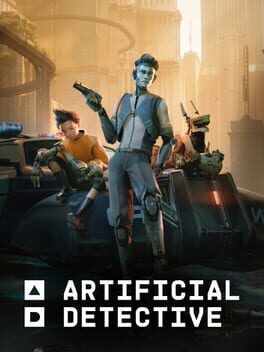

VIVIX’s debut turns a wisecracking robot into the last detective standing in a decopunk metropolis, blending Control-style spectacle, Dead Space tension, and a hooky mystery about the disappearance of humanity.
Artificial Detective’s pitch is the kind of high‑concept elevator line that lodges in your brain and refuses to leave: you are the last working cop in a city with no humans left to protect.
In Conglomerate North, a vast decopunk metropolis of chrome spires and flickering neon, humanity has simply vanished. In their place, rogue machines prowl rain‑slick streets and art deco plazas. You wake up as AD 2846, a lanky, wisecracking robot detective with more questions than intact memory sectors, and get handed the most important case in the world: figure out what happened to everyone.
That mystery hook is the spine of Artificial Detective, the debut third‑person action adventure from VIVIX, a new studio made up of developers and artists who have worked on Control, Dead Space, Call of Duty: Modern Warfare 2, and Netflix’s Love, Death & Robots. The game is targeting a 2027 launch on PS5, Xbox Series X|S, and PC, and its reveal at the Xbox Partner Preview landed like an instant tone‑setter for the generation’s next wave of stylish sci‑fi.
A robot cop with a past, in a city that wants him dead
Artificial Detective is not just about a cool robot doing cool robot things. AD 2846 was built to assist a human detective, and those memories linger in scattered fragments. The reveal materials tease glitchy flashbacks and half‑remembered conversations, enough to suggest that the disappearance of humanity and the fate of AD’s former partner are tightly intertwined.
That dual mystery gives the premise a sharper edge than a simple “where did everyone go?” hook. You are not an omniscient savior swooping in after the fact. You are a leftover tool from a world that no longer exists, trying to reconstruct both the crime and your own place in it. Every clue about humanity’s fate is also a clue about who AD used to be, and why a robot cop was left on the shelf when the lights went out.
It helps that AD is not written as a stoic slab of metal. The team frames him as a sarcastic, stylish presence, somewhere between RoboCop’s deadpan authority and C‑3PO’s anxious charm. That tone runs through the reveal trailer, where quips cut through tense shootouts and quiet environmental storytelling. It is a city of empty diners and silent train stations, but the lead is never completely humorless.
Decopunk, neon, and the fingerprints of Control and Dead Space
VIVIX calls Artificial Detective a “decopunk” adventure, and the label feels earned the moment Conglomerate North appears on screen. Instead of the usual grungy rain‑drenched cyberpunk, this is a metropolis built from 1930s‑style art deco geometry, then pushed into a far‑future register. Gleaming towers taper into the clouds, train lines carve perfect arcs between monolithic stations, and interiors feel like high‑end hotel lobbies frozen mid‑evacuation.
The Control pedigree shows in how those spaces are composed. Streets are clean yet eerie, with strong, graphic silhouettes and lots of negative space that lets lighting do the storytelling. A single blinking billboard or a pile of abandoned luggage on immaculate marble flooring says more than paragraphs of lore dumps. Dead Space’s influence, on the other hand, is visible in the way the world is framed: long shadowy corridors, shapes lurking at the very edge of visibility, and a constant sense that something mechanical is watching from just beyond the lights.
Those visual instincts are no accident. VIVIX’s roster includes artists and developers who have worked on Control’s brutalist weirdness, Dead Space’s industrial horror, and the kinetic vignettes of Love, Death & Robots. In motion, Artificial Detective looks like a playable fusion of all three. Robots sport intricate, almost over‑engineered silhouettes, part retro appliance and part military hardware, while AD himself has the clumsy elegance of a machine that was built to stand beside humans in tailored suits, not soldier alone on the frontlines.
It is the contrast that sells it. Conglomerate North looks pristine from a distance, but every alley and upper level reveals the rot: malfunctioning maintenance drones welding in wrong places, propaganda displays still cycling through messages no one is around to read, and clusters of hostile machines that have reinterpreted their directives in frightening ways.
Companions that turn the investigation into a team effort
AD 2846 is not exploring this ghost city alone. Early footage and previews introduce Mowglie, a young human girl who appears to be one of the last people left in Conglomerate North, and a squat, heavily‑armed robot dog that serves as both partner and weaponized Swiss army knife.
The three‑character dynamic is central to how Artificial Detective presents itself. AD plays the gruff, sardonic lead trying very hard not to admit he cares. Mowglie injects curiosity and vulnerability, poking into corners and challenging AD’s mechanical assumptions about the world. The robodog is both comic relief and very real backup, tearing into enemy lines or crawling into ducts that neither of the bipedal duo can reach.
Mechanically, that setup hints at a blend of companion‑driven puzzle solving and tactical combat. Think investigation sequences where Mowglie can slip through gaps, trigger switches, or spot details from a child’s perspective while the robodog sniffs out power lines and hidden threats. In a city reclaimed by rogue automation, simply crossing a plaza becomes a layered problem: what can AD hack from range, what can the dog disable up close, and what path keeps Mowglie out of the firing line.
An action adventure that mixes firefights, stealth, and sleuthing
Underneath the striking art direction is a clear pitch for moment‑to‑moment play. Artificial Detective is framed as a third‑person action adventure with an emphasis on story, but there is nothing passive about what VIVIX is showing.
Combat leans into the fantasy of being a purpose‑built enforcement machine in a city designed around automation. AD wields modular weapons and tools, lining up shots in over‑the‑shoulder firefights while the robodog harasses flanks or pins enemies in place. Rogue machines come in different chassis and behaviors: gangly maintenance units turned feral, bulked‑up security drones that move like mini‑mechs, and nimble spider‑like bots that scramble across walls and ceilings.
Dead Space’s shadow looms here in the way targets telegraph their weak points through exposed joints or glowing cores, while Control’s influence appears in how fights seem staged within highly readable, destructible spaces. Expect arenas where cover is more than just waist‑high walls, with environmental hazards and hackable systems turning every encounter into a small tactical puzzle.
When guns are not talking, stealth and investigation pick up the slack. Trailers and write‑ups describe sequences that have AD scanning crime scenes, sifting through scattered data logs, and using his synthetic body as a toolkit. That can mean manipulating on‑screen interfaces with precise robotic inputs, overriding security doors mid‑chase, or freezing in plain sight while hostile patrols trundle by, convinced you are just another decommissioned unit.
The studio leans heavily on “story‑driven” in their messaging, and in practice that looks like a rhythm of quiet exploration, clue‑gathering, then sudden spikes of action. You are not just clearing out outposts for the sake of loot. Every skirmish is framed as a step in a broader investigation, a new angle on how Conglomerate North went from bustling metropolis to automated tomb.
Why the talent behind VIVIX matters
Pedigree is not everything, but it does matter when a new IP swings this hard. VIVIX is not a scrappy team with nothing but passion and an idea; it is a studio assembled from people who have seen firsthand how to ship big, polished experiences.
Control is one of the most visually distinct games of the last decade, with a world that feels meticulously authored down to how dust floats in the light. Dead Space remains a masterclass in spatial dread, teaching players to read every hallway and hiss of steam as a potential threat. Modern Warfare 2, for all its bombast, proved that first‑person action could be cinematic without losing clarity. Love, Death & Robots has become shorthand for short‑form, visually aggressive sci‑fi.
Pieces of each are visible in Artificial Detective. The crisp, legible combat staging, the confident use of bold shapes and strong lighting, the willingness to lean into the inherent weirdness of a robot cop cracking jokes in a dead city all speak to a team that understands both spectacle and restraint. If they can bring that same level of care to pacing and narrative payoff, there is every chance this could be one of the more memorable sci‑fi adventures of its launch window.
A case worth keeping on your radar
Artificial Detective is still some distance away, with a 2027 release window and plenty of time for its systems and story to evolve. What VIVIX has already nailed is identity. From the first frame of its reveal, this is a game that knows exactly what it wants to be: a decopunk robot detective story that marries punchy third‑person action with the slow burn of a missing‑humanity mystery.
A wisecracking cop made of metal, a human child who might hold answers, a loyal robodog, and a metropolis built to celebrate the machine age now left to rust in the absence of its makers. If VIVIX can deliver on that promise, Artificial Detective will not just be another stylish sci‑fi backdrop; it will be a place worth haunting long after the final case file is closed.