
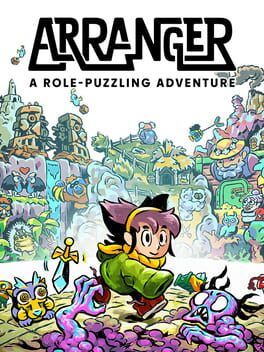

Arranger’s newly announced physical Switch release caps a quiet cult rise for one of 2024’s smartest puzzle RPGs. Here’s how its grid‑shifting mechanic, breezy RPG shell, and personal storytelling all lock together like a perfect sliding puzzle.
Arranger: A Role‑Puzzling Adventure is the rare indie that feels like it already belongs on a cartridge.
The debut game from Furniture & Mattress launched digitally in July 2024 to glowing reviews and word‑of‑mouth praise, but it has always carried the vibe of a future “shelf staple” for puzzle and RPG collectors. With Lost in Cult confirming a physical Nintendo Switch edition, including a limited collector’s run, Arranger is getting the boxed treatment its quietly growing cult following has been hoping for.
That following did not form around big marketing beats or an obvious genre pitch. It grew around a single strange sentence: when Jemma moves, the world moves with her.
A world on rails that bends around you
Arranger looks, at a glance, like a top‑down RPG about a girl leaving her small town. You see tile‑based villages, overworld paths, dungeons and NPCs waiting to be talked to. Then you nudge the stick.
Instead of Jemma simply walking one tile to the right, the entire row of the world she stands on slides with her. Trees, villagers, enemies, chests and hazards all shift one space along that horizontal track and loop around the opposite edge of the screen. Move up or down and the same happens on the column she occupies. You are not just a character on a grid, you are the hand pushing the row of tiles.
Every step becomes a decision. Moving to reach a chest might drag an enemy into your path. Shifting to talk to someone might also reposition a crucial block that opens a shortcut. The basic verbs of an RPG, like walking across town or approaching a dungeon entrance, are restaged as sliding‑block puzzles where you constantly weigh where Jemma will end up against what you’ll do to the entire line she stands on.
By committing fully to this idea, Arranger turns RPG structure into a single, elegant rule set. Navigation, combat, dungeon gimmicks and even light platforming all resolve back to the same question: which line are you on, and what happens when you push it?
Puzzle dungeons instead of battle grind
Arranger calls itself a “role‑puzzling adventure” for a reason. It borrows the visual language and pacing of classic action RPGs, then quietly removes the parts that usually slow them down.
There is no traditional XP curve and no inventory Tetris. You are not combing menus, equipping +3 gear or grinding mobs to pad out a stat bar. Progress comes from understanding the grid and reading each screen as a spatial problem.
Combat is a natural extension of that philosophy. Enemies occupy tiles like everything else, and you rarely “attack” them in a direct sense. Instead, you slide environmental hazards, swords, or even other monsters along shared rows and columns so that the right thing hits the right target. The satisfaction comes less from big numbers and more from the snap of a good solution as an enemy is taken out by a trap you lined up five moves ago.
Each region introduces a twist on this same base interaction. One area plays with beams that toggle barriers when aligned, so your sliding affects distant parts of the layout. Another has you juggling multiple characters whose positions do not line up neatly, forcing you to think two or three turns ahead just to avoid blocking your own path. New concepts arrive quickly, are explored in a small cluster of screens, then graciously bow out before they can turn into chores.
That scope is part of why Arranger has resonated. It is short, focused and built to be finished, not farmed. Where many RPGs feel like weekend‑eating commitments, Arranger feels closer to a brilliant puzzle box you can turn over in your hands across a few evenings, remembering individual screens the way you might remember a good crossword clue.
When the mechanic is the metaphor
Arranger’s grid is not only a mechanical hook. It is also a character study in disguise.
Jemma starts in a small, stifling town where she is treated as the odd one out. Her strange power to literally shift reality under her feet makes her feel out of place in a world that prefers things to stay where they are. The broader setting is ruled by a creeping, immovable “static” that freezes spaces and people in set patterns.
The minute‑to‑minute act of sliding rows and columns underlines that theme. To move forward, Jemma is forced to disrupt arrangements, misalign routines and knock other people’s comfort zones out of position. Every time you drag a line of villagers away from their usual spots, or twist a familiar path into something new, you are performing the same kind of gentle upheaval the story keeps returning to.
Crucially, Arranger rarely stops to lecture about this. There are no pop‑up text boxes explaining metaphor; the ideas are baked into how you interact with its world. Screens that initially feel like pure spatial riddles often mirror what Jemma is dealing with emotionally, from dead‑end loops that echo her feeling of going nowhere to puzzle layouts that only open up once you stop trying to walk “normally” and start embracing your offbeat ability.
That tight fusion of mechanic and meaning is a big part of the game’s critical praise. Reviews repeatedly frame Arranger as an example of how puzzle games can tell personal stories without leaning on long cutscenes or dense lore. The grid is both rulebook and diary.
A breezy adventure with sharp edges
Despite the conceptual density, Arranger is not punishing. It wants you to feel clever, not crushed.
The game is structured as a brisk road trip through discrete locations, each with its own visual motif and mechanical trick. Solutions are almost always fair, taught through level design, visual signposting and gentle iteration rather than explicit tutorial text. You watch what changes when you move, experiment a bit and gradually click into a kind of sliding‑puzzle rhythm that some critics have compared to falling into a Tetris flow.
Assist options and forgiving design round off the roughest corners. If a particular configuration refuses to fall into place, it rarely takes more than a handful of moves to reset or reframe your thinking. The adventure keeps moving, full of oddball NPCs, quietly funny dialogue and soft, understated music that keeps the tone closer to cozy daydream than stern brain‑training app.
That accessibility is framed in contrast to its sharpness. Arranger trusts players to learn by doing, which means that even as it stays approachable, it never feels condescending. Puzzles escalate in complexity throughout its five‑ish hour runtime, but the game never pads its length with filler rooms or routine combat encounters to slow you down. That restraint has been singled out again and again as one of its defining strengths.
How a cult favorite forms before a collector’s edition exists
Arranger’s cult status has not come from a huge player base or overnight virality. It has come from the kind of word‑of‑mouth that collectors tend to follow: critics using unusually glowing language, puzzle aficionados trading clips of particularly elegant rooms and people who finish it immediately recommending it to friends who like “weird little RPGs.”
Because the entire game hangs on a single, easy‑to‑describe trick, it makes for compelling conversation. You can explain Arranger at a party in a sentence and then spend ten minutes unpacking the implications of that rule. You can show a short clip of Jemma sliding across a screen and pulling a village along with her and have someone understand instantly why it feels different from a conventional grid‑based game.
Combine that with a cohesive art direction, music that underlines the game’s gentle melancholy, and a confident runtime that leaves people wanting more, and you have a textbook recipe for a modern cult favorite. It is the kind of game that pops up on end‑of‑year lists, on recommendation threads for “short but special” experiences, and, crucially, in conversations about what deserves a preserved, physical edition.
Why the physical Switch release matters
Lost in Cult’s upcoming physical Switch release gives that conversation a concrete object. For players who prefer collecting carts over icons on a home screen, Arranger’s arrival on shelves is both a preservation win and a validation of its reputation.
The standard edition offers a straightforward way to secure a copy that will still boot up long after storefronts change and subscriptions disappear. The limited edition pushes into the kind of archival detail that suits a design‑driven game like this, bundling in essays and developer interviews that dig into how the grid mechanic evolved and how the team used RPG structure as a frame for a pure puzzle concept.
By the time those cartridges arrive, Arranger’s cult will likely be even larger. The digital release has already made its case to critics and puzzle fans; the physical release gives it a second life with collectors, newcomers browsing Switch shelves, and anyone who has heard “you have to try this, it’s like a Zelda where every step rearranges the world” enough times that they finally want their own copy.
Arranger: A Role‑Puzzling Adventure was built on one clear, strange idea and executed with uncommon focus. That is exactly the kind of game that ends up as a treasured spine on a Switch library, slotted between the big box sets, quietly waiting for the next person who wants to see what happens when you move and everything else moves too.