
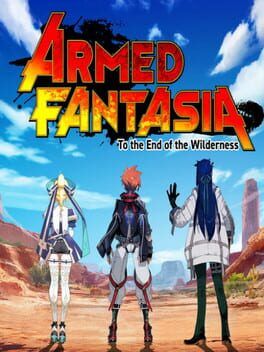
Digital Bros has discontinued Armed Fantasia after gameplay revisions, market review, and added completion costs, leaving Kickstarter backers and Wild Arms fans without clear next steps.
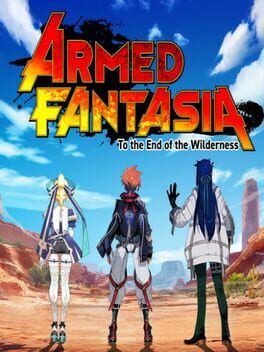
Image: IGDB
Digital Bros has ended Armed Fantasia, and backers are still waiting for direct answers
Armed Fantasia: To the End of the Wilderness has been canceled. The confirmation did not arrive through a celebratory developer update, a Kickstarter post, or a publisher-facing trailer reversal. It appeared in the FY2026 financial results from Digital Bros, the parent company of 505 Games, which listed the Wild Arms spiritual successor among three discontinued projects.
In the notice cited by Nintendo Everything, Noisy Pixel, Push Square, Console Creatures, and Insider Gaming, Digital Bros said it had decided to discontinue development on Directorate: Novitiate, Armed Fantasia, and a sequel to the free-to-play game Battle Island. The company said the decision came “after multiple attempts to revise their gameplay,” and followed a review of each product’s potential in light of changing market conditions and the additional investment required to finish and release them.
That wording leaves Armed Fantasia in a difficult space for everyone who followed or funded it. The cancellation is confirmed at the publisher-parent level, but the source material does not include a new Kickstarter update explaining backer remedies, reward status, ownership of remaining assets, or whether any part of the project could survive outside 505 Games. Push Square reported that, at the time of its article, no updates had been given regarding the Kickstarter campaign and backers were being left in the dark.
For readers searching for “Armed Fantasia canceled” or “Armed Fantasia Kickstarter,” the practical answer is blunt: Digital Bros says development has been discontinued, and no source provided here confirms a refund plan, revised delivery plan, playable release, or transfer to another publisher. Until Wild Bunch Productions, 505 Games, or the Kickstarter campaign itself posts a backer-specific statement, the business cancellation is clearer than the consumer outcome.
The official reason points to design trouble, rising cost, and lower sales expectations
Digital Bros did not frame the Armed Fantasia cancellation as a single-issue failure. Its financial notice ties the decision to multiple pressures: repeated gameplay revision attempts, market conditions, and the amount of extra investment needed to bring the affected games to market.
The most specific phrase is also the most damaging one for a systems-led RPG: “after multiple attempts to revise their gameplay.” Armed Fantasia was pitched around a combat identity of its own, with Console Creatures describing its Cross Order Tactics battle system as a blend of turn-based strategy and “high octane action.” Noisy Pixel likewise reported that the game’s combat was built around Cross Order Tactics. When a publisher says a project has gone through multiple gameplay revisions, that suggests the core loop or its production path had not reached a state Digital Bros was willing to continue funding. The filing does not say exactly which systems failed to meet expectations, so anything beyond that is interpretation.
The financial consequence was substantial. Digital Bros reported a non-cash asset impairment of €18.7 million, including €17.6 million in write-offs tied to discontinued projects and €1 million in impairment losses on other games where impairment testing found expected future cash flows below carrying value. That does not mean Armed Fantasia alone cost €17.6 million, since the write-off covered the discontinued projects as a group. It does show the cancellation was part of a larger portfolio reassessment rather than an isolated press-cycle delay.
The company’s language also matters because it separates a creative dream from a releasable product. A Wild Arms successor can have the right staff, the right mood, and the right fan demand, but an RPG still has to support progression pacing, encounter design, field traversal, quest structure, performance targets, localization, platform certification, and content volume. Digital Bros’ stated concern about additional investment to complete development implies Armed Fantasia had not yet crossed that threshold.
The pitch was built for players who missed PlayStation-era JRPG ambition
Armed Fantasia drew attention because it was openly positioned as a spiritual successor to Wild Arms, the Western-flavored JRPG series that began in the original PlayStation era. Insider Gaming summarized Wild Arms as a series that started during the Sony PlayStation 1 era, with eight titles released between 1996 and 2018 across various platforms, and noted that the last console release was Wild Arms 5 in 2005.
The staff connection made the pitch stronger than a genre homage. Console Creatures reported that Armed Fantasia included Akifumi Kaneko, character designer Tomomi Sasaki, composer Michiko Naruke, and composer Noriyasu Uematsu, all associated in its reporting with Wild Arms entries. Noisy Pixel identified Kaneko as the Wild Arms creator and scenario writer, and said Armed Fantasia was led by him. For fans of classic JRPGs, that combination suggested continuity of tone, music, and scenario instincts rather than a surface-level imitation.
The game itself was not described as a direct Wild Arms sequel. It starred Ingram Goodweather, described by Console Creatures as an up-and-coming Pathfinder in search of ARMs, and used a Western-inspired fantasy setting according to Noisy Pixel. ResetEra’s thread excerpt, discussing the original pitch, highlighted a large world map with racing, jumping, puzzle-solving, and high-speed traversal across land, sea, and air. Those details explain why the project carried unusual expectations: it was promising a style of RPG many fans associate with older console generations, but with modern-scale traversal and production demands.
That ambition is also the fault line. A classic JRPG cancellation like this does not only remove one title from a release calendar. It removes a proposed answer to a long-running player question: what would a Wild Arms-style adventure look like if its world map, vehicle systems, party building, and battle design were rebuilt for current hardware? Armed Fantasia never reached the point where players could evaluate that answer themselves.
The four-year path moved from Kickstarter momentum to publisher control
Armed Fantasia was announced in 2022 through a joint Kickstarter campaign with Penny Blood, a Shadow Hearts spiritual successor. Noisy Pixel and Console Creatures report that the campaign raised more than ¥379 million from over 17,000 backers. Push Square described the double-header campaign as raising around $2.5 million and said it cleared its original $750,000 funding goal in a single day. Those figures are consistent in broad terms, with the yen total translating to roughly the dollar amount cited by Push Square depending on exchange assumptions.
The project later brought in 505 Games as publisher. Nintendo Everything reported that 505 Games was brought on after the initial Kickstarter funding, while Noisy Pixel wrote that 505 later became involved as publisher. Console Creatures added a sharper detail, reporting that Kaneko had been steering the project after it had run out of funds before 505 picked up publishing rights. That claim is attributed to Console Creatures’ reporting; the Digital Bros notice itself does not discuss the project’s pre-505 funding condition.
There was also an earlier platform-holder angle. Push Square cited a 2022 interview in which former Wild Arms designer Akifumi Kaneko said Armed Fantasia had been pitched to Sony multiple times, but Sony was not interested in publishing it. That history now reads differently. The project eventually found a publisher in 505 Games, but Digital Bros’ cancellation shows that securing publishing support did not resolve the underlying challenge of turning a nostalgia-backed concept into a finished commercial RPG.
For backers, this is the painful progression path: early campaign energy, legacy-staff credibility, a publisher partnership, then a long stretch where public visibility was limited, followed by cancellation inside a corporate financial document. The sources do not show that backers were warned through Kickstarter before the Digital Bros filing became public.
The March 2026 update sounded like progress, which makes the cancellation feel abrupt
The cancellation lands harder because the most recent development signal cited in the provided sources was not framed as a collapse. Noisy Pixel reported that in March 2026, Wild Bunch Productions said it had completed a vertical-slice ROM featuring Armed Fantasia’s main scenario, core gameplay systems, and other integrated elements before submitting it to the publisher. Console Creatures similarly reported that a March 2026 update said a vertical-slice ROM was ready to show and had been submitted to the publisher.
A vertical slice is not a finished game. In RPG production, it is often a proof point that systems, art direction, scenario flow, exploration, combat, interface, and technical foundations can operate together in a representative build. It can also expose whether the project scales cleanly. If the slice works in isolation but content creation remains too costly, if combat requires major redesign, or if the world structure is too expensive to complete, a publisher can still decide the remaining road is too risky. The sources do not say which of those scenarios applied to Armed Fantasia, but Digital Bros’ reference to gameplay revisions and added investment fits the kind of decision that can follow a milestone review.
Noisy Pixel also reported that Kaneko apologized in March for the extended gap between updates and said the studio was preparing remaining content while connecting and refining different parts of the game. According to that report, he noted that the timing and scope of public updates were affected by publisher strategy, contracts, and rights. That helps explain why fans had limited visibility into the state of the game, but it also raises the central frustration: the public-facing update suggested assembly and refinement, while the financial result says the project no longer justified completion.
There is no contradiction in those two facts, but there is a gap. The team could have completed a meaningful internal build and still failed a publisher review. What players lack is the missing middle: what Digital Bros wanted changed, what the team revised, and why the final review ended with discontinuation instead of delay, rescope, or a smaller release.
Platforms were never fully settled in public reporting
One unresolved part of Armed Fantasia’s public story is where it would have launched. Noisy Pixel reported that 505 Games’ involvement had Armed Fantasia planned for PlayStation 5, Xbox Series, and PC. Nintendo Everything reported that the game had also been planned for Nintendo platforms, but said it was unclear whether that meant Switch or its successor. Nintendo Everything added that, had the project moved forward, it likely would have appeared on Nintendo Switch 2 given the original Switch’s age, but that part was the outlet’s assessment rather than an announced platform confirmation.
That platform ambiguity matters because RPG scope changes depending on target hardware and release timing. A game built around a large world map, high-speed traversal, turn-based systems, and cinematic legacy appeal has to be budgeted and optimized differently if it is shipping across current consoles, PC, and Nintendo hardware. The sources do not identify platform development as the reason for cancellation, so it would be wrong to blame Switch, Switch 2, PS5, Xbox Series, or PC requirements. Still, the spread of reported platforms shows the project was aiming beyond a small PC-only Kickstarter delivery.
There is also no confirmed release date, price, demo plan, performance target, or upgrade path in the source material. For practical purposes, readers should treat Armed Fantasia as unavailable rather than delayed. If storefront wishlists, campaign pages, or old trailers remain visible, the Digital Bros filing is the controlling reported development: the publisher-parent company has discontinued the game.
For fans tracking a possible Wild Arms successor, the safer expectation is to wait for an official statement from Wild Bunch Productions, 505 Games, or the Kickstarter campaign before assuming anything about refunds, partial rewards, source-code rescue, soundtrack releases, or another publisher stepping in.
A loss for Wild Arms fans, but also a warning about nostalgia-scale RPG funding
Armed Fantasia’s cancellation hurts because it targeted a specific absence. Wild Arms has not had the same continuous modern presence as some other PlayStation-era RPG names, and the people attached to Armed Fantasia gave fans a reason to believe the series’ frontier mood, music, and party-adventure rhythm might live again under a new banner.
The lesson is not that spiritual successors are impossible. The reported facts here support a narrower and more useful conclusion: a large-scale, systems-heavy JRPG remains expensive and risky even when it begins with legacy talent and a successful crowdfunding campaign. Combat has to hold for dozens of hours. Exploration has to justify its map. Character growth has to reward experimentation without collapsing balance. Quests and scenario structure have to survive production realities. Music and art direction can create identity, but they cannot by themselves solve schedule, scope, and market risk.
Digital Bros’ filing frames Armed Fantasia as one project inside a broader business review. Fans will understandably experience it as the end of a four-year wait for a Wild Arms spiritual successor. Both readings are true within the source material. The corporate document explains why the publisher-parent company walked away; it does not answer the human side of crowdfunding, where more than 17,000 backers supported a promise before publisher strategy and portfolio math took over.
Until a backer-facing update fills in those blanks, the Armed Fantasia story ends unevenly: confirmed canceled as a commercial project, still unresolved as a Kickstarter obligation, and remembered as one of the more ambitious attempts to revive classic PlayStation-era JRPG design through modern crowdfunding.