
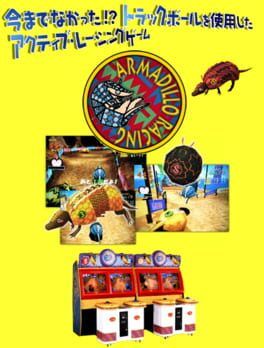

Namco’s 1997 arcade oddity Armadillo Racing is getting its first console release through Arcade Archives, with PS5, Switch 2, PS4, Switch, Xbox Series X/S versions and USB trackball support.
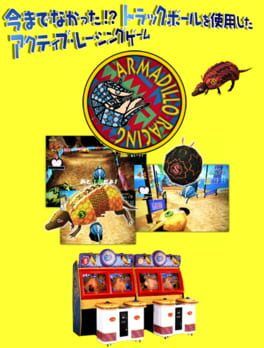
Image: IGDB
Armadillo Racing finally leaves the arcade on July 23
Namco’s Armadillo Racing, a 1997 arcade racer that never received a home version, is getting its first console release on July 23 through Hamster Corporation’s Arcade Archives line. That is the confirmed headline across VGC, Nintendo Everything, and Push Square, and it immediately gives this release a different weight from a routine retro drop: one of Namco’s stranger trackball-driven arcade games is becoming legally available at home for the first time.
Nintendo Everything, citing Hamster and the official overview, says Armadillo Racing originally launched in 1997 and was released only in Japan. VGC frames the new version as the first ever home release, while Push Square describes it as the game’s console debut. The platform spread is broad but split by Hamster’s two current archive labels. VGC reports that Armadillo Racing will launch as an Arcade Archives title on Nintendo Switch and PS4, while Arcade Archives 2 versions are planned for Nintendo Switch 2, PS5, and Xbox Series X/S.
The tension is in the control method. Armadillo Racing was built around a trackball cabinet, and Hamster says the home version can be played with a standard controller while also supporting USB trackball controllers. VGC notes that it is not yet clear which trackballs will work, and Push Square similarly says Hamster has not specified compatible models. For arcade racing fans, that compatibility list is the practical detail that will decide whether this is a faithful cabinet substitute or a clever home adaptation with one important unknown.
A Namco racer where the steering wheel is the wrong reference point
Armadillo Racing is a racing game, but it does not sit in the same handling family as Ridge Racer or Ace Driver. The official description published via Nintendo Everything says players control an armadillo that rolls as it picks up speed, heading through obstacle courses filled with unique events as well as sprint courses designed for direct racing. VGC’s account is even plainer: players guide an armadillo around a track while it is rolled up in a ball.
That changes how the word “racing” should be read here. A conventional arcade racer asks the player to manage steering angle, throttle, braking, and sometimes drift state. A trackball racer turns input into physical momentum. The original cabinet’s trackball was not a cosmetic flourish; it was the interface that made the fantasy readable. Pushing, spinning, and correcting a rolling character produces a different handling texture from tapping a D-pad or leaning on an analog stick.
The home version’s standard controller option matters because it makes the Armadillo Racing home port accessible to anyone buying it digitally. The USB trackball support matters because it gives preservation-minded players a route back toward the original control language. Until Hamster identifies supported devices, though, the safest expectation is that gamepad play is the baseline and trackball play is a promising feature with hardware risk attached.
Trackball support is the feature that changes the audience
For many players, Arcade Archives Armadillo Racing will be a curiosity: a rare Namco Armadillo Racing release with an unusual premise, online score modes, and modern console access. For arcade hardware fans, the phrase “USB trackball support” is the real hook. It suggests Hamster is aware that reproducing the ROM alone does not capture the whole arcade experience when the cabinet was built around a specialized input device.
VGC reports that Hamster says USB trackball controllers are supported, while also stating that compatible models have not been clarified. Push Square describes the support as applying to select trackball controllers, again without a named list. Those caveats should keep buyers cautious. Trackballs vary in how they present themselves over USB, and console support can be narrower than PC support. The sources confirm the feature exists, but they do not confirm plug-and-play compatibility for any specific consumer device.
That lack of detail does not undercut the preservation value. It does, however, affect buying advice. If you want Armadillo Racing Switch 2, Armadillo Racing PS5, or another version mainly to test a trackball setup, wait for Hamster’s compatibility notes or early player reports before purchasing hardware. If you are comfortable playing through a controller, the release itself has a clearer path: the sources say standard controller play is supported.
Hamster’s System 22 run gives this release a larger pattern
VGC places Armadillo Racing inside Hamster’s ongoing work on Namco’s System 22 and Super System 22 arcade libraries. According to VGC, those boards helped Namco move into polygonal arcade games, and Hamster has already released seven System 22 or Super System 22 titles through Arcade Archives: Ridge Racer, Air Combat 22, Aqua Jet, Tokyo Wars, Rave Racer, Cyber Commando, and Ace Driver. Armadillo Racing becomes the eighth in that sequence.
That context is useful because it shows this release is not an isolated rescue. It is part of a visible effort by Hamster and Bandai Namco-related teams to make a difficult era of Namco arcade software playable outside original cabinets. Ryoichi Kaku, identified by VGC and Push Square as a lead at Bandai Namco’s Research Institute and a member of the original Armadillo Racing development team, thanked Hamster for collaborating on these releases. In the quoted statement, Kaku said Bandai Namco Research Institute has been working jointly with Hamster to recreate arcade games originally running on Namco System 22 and System Super 22 hardware.
Kaku also said releasing Armadillo Racing through Arcade Archives “for the first time in 30 years” is deeply meaningful to him as both an original development team member and someone involved in bringing it back. The official overview cited by Nintendo Everything identifies the original release year as 1997, so the “30 years” line should be read as a broad anniversary-style statement rather than a precise calendar count from the listed launch year.
Modes, VRR, rewind, and the Arcade Archives 2 split
The content package depends on which label your platform receives. VGC reports that each Arcade Archives release includes Original Mode, High Score Mode, and Caravan Mode. Nintendo Everything’s official overview adds that Original Mode includes convenience options such as difficulty and display settings, button remapping, rapid-fire options, multiple save files, rewind, and, for some titles, settings that recreate the atmosphere of CRT displays. The same overview says Hi Score Mode and Caravan Mode support online rankings.
Arcade Archives 2 adds another layer. VGC says the Switch 2, PS5, and Xbox Series X/S versions include Time Attack Mode, where players try to beat the full game as quickly as possible. Nintendo Everything’s official overview describes Time Attack similarly, emphasizing completion speed regardless of score. VGC and Nintendo Everything also report VRR support in Arcade Archives 2, described as helping reproduce the original arcade experience more accurately.
For a racer built around speed and input response, VRR is worth watching without overstating it. The sources do not provide frame-rate measurements, latency figures, or technical comparisons between versions. What is confirmed is that VRR support is part of the Arcade Archives 2 feature set, not the older Arcade Archives release as described in the source material. On a compatible display, that may be the version racing fans gravitate toward, especially if they care about smoother motion and closer timing behavior.
Pricing and upgrade path make the platform choice less simple
VGC reports that Arcade Archives Armadillo Racing costs $14.99 on PS4 and Switch, while the Arcade Archives 2 version costs $16.99 on PS5 and Switch 2. Push Square also lists $16.99 for PS5 and $14.99 for PS4. VGC says players who buy the $14.99 Arcade Archives version on PS4 or Switch will be able to upgrade later to the $16.99 Arcade Archives 2 version on PS5 or Switch 2 for $2.99. Push Square reports the same $2.99 PS4-to-PS5 upgrade fee.
That pricing structure creates a reasonable split. If you already own a PS5 or Switch 2 and want the fullest feature set at launch, the Arcade Archives 2 version is the cleaner purchase because it includes Time Attack and VRR support according to the sources. If you are staying on PS4 or Switch for now, the lower-priced release still provides the core game and the standard Arcade Archives modes, with an upgrade path reported for PlayStation and Nintendo’s current-to-next hardware transition.
The Xbox Series X/S version is listed by VGC as an Arcade Archives 2 release, but the provided source material does not mention an Xbox upgrade route from an older Xbox version. That is unsurprising given the platform list, but it remains a gap in the information available here rather than a confirmed limitation beyond what the sources state.
A preservation win with one hardware question still open
Armadillo Racing’s return matters because the confirmed facts line up in a way retro arcade fans rarely get at once: a Japan-only Namco arcade release, no prior home-console version, involvement from Hamster’s established Arcade Archives program, comments from a Bandai Namco Research Institute lead connected to the original development team, and an attempt to support the original cabinet’s defining input style.
The game also brings back its bonus content. VGC reports that finishing in first place unlocks a bowling mini-game, and Push Square says that secret bowling mini-game will return in the port. That small detail fits the broader value of the release. This is not a licensing shell around a remembered brand; the sources present it as a preservation-minded recreation of a specific arcade oddity, with modes and options built for modern play.
The unresolved issue is compatibility. Arcade Archives Armadillo Racing has a clear release date, platforms, prices, modes, and upgrade path as reported by the cited outlets. Armadillo Racing trackball support is also confirmed, but the supported hardware list is not. For players who simply want to experience Namco’s rolling racer at home, July 23 is the date to circle. For players trying to rebuild the feel of the cabinet in a living room, the green flag should wait until Hamster names the trackballs that actually work.