
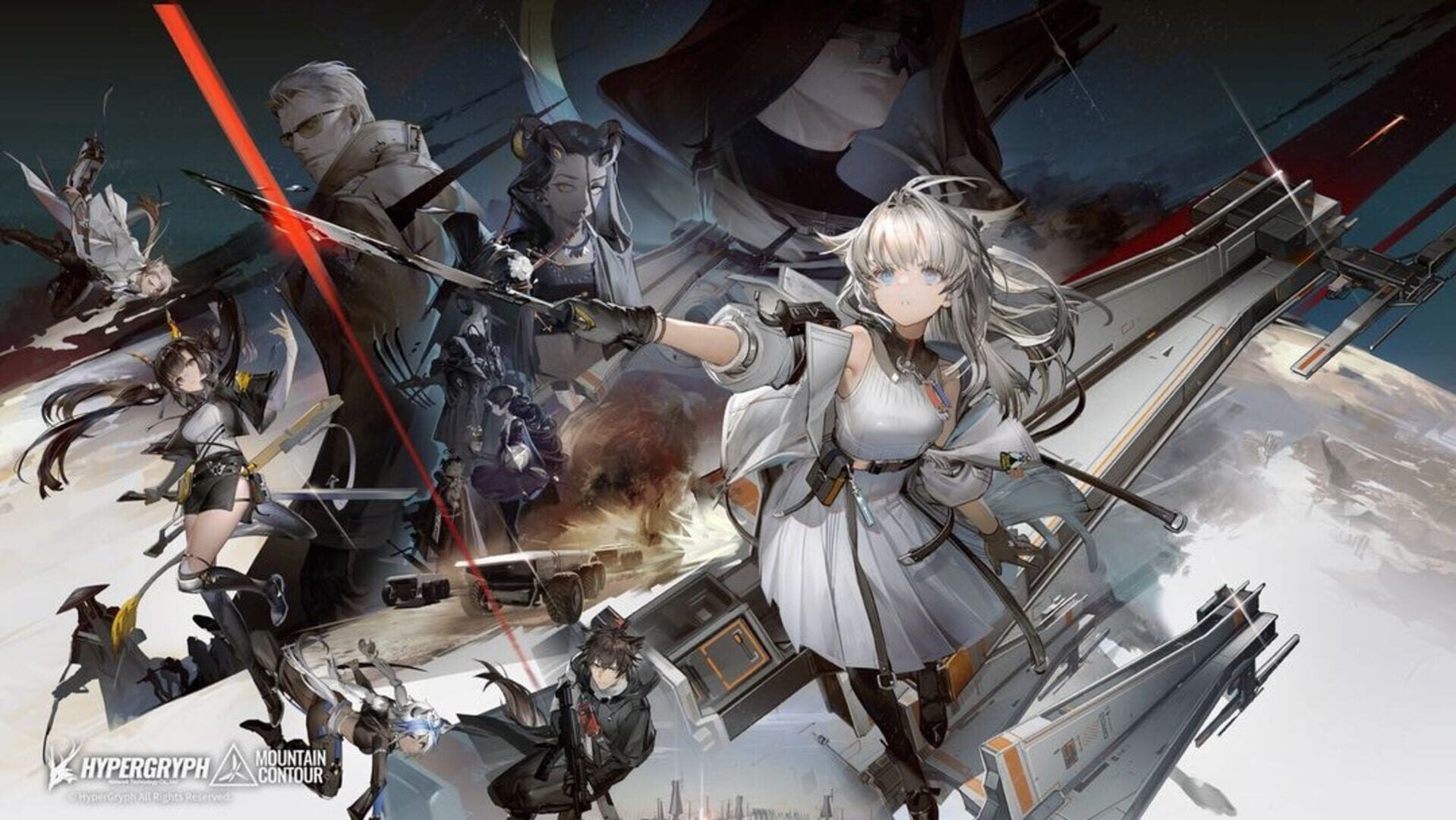

A deep dive into Arknights: Endfield’s first major update, breaking down the new 6-star Operators, hydro‑industrial systems, key optimizations and how Version 1.1 positions the game in a crowded gacha/strategy market.
Arknights: Endfield’s first big post-launch update is exactly what a young live service game needs: a sharp content injection and a surprisingly grounded list of fixes for the stuff players complain about every day. Version 1.1, titled “Old Deep Water Dies, by Rising Tide It Is Denied,” rolls out on March 12 and marks the point where Endfield stops being a flashy tech demo for Hypergryph’s engine and starts behaving like a long-term service title.
Below is a full breakdown of what 1.1 actually changes, how the new hydro-industrial systems work in practice, and where that leaves Endfield in the gacha and strategy space just a few months after launch.
Two new 6-star Operators: Tangtang and Rossi
Headlining the patch are two 6-star Operators that lean hard into Endfield’s real-time battlefield pacing and its growing environmental toolkit.
Tangtang is a Cryo Caster who fights with a hand cannon, bringing reliable ranged coverage and crowd control. The cryo angle matters more in Endfield than in a traditional tower defense game because of how status and positioning interact with enemy behavior. Being able to slow or freeze key targets in a real-time skirmish gives you extra windows to rotate melee units, retreat fragile DPS, or manually kite elites around cover. Tangtang’s kit is clearly designed for players who enjoy micromanaging ability timing; she rewards those small, well-timed bursts of control that prevent a snowball rather than fixing it.
Rossi is a Physical Guard wielding a sword and sits closer to the frontlines as a flexible bruiser. More than just another high-rarity brawler, she fits into the “anchor” role that Endfield’s harder encounters increasingly demand. You want a central unit who can hold space while the rest of your squad repositions or while your AIC facilities and deployables ramp up. Rossi’s dedicated character quest highlights this style of play, teaching you how to leverage her sustain and damage windows rather than simply slotting her in as a raw stat stick.
Together, Tangtang and Rossi extend Endfield’s roster into more defined tactical archetypes. Rather than simply being stronger alternatives, they fill recognizable jobs: high-control artillery and frontline coordinator. For players coming from classic Arknights banners that often revolved around “must-pull” meta units, Version 1.1’s duo is less about pure power creep and more about deepening how you approach real-time fights in 3D space.
Qingbo Stockade and the next step for Talos-II
On the PvE side, Version 1.1 pushes the main story forward with a new chapter centered on Qingbo Stockade. This region is framed as a strategic node under threat, tying directly into Endfield’s focus on frontier development and corporate logistics on Talos-II.
Qingbo Stockade gives the game another distinct biome to play with and, crucially, new tactical layouts for its hybrid RTS design. More verticality, tighter chokepoints and mixed approach routes broaden the missions beyond the relatively open launch zones. For players who have already cleared the 1.0 mainline and side content, Qingbo functions as both a narrative step forward and a sandbox where the new industrial systems and operators feel immediately relevant rather than bolted on.
The story itself continues to lean into Endfield’s corporate science fiction angle. Rather than traditional fantasy stakes, the conflict at Qingbo Stockade is rooted in resource control, infrastructure stress and the uneasy balance between survival and exploitation. It is a natural backdrop for the new hydro-industrial focus of the patch.
Hydro-industrialization: water as infrastructure, not just scenery
The biggest structural change in 1.1 is the expansion of the AIC system through hydro-industrialization. In broad terms, this is Endfield turning water from a background resource into a fully integrated part of its base-building and production loop.
Hydro-industrial facilities hook into rivers and bodies of water near your sites, letting you convert flowing or stored water into usable industrial output. Practically, that means new water-focused structures enter the AIC grid and must be planned around existing power, logistics and terrain constraints. You are not just placing buildings on arbitrary nodes; you are routing pipelines and flow through spaces that also double as combat arenas in certain missions.
In moment-to-moment play this shifts how you think about expansion. Opening a new forward operating area is no longer only about throwing down generic production buildings. You start weighing whether the local water features justify building hydro facilities there, how that output will feed back into your central logistics and whether it is worth defending if enemy incursion patterns change. It makes the broader Talos-II map feel more like a living industrial frontier than a set of disconnected combat stages.
Over time, hydro-industrialization is poised to sit alongside Endfield’s existing factory chain as a second spine of progression. If Hypergryph keeps layering unique upgrades and event hooks onto it, Version 1.1 may be remembered as the moment when base development becomes as strategic and expressive as squad-building.
Automation, Recycling Hubs and the daily grind
For anyone already grinding Endfield’s early cycles, the most immediately felt change in Version 1.1 is how it tackles routine friction. The dev team has leaned into “industrialization” not just thematically but in terms of playtime efficiency as well.
Recycling Hubs are a prime example. In Version 1.0, collecting from distant hubs meant trekking across the map just to tap on a UI element. Once they are fully upgraded in 1.1, you can now collect their output remotely. It sounds modest on paper, but combined with an expanded automation toolkit it drastically reduces those empty minutes where you were effectively being paid in resources to run between icons.
AIC-level improvements also streamline how different facilities talk to each other. Routes are more clearly surfaced, bottlenecks are easier to diagnose, and “set and forget” configurations become genuinely viable. Endfield has always wanted you to feel like a manager overseeing a living industrial network; Version 1.1 finally starts cutting the busywork that undermined that fantasy.
Those changes sync neatly with the new hydro-centric buildings. Better automation and smarter collection tools mean you can afford to think two or three expansion steps ahead rather than constantly being pulled back to fix small logistics problems.
Quality-of-life changes that actually matter
Beyond resource systems, 1.1 is filled with practical interface and control adjustments pulled almost verbatim from community feedback.
The cleanest example is on PC, where players can now exit the AIC top-down view with the Esc or Caps Lock keys. That might sound trivial, but in a game that constantly asks you to hop between 3D exploration, tactical deployment and overhead management, every extra second of UI wrestling adds up. The new shortcuts alone make the game feel closer to a modern RTS instead of a mobile-first port.
The character acquisition flow has also been polished to make pulls and recruitment snappier and easier to parse. Animations have been tightened, reward displays are clearer, and the game guides you more smoothly from pulling a character to slotting them into your teams and infrastructure. New gear piece packs help fill gaps in progression, particularly for players who started late or made early build mistakes.
Wrap these tweaks together with a slate of lighter events, including a playful cleaning activity reminiscent of PowerWash Simulator, and Version 1.1 starts to feel like a holistic response to how people are actually playing, not just a checklist of “more content.”
Where Arknights: Endfield sits in the gacha and strategy landscape
Hypergryph launched Endfield into one of the most crowded corners of the market: character-driven gacha layered on top of some form of strategy. Between Honkai: Star Rail’s turn-based battles, Genshin’s open-world action, traditional Arknights tower defense and a wave of tactics-lites and autobattlers, it is not enough to simply offer flashy 3D fights and a banner schedule.
Version 1.1 helps clarify what makes Endfield different.
First, its core loop is as much about industrial planning as it is about stage clearing. Your progression is tied to how you shape Talos-II’s frontier, route resources through facilities, and defend the resulting network. The hydro-industrialization system doubles down on this identity by making infrastructure decisions feel weighty and tangible.
Second, combat is closer to a real-time tactics game with hero units than to classic tower defense. Operators like Tangtang and Rossi are designed around active positioning and ability timing in 3D spaces rather than static lane assignment. As more units are added that exploit terrain, status interactions and deployable tools, Endfield edges into a niche currently underserved among gachas: high-agency, small-squad tactics that reward paying attention in the moment.
Third, the early emphasis on optimizations and quality-of-life is notable in a sector where many titles wait a year or more to seriously address rough edges. By dedicating such a large portion of its first major update to controls, automation and daily friction, Hypergryph signals that it wants Endfield to be a sustainable daily game, not just a launch spectacle.
There are still challenges. The monetization layer will need to stay restrained enough to keep experimentation viable, and the team must avoid leaning too heavily on 6-star power spikes to drive engagement. But if Version 1.1 is indicative of the game’s cadence, Endfield is on track to carve an identity as the “infrastructure RTS gacha” rather than just another anime sci-fi RPG.
Should you come back for 1.1?
If you bounced off Endfield at launch because of clunky controls or base micromanagement that felt like unpaid errand-running, Version 1.1 is worth revisiting. Hydrological facilities give the frontier-building fantasy more bite, new automation and remote collection tools cut down on tedium, and the new Operators slot neatly into tactical roles without simply invalidating existing squads.
For newcomers, 1.1 arrives early enough that starting now does not feel like boarding a moving train. The story is still in its opening movements, the meta is not fully entrenched, and the industrial systems are just beginning to show their depth. In other words, the rising tide may be exactly what Endfield needed for its waters to feel inviting instead of overwhelming.