
A full primer on Arknights: Endfield ahead of its January 22, 2026 global release: how it shifts from tower defense to 3D action-strategy RPG, what the factory-building and party systems look like, platforms, likely monetization, and what it all means for the wider Arknights universe.
Arknights is finally leaving the grid.
Arknights: Endfield, the long-teased 3D spin-off, now has a global launch date of January 22, 2026 on PS5, PC, and mobile. Where the original Arknights built its identity around lane-based tower defense and tile placement, Endfield is repositioning the series as a real-time action-strategy RPG with open zones, free movement, and base-building.
For anyone who bounced off the original’s abstract tiles or is wondering how this still “feels” like Arknights at all, here is a breakdown of what Endfield actually is, how it plays, and why it matters for the franchise.
From tower defense to 3D action-strategy RPG
Core Arknights is all about puzzle-like defense maps. You deploy Operators on a grid, route enemies into killboxes, and juggle deployment costs. Endfield takes that same emphasis on unit roles and ability timing, then drops it into a fully 3D real-time combat system.
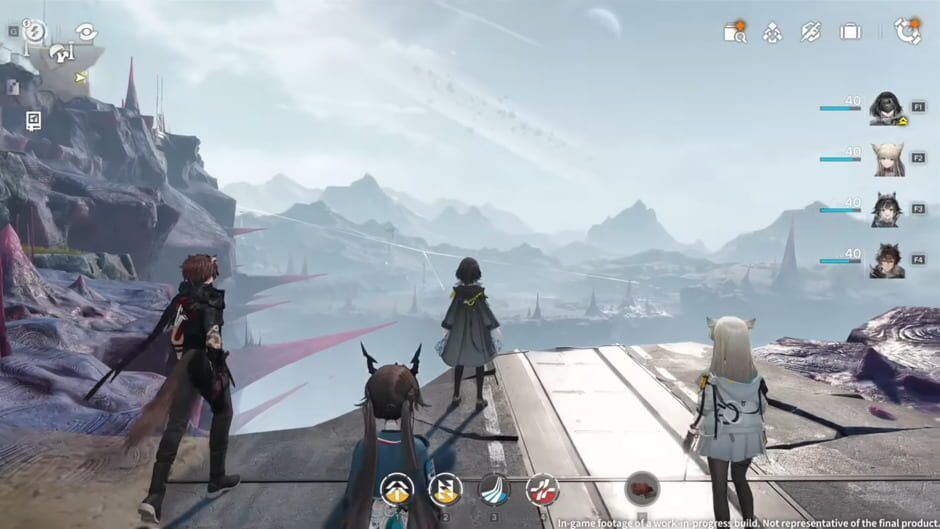
You directly control a character on the field, moving, dodging, and attacking in real time while your squad fights alongside you. Combat in the recent beta tests sits somewhere between action RPG and tactical brawler. Normal attacks and skill activations are manual, but positioning, crowd control, and synergy still matter in a way that will feel familiar to veterans of the tower defense game.
Rather than static stages, you roam regions of Talos-II, pulling enemies, kiting them through environmental hazards, or clustering them for AoE skills. Instead of “placing” units onto set tiles, you are making micro-positioning calls on the fly. It keeps the series’ tactical DNA but trades puzzles for more expressive play.
Factory-building and frontier infrastructure
The Game Awards trailer briefly showcased Endfield’s industrial backbone: factory lines, conveyor belts, and a UI that looked closer to a light production sim than a typical gacha RPG.
On Talos-II, the Endfield Industries team is pushing into unstable frontier territory. That fiction underpins the game’s core management layer. You are not only fighting enemies but also building up infrastructure to make permanent gains in a hostile world.
From test builds and official breakdowns, Endfield’s factory system revolves around establishing and upgrading industrial nodes that automate resource production. You place structures, link them together into chains, then tune what they produce. These factories handle vital materials that feed into character progression, equipment crafting, and regional upgrades.
Instead of just setting up a generic base menu, you are making spatial decisions in semi-3D layouts: where to place production modules, how to route output efficiently, and which bottlenecks to fix first. It is less sprawling than a full-blown city builder, but more systemic than a passive mobile game “base.”
The strategic hook is that your progression is tied to how well you understand these systems. Optimized setups mean smoother material flow and less grind. If you have ever felt that Arknights’ base in the original game was underused beyond routine check-ins, Endfield seems designed to make logistics a pillar of the experience instead of an afterthought.
Party system and combat roles
The Game Awards trailer also highlighted Endfield’s party structure. Rather than fielding a dozen units across lanes, you typically run a compact squad while diving into real-time combat and exploration.
Current builds focus on parties of up to four characters in the field. You can swap between them on the fly or let AI handle the members you are not directly controlling. Each Operator brings a familiar Arknights-style role identity: frontliners that hold aggro, ranged damage, support casters, and more specialized control or burst picks.
Skill management mirrors some of the rhythm from tower defense. Powerful abilities have cooldowns or require energy, so the challenge is in lining up bursts for enemy waves, elite foes, and boss patterns without overcommitting. Status effects and elemental synergies encourage building parties that complement each other rather than just stacking your highest-rarity units.
Tactical depth shows up in small choices. Deciding when to tag in a shielded defender, when to swap to a healer to stabilize after an area attack, or when to sprint in with a melee carry for a perfectly timed burst window gives combat a strongly “read the battlefield” feel. Endfield wants you to think tactically but act in real time instead of plotting moves on a static grid.
Platforms and technical expectations
Arknights: Endfield is targeting a simultaneous global launch on PlayStation 5, PC, and mobile platforms. Hypergryph and global publisher Gryphline are presenting it as a unified live service, not a staggered rollout.
On PS5 and PC, expect the most stable performance, higher-resolution assets, and more robust controller support. These platforms are clearly the showcase for the sweeping vistas of Talos-II that were emphasized in the Game Awards reveal and earlier beta trailers.
On mobile, Endfield is ambitious but designed around modern high-end devices. Graphical options and performance presets are going to matter here, especially as the game relies on responsive action inputs and readable battlefield telegraphs. Given Hypergryph’s track record with the original Arknights on phones, players can reasonably expect a lot of tuning and optimization passes leading up to launch and during the first live months.
Cross-platform progression has not been exhaustively detailed, but all signs point to Endfield leaning into unified account systems that let you move between PC, console, and mobile without losing progress. For a real-time game where session length can vary, the ability to grind resources on mobile and then enjoy story content or boss fights on a bigger screen would be a natural fit.
Monetization: what to expect from a free-to-play spin-off
Endfield will be free-to-play with in-game purchases. Coming from the original Arknights and its gacha structure, players are already speculating about how aggressively the new title will monetize.
Several factors shape expectations. First, Hypergryph has built goodwill in the tower-defense game by avoiding the harshest pay-to-win traps. Power creep exists but has generally been moderated, with most high-end content being clearable using lower-rarity units if you invest and play well. Second, Endfield is a spin-off that is trying to court a broader action RPG audience, which likely means leaning on cosmetics, seasonal banners, and character pulls as the primary revenue drivers.
Do not be surprised to see a familiar gacha core focused on recruiting new Operators and possibly rolling for high-value gear, along with the usual free-to-play staples like battle passes, cosmetic bundles, and premium currency packs. Where the game will be judged is how much of its higher-difficulty content expects narrowly specific units or gear, and how generous the earnable currency flow is.
Given the series’ history, the safest assumption is a monetization model that is unmistakably gacha but moderated by a strong single-player structure, clear story progression, and flexible team building that lets dedicated players keep up without treating every banner like a mandatory spend.
What Endfield means for the broader Arknights universe
Even if you do not plan to play Endfield, its existence reshapes what Arknights is as a franchise.
Narratively, Endfield moves away from the narrow focus on Rhodes Island’s defensive operations and into frontier expansion. Talos-II is a different world with its own geopolitical and environmental problems, but there are strong connective tissues in technology, terminology, and visual motifs. That opens the door for cross-references, cameos, and deeper lore that fills in how this universe functions beyond the immediate crises seen in the tower defense game.
Endfield also provides a space for experimenting with tone. The core Arknights story has grown increasingly heavy, dense, and sometimes claustrophobic due to its disaster-focused premise. By contrast, Endfield’s frontier exploration, industrial development, and long-horizon planning introduce a sense of rebuilding and long-term hope. It still looks harsh and dangerous, but the framing is about pushing outward rather than barely holding the line.
On the industry side, Endfield is part of a broader pattern of mobile-native IPs trying to cross into premium-feeling 3D spaces while keeping a free-to-play backbone. Hypergryph is betting that Arknights can evolve into a multimedia brand supported by multiple kinds of games instead of just doubling down on tower defense. If Endfield hits, it will validate the idea that gacha-born IP can support more ambitious, console-quality spin-offs without fully abandoning its mobile roots.
For players, Endfield means choice. If you love the strategic puzzle-solving of the original, that game is not going anywhere. If you prefer direct control, exploration, and more kinetic combat, Endfield will offer a way into the same universe that does not ask you to fall in love with grids and leak routes.
With over 30 million pre-registrations already logged and a January 22, 2026 release locked in, Arknights: Endfield is shaping up to be more than a side experiment. It is the test of whether this universe can support a second flagship that stands on its own while still feeling unmistakably like Arknights.