
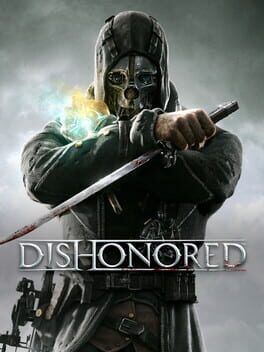
A retrospective on Arkane’s lost Thief 4 and Blade Runner pitches, how their ideas bled directly into Dishonored, and why fans still see the studio as the keeper of stealth-first immersive sims.
In another timeline, Arkane Studios is not “the Dishonored studio.” It is the team that rescued Thief from limbo, or the one that finally gave Blade Runner the immersive sim it always seemed destined for. In that universe there is no Outsider, no City Watch barking about “the masked man,” no whale-oil empire teetering on the edge. There are only licensed logos on the box.
In our timeline, those dream projects collapsed. Yet the wreckage of Arkane’s cancelled Thief 4 and Blade Runner pitches did not disappear. It was recycled, reforged and wired into the beating heart of Dishonored. That is why, more than a decade later, fans still talk about Arkane as the heir to Looking Glass, a studio that treats stealth not as a side dish but as the main course, then seasons it with meticulous worldbuilding.
The fork in the alley: Thief 4 or Blade Runner
In the late 2000s Arkane was a respected but vulnerable studio. Arx Fatalis had cult cachet, Dark Messiah of Might and Magic had a hardcore following, but the future was uncertain. When Bethesda came knocking with two potential licenses, it felt like salvation.
According to co‑creators Raphael Colantonio and Harvey Smith, Bethesda believed Arkane was the perfect fit for Thief. The lineage made sense. Thief, System Shock and Deus Ex were spiritual ancestors of Arkane’s work, and several Arkane developers revered those games. Being asked to pitch Thief 4 was like being handed the keys to a family home.
Then a second door opened. Bethesda floated the possibility of a Blade Runner game, positioned as an immersive sim. For Smith in particular, this was intoxicating. Ridley Scott’s retro-future noir, full of rain, neon and unreliable humanity, had obsessed designers for decades. The idea that Arkane might get to define how a Blade Runner immersive sim actually plays was an almost cruel temptation.
The studio effectively split its imagination in two. One team focused on Thief, the other on Blade Runner, each sketching out what an Arkane version of those universes might feel like. Internally, Colantonio and Smith have described it as “a little bit of a competition,” but it was less rivalry and more a shared realization that, whichever project won, Arkane could finally make the pure stealth immersive sim it had always wanted to build.
Arkane’s Thief 4: stealth as sacred ground
Arkane’s Thief pitch was not a napkin sketch. Colantonio has talked about videos, extensive materials and a strong narrative backbone. The team was not trying to reinvent Thief so much as modernize its principles.
The core idea was fidelity to the series’ slow, methodical stealth. Where other studios drifted toward louder power fantasies, Arkane leaned in the opposite direction. Darkness mattered. Noise mattered. Positioning and timing mattered. Enemies were not dumb obstacles but systems to be studied and manipulated.
If that sounds familiar, it is because Dishonored would later enshrine the same values. Arkane’s Thief concept treated stealth as the default mindset, not the “ghost” achievement you chase after your first high-chaos rampage. Levels were built as overlapping networks of patrols, sightlines, vents and vantage points, all designed to make you think like a thief first and an assassin second.
Colantonio has since admitted that Dishonored “started on the base of Thief 4.” You can see it in Dunwall’s backbone. Missions like “House of Pleasure” or “The Royal Physician” feel like they were once outlined as classic Thief jobs: get in, steal or neutralize the target, get out without being seen, make your own route between gutters, roofs and servant corridors.
The cancelled Thief pitch also influenced Arkane’s approach to information density. Just as Looking Glass packed its mansions with whispered conversations and physical clues, Arkane’s documents and overheard dialogue were never filler. They were stealth tools. A note might tease a hidden safe. A half-heard guard chat might reveal that one patrol route doubles back every thirty seconds. That philosophy was very much in place long before the name Dishonored existed.
The Blade Runner that never was
If the Thief pitch was a love letter to stealth, Arkane’s Blade Runner concept was a manifesto about identity and physicality.
Working with guidance from immersive sim veteran Doug Church, Arkane explored what it would mean to have Replicants moving through a first-person world. Church suggested that artificial humans should not behave like regular NPCs. They should casually perform feats that give away their inhuman nature, such as plucking eggs out of boiling water or executing impossible acrobatics without flinching.
Arkane ran with this. Early ideas included “Replicant fighting” that blurred the line between investigation and combat. Encounters would not just be about shooting; they would be about reading tells, noticing the uncanny body language that exposed a Replicant hiding in plain sight.
In a more conventional studio, those ideas might have been folded into a linear shooter or a dialogue-heavy adventure. At Arkane they became part of a first-person immersive sim template. The city would be a tangled vertical playground of alleys, apartments, noodle stands and off-the-books labs. Information, not firepower, would be your real currency. The more you observed the world, the more it opened to you.
You can feel that blueprint in Dishonored’s DNA. There are no Replicants in Dunwall, but there are Weepers, Overseers and aristocrats whose behaviors and schedules telegraph who they really are. Arkane’s fixation on non-verbal storytelling, on revealing character through motion and routine, echoes the Blade Runner thought experiment. It is the same urge that drives the studio’s obsession with eavesdropping and shadowing targets before you ever draw a blade.
From licensed dreams to a whale-oil nightmare
In the end, neither license panned out. The Thief rights slipped away. The Blade Runner opportunity evaporated. For a while Arkane feared the worst: that its development deal with Bethesda might collapse alongside those projects, leaving the studio adrift.
Instead, Bethesda surprised them. As Colantonio tells it, the publisher essentially said: keep doing what you are doing and call it something else. The prototypes, the systems, the tone, the level design philosophy, even the dual-approach fiction of sneaking and confronting targets were too promising to abandon.
That is the moment Dishonored was born.
The result was not simply “Arkane’s original IP.” It was a chimera stitched together from the studio’s best ideas for Thief and Blade Runner, then transplanted into a new setting. Dunwall inherited Thief’s thick shadows and rooftop routes, while drawing its moral ambiguity and industrial rot from Blade Runner’s rain-slick streets. The game’s mechanical pillars were lifted straight from those cancelled pitches: player-led infiltration, systemic AI that reacts to sound and sight, and narrative consequences shaped by how violently or quietly you solve problems.
When you Blink from balcony to balcony to bypass a patrol, you are inhabiting the Thief 4 that never existed. When you watch a corrupt noble at a masquerade, trying to read their mannerisms before striking, you are walking through the Blade Runner sim that Arkane never got to ship.
Stealth-first by design, not by marketing
Dishonored’s genius is that it never treats stealth as a bolt-on. The cancelled Thief work ensured that sneaking would be mechanically rich, while the Blade Runner research guaranteed that observation would be narratively meaningful.
Arkane structured missions like investigative puzzles. Before you ever swing a sword, you map sightlines, test patrol timings, peek through keyholes and peer from windows. The studio bakes options into every encounter: a high ledge for the patient climber, a sewer grate for the rat-possessor, a side door for the careful lockpicker. Violent routes exist, but they are framed as choices that carry weight, not the default state of play.
That orientation carries through to how information is delivered. Arkane designs its levels so that worldbuilding doubles as intel. The Overseer hymn drifting in from the street is a stealth cue, warning of a nearby patrol. The placement of whale-oil tanks teaches you not just about Dunwall’s power grid but about where explosive bottlenecks lie. Even the iconic Heart, which whispers secrets about NPCs, turns lore into actionable data.
These habits all trace back to the studio’s time dissecting what made Thief and Blade Runner tick. To make a real Thief game you must care deeply about how players read space and sound. To make a real Blade Runner game you must care about how they read people. Dishonored fuses those disciplines into one coherent stealth-first philosophy.
Why fans still see Arkane as the keeper of the flame
Over the years Arkane has explored time loops, mind-bending space stations and vampire-ravaged coastlines, but fans still talk about the studio in Thief-like terms. Even when marketing leans on action, players reach for the stealth tools, hug the shadows and listen at doors. It is an instinct that Dishonored trained into them, and it persists because Arkane keeps designing for it.
Dishonored 2 only deepened that identity. Levels such as The Clockwork Mansion and A Crack in the Slab are masterclasses in spatial problem-solving, built around quiet experimentation and lateral thinking. Death of the Outsider distilled the series’ stealth toolkit into something leaner but still fundamentally about observation, infiltration and escape.
Outside Dishonored, you can see the same mindset running through Prey’s Talos I station or Deathloop’s Blackreef. Both games can be played loudly, but the most satisfying moments come from planning, scouting and exploiting systemic cracks rather than brute force. That is the immersive sim ethos Arkane internalized while dreaming about Garrett’s next heist or Deckard’s next case.
This is why, when news broke that Arkane had once been tapped for Thief 4 and Blade Runner, the reaction from fans was not just curiosity but a kind of bittersweet validation. Of course they were. Of course the studio that gave us Dunwall and Karnaca once circled Thief’s gaslit alleys and Blade Runner’s neon rain.
The ghosts of games we never played
There is a particular ache to cancelled immersive sims. They are not just lost stories, but lost systems and spaces, intricate sandboxes that no one will ever test for weaknesses. Arkane’s Thief 4 and Blade Runner are exactly that kind of phantom project.
Yet unlike so many vaporware legends, their work survives in a tangible form. You can load up Dishonored today and feel those ghosts at your back. Every time you extinguish a light to carve out a new pocket of darkness, you are playing Thief 4 in spirit. Every time you stalk an NPC just to hear what they say to a co‑worker, you are channeling Arkane’s Blade Runner.
The tragedy, then, is also a triumph. Arkane did not get to reinterpret two of immersive sim’s foundational texts, but in losing those licenses it was forced to make a statement of its own. Dishonored is that statement: a stealth-first, worldbuilding-led answer to a question the studio has been asking itself since those pitches fell through.
What if Thief and Blade Runner never came back, and it was up to someone else to keep the flame alive?
Arkane’s answer still glows in the dark.