
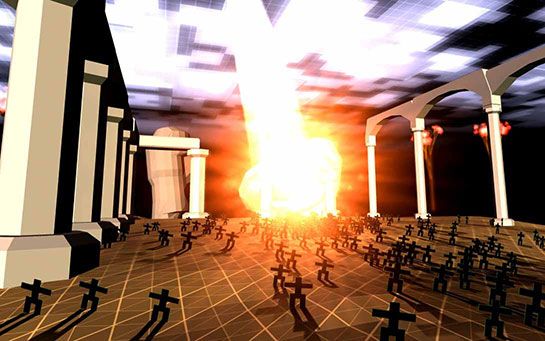

Introversion Software has announced Arise Dark Lord, an action-strategy hybrid RTS due in 2027 with an itch.io prototype, Steam wishlist page, and a dark lord management pitch that should interest Prison Architect fans.
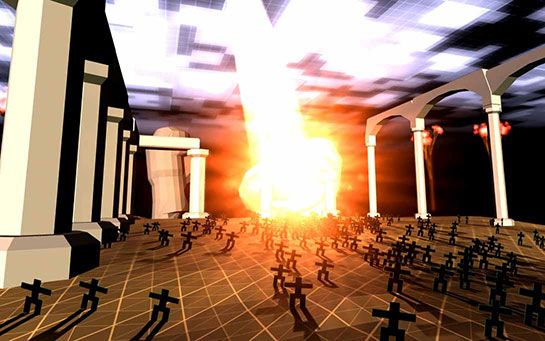
Image: introversion.co.uk
Introversion’s next game puts the villain economy at the center
Introversion Software has announced Arise Dark Lord, an action-strategy hybrid RTS planned for release sometime in 2027, with a free prototype already available through itch.io and a Steam page open for wishlisting. The immediate hook is simple and useful: instead of managing a prison, a starship, or a cold-war endgame, players manage the growth of an evil realm while directly controlling the Dark Lord who anchors it.
The reveal, reported by GamingOnLinux from a press email and echoed by Introversion’s own itch.io announcement, describes a game that blends tower defence, base building, RTS command, and direct avatar control. That mix creates the central tension around Arise Dark Lord: Introversion is returning to systemic management territory that Prison Architect fans understand, but the new game appears to be pushing that expertise into a more active, combat-forward structure.
According to the itch.io post from Subversion Studios, the developer has been working on Arise Dark Lord “for a few months” and calls it the eighth game made with Introversion Software, naming Prison Architect, DEFCON, Darwinia, and The Last Starship as earlier touchstones. That framing matters because this is not being positioned as a studio merely lending a logo to a genre exercise. It is being introduced as part of Introversion’s long-running line of systems-driven PC games, even if its fantasy premise looks louder and bloodier than the studio’s most famous management sim.
What the Arise Dark Lord reveal actually confirms
The confirmed premise is that players are the Dark Lord, tasked with raising an undead army and crushing human settlements before the world can destroy the player’s Dark Tower. The same core pitch appears in the GamingOnLinux press-email excerpt, the itch.io announcement, and the TapTap listing: your power grows through sorcery, army building, resource extraction, fortification, and eventual conquest.
Mechanically, the announced feature set points to a loop built around expansion pressure. The sources say players will directly control the Dark Lord using keyboard, mouse, or joypad, cast spells powered by Mana gained from kills, summon orcs, raise zombies, corrupt forests and mountains for resources, and fortify the Dark Tower with turrets, siege weapons, barricades, and cursed traps. Sacking human cities or ruining fortresses grants Insight, which is used to upgrade the spellbook.
That is enough to sketch a strategic economy without pretending the full design is known. Mana appears to reward aggression. Insight appears to reward successful offensive campaigns. Resources come from corrupting the landscape, which suggests expansion may carry a visible territorial cost. Defensive construction exists because the humans eventually counterattack. If these systems stay intact through development, Arise Dark Lord’s meta will likely be about timing: when to farm kills for spell power, when to convert terrain into industry, when to invest in tower defenses, and when to march out before the enemy response scales past your preparation.
What is not confirmed is equally important. The sources do not provide a price, final system requirements, full platform list, campaign structure, multiplayer plans, length, or early access strategy. The 2027 date is broad, and both GamingOnLinux and TapTap describe the game as in development or early development. Treat the prototype as a signal of direction, not a guarantee of final balance, content, or release cadence.
The Prison Architect connection is about systems, not theme
The phrase “from the creators of Prison Architect” is doing real work in the Arise Dark Lord reveal, but players should be precise about the comparison. Prison Architect’s appeal came from layout, constraint, failure cascades, labor allocation, flow control, and the moral discomfort of optimizing a prison. Arise Dark Lord swaps that setting for overt dark fantasy conquest, yet the reveal suggests a familiar Introversion interest in pressure systems that push back against the player’s build order.
Prison Architect fans should watch the Dark Tower loop in particular. A base that must be fortified against escalating counterattacks is a natural fit for the studio’s management instincts. The interesting question is whether Arise Dark Lord turns villainy into a readable production chain: kills into Mana, conquest into Insight, corrupted land into materials, defenses into survivability, and armies into map control. That is where the Prison Architect lineage could become meaningful rather than cosmetic.
There is also a business-history reason this reveal lands differently in 2026. GamingOnLinux notes that Introversion sold off Prison Architect, and the Wikipedia development summary for Prison Architect 2 says Paradox Interactive acquired the title from Introversion in 2019. That same summary says Prison Architect 2 is being developed by Double Eleven and Kokku, published by Paradox, and has been delayed indefinitely for performance and content improvements after several earlier date changes. In that context, Arise Dark Lord is not competing as the next Prison Architect. It is Introversion’s own new bet, arriving while the brand most associated with the studio now lives under another publisher’s pipeline.
For players, that distinction should temper expectations. Do not expect Prison Architect with skeletons. Expect a studio known for readable simulations to test how much management tension can survive inside a more immediate action RTS format.
The strongest design question is control, not evil spectacle
The most revealing phrase in the announcement is “direct control of your Dark Lord avatar.” Hybrid RTS games often struggle when the player is asked to be both commander and unit. If the avatar is too powerful, base building becomes background admin. If the avatar is too weak, direct control becomes busywork that distracts from the actual strategy. Arise Dark Lord’s announced economy gives Introversion a possible solution by tying the Dark Lord’s violence to Mana generation and spellcasting.
That creates a potentially strong risk-reward structure. Sending the Dark Lord into danger could accelerate your magic economy, but it could also pull attention away from defenses and resource conversion. A well-balanced version of this game would make the player decide whether to personally harvest power at the front, shore up the Dark Tower, or spend attention ordering armies and expanding corruption across the map. A weaker version would collapse into either tower defense with a controllable mascot or action combat with occasional building menus.
The reveal does not show enough to judge which direction it will take. PCGamesN’s Lauren Bergin says she played the Prologue during a lunch break and praised its parchment-like art style, Tolkien-adjacent fantasy feel, and immediate fun, but that is an early hands-on impression rather than a review of a finished game. The practical read is that the prototype is where strategy players should look first. If the control scheme already makes it easy to swap between spellcasting, construction, army pressure, and defense repair, Arise Dark Lord has a foundation. If those layers fight each other, the 2027 runway will need to solve it.
Platforms and availability are still messier than the premise
Right now, the cleanest availability facts are that Arise Dark Lord has a playable prototype on itch.io and a Steam page for wishlisting. PCGamesN links to both the itch.io Prologue and the Steam listing, while TapTap’s page also points its pre-register button to Steam. GamingOnLinux lists the game under Proton/Wine, which suggests Linux interest through compatibility rather than confirming a native Linux build.
The TapTap listing creates a small platform ambiguity. Its page header presents Arise Dark Lord as a latest-version page for Android/iOS, but the actual pre-registration link goes to Steam, and the source text provided does not confirm a mobile version, app-store release, or mobile-specific build. Until Introversion or a storefront listing states otherwise, the safest reading is that Steam and itch.io are the concrete places to follow the game, with mobile availability unannounced.
There is also no confirmed price. There is no confirmed early access label in the supplied sources. There is no confirmed console version. Joypad support is mentioned in the announced control options, but controller support does not equal a console launch. Strategy fans burned by vague platform assumptions should wait for Introversion’s store pages or direct posts to spell out release targets closer to 2027.
A prototype-first reveal fits Introversion’s long game
The itch.io announcement asks players to “play and review the prototype” and share thoughts, which makes the Arise Dark Lord reveal feel less like a polished marketing beat and more like an early systems test in public. That approach suits a game whose success will depend on balance, readability, and pacing rather than premise alone. The fantasy is easy to understand. The hard part is making the economy of evil stay legible when the player is simultaneously a commander, builder, defender, and spellcaster.
For Prison Architect players, the reason to watch Arise Dark Lord is not nostalgia. It is the possibility that Introversion can translate its talent for player-made systems into an RTS where every aggressive action feeds a wider strategic machine. The announced Mana, Insight, resource extraction, army summoning, and tower defense loops all point in that direction, but the prototype will need to prove that those loops reinforce one another instead of competing for attention.
The best practical advice is to treat Arise Dark Lord as a 2027 strategy prospect worth wishlisting and sampling early, especially if you enjoy management games where failure comes from your own overextension. Play the itch.io prototype if you want to see the shape of the design now. Wait for firmer Steam details if you need price, requirements, platform certainty, or a clearer sense of how much content the final release will contain.