
How a PvPvE extraction shooter accidentally turned into a hotspot for virtual war photojournalists, and why Arc Raiders’ visual design, pacing, and tools are perfect for in-game photo stories.
Arc Raiders launched as a tense extraction shooter about outgunned scavengers dodging orbital machines and desperate Raiders. Somewhere between the bombardments and botched extractions, players discovered something else hiding in its dust storms and neon skylines: a remarkable canvas for in-game war photography.
A small but dedicated community now logs in not to top leaderboards, but to document the conflict. They roam the war-torn landscapes with binoculars out, not rifles, looking for stories instead of kills. Through their work, Arc Raiders is starting to feel less like a pure loot treadmill and more like a living war documentary where every raid might become a spread in a virtual magazine.
Why Arc Raiders Works So Well As A War Photography Sandbox
Plenty of shooters look good in screenshots, but Arc Raiders offers a specific blend of mechanics and aesthetics that rewards embedded-photojournalist play.
On a systems level, the standout is aggression-based matchmaking. If you spend a session shooting anything that moves, the game quietly routes you into more hostile lobbies later. If you holster your aggression, you tend to meet others doing the same. For virtual photographers, that means they can gradually carve out relatively peaceful instances where most strangers are either chill or at least curious enough to let you approach with binoculars in hand.
That soft social contract pairs nicely with Arc Raiders’ pacing. Raids are built around long walks, cautious looting, and stand-offs with towering ARC machines that telegraph their presence from far away. There is a lot of downtime between spikes of chaos. Photographers use those lulls to walk with random squads, ask for makeshift photoshoots on voice chat, or just hang back while firefights unfold, waiting for the exact frame where a Rocketeer staggers under fire or a Leaper sails across the moon.
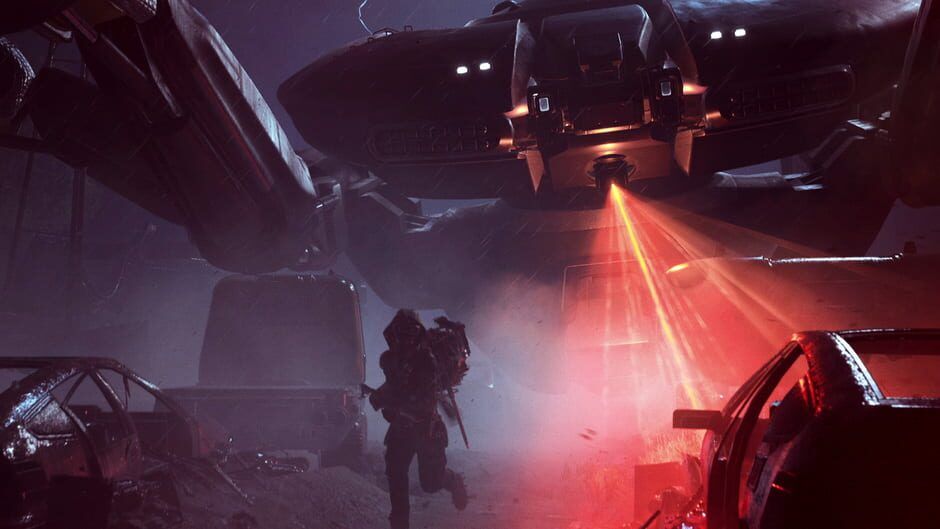
Visually, the game is unusually readable and expressive. Harsh spotlights cut through stormy nights, tracer rounds sketch glowing geometry across the sky, and the machines themselves are imposing silhouettes you can recognize instantly at a distance. The lighting favors strong contrasts and long shadows that make even hurried shots feel composed. Arc Raiders looks like a space-age newswire feed even before someone points a virtual camera at it.
Finally, Embark has quietly filled the sandbox with toys that support non-lethal play. Fireworks, instruments, and other social items give players a way to say "I’m here for vibes" without typing a single word. It all nudges the community toward a culture where it feels plausible that someone walking toward you with binoculars might just want a portrait.
The New Embedded Correspondents Of Arc
Polygon’s feature on the scene spotlighted several of the creators treating Arc Raiders as their own front line.
TopsideFlicks, a real-world photographer and videographer, approaches each session like a field assignment. His videos are less montage and more reportage. You ride along as he and his squad pick up faint gunfire on the horizon, rush toward it with binoculars raised, and try to catch the moment a beleaguered Raider dives into an extraction elevator with backpacks bulging. In one frequently cited encounter, he and a friend spent nearly ten minutes tracking a downed player crawling for safety. They revived him under bombardment, then all three sprinted side by side through ARC fire, making it into the evac zone with seconds left. The clip plays like a war documentary that somehow forgot to include a HUD.
For stills, he relies on the game’s binoculars as a pseudo-lens, then color grades and tweaks in post. Some of his most shared images frame Arc Raiders as a conflict between silhouettes and light. A massive Queen frame peeking over a wall of muzzle flash. A lone Raider standing atop the Vigorosa building with lightning forking the sky behind them. A Leaper frozen mid-jump in front of the moon like a mechanical eclipse. None of these shots were staged in a private lobby. They are live rounds and live stakes, captured in open matchmaking.
Then there is Garntrpg, who treats Arc like a sci-fi street photography project. He wanders the map, introduces himself over comms, and asks if people want a shoot. When someone with a mic responds, they will often follow him up to rooftops or into bombed-out courtyards to pose. One of his favorite pieces uses clever edits to mimic 19th century chronophotography. A Raider appears multiple times in a single frame, sprinting along a line between two silos on the Spaceport map. It looks like experimental film dug up from a classified archive.
Around them, a wider constellation of creators has emerged. TikTok user Red Raider posts short, punchy clips that treat each raid as a self-contained micro-story rather than a highlight reel of kills. On Instagram, SperanzaFrontline curates moody stills that lean into the game’s retro-future hardware and harsh lighting. ItsTheJimJam on YouTube cuts together longer field reports from multiple raids, threading small human moments between bursts of machine violence.
None of them are using a built-in photo mode. They improvise with binoculars, careful positioning, and heavy post-editing. That improvisation is part of the appeal. There is a layer of risk and craft in every frame because the person taking it could be downed at any moment.
How Arc Raiders’ Design Serves Virtual Photojournalism
Looking at the game through a war photography lens reveals how several design choices unintentionally serve this community.
The encounter design tends to telegraph drama from far away. ARC machines announce themselves with audio cues and visible patrol routes. You often see a Queen or Bombardier silhouetted against the horizon long before you engage it. That gives photographers time to position themselves, track flanking squads, and frame the entire fight as one continuous scene. Because enemies and Raiders both move in clear arcs across open ground, it is easier to anticipate compositions than in cramped corridor shooters.
Environmental storytelling also plays a major part. The ruined suburbs, skeletal high-rises, and battered infrastructure give nearly every angle a narrative hook. A shot of a Raider lighting a flare beneath a toppled tower immediately reads as a search-and-rescue operation whether or not that is what was actually happening. Embark’s choice to emphasize verticality and skyboxes full of shifting weather and orbiting hardware means even wide shots have layers. Background storms and distant bombardments lend context to whatever small moment is unfolding in the foreground.
The audio design might not seem like a photography tool at first, but it effectively acts as an early-warning system and direction finder. Distant gunfire, mechanical shrieks, and extraction sirens tell you where stories are breaking out long before you can see them. Many photographers talk about “chasing the sound” across the map, racing to where the noise crescendos so they can arrive just in time for the climax.
Even the risk-reward loop of extractions plays into storytelling. Because loot matters, using your last stim to revive a stranger or waving instead of shooting is a meaningful choice. When someone decides to stop and pose on a rooftop under live fire, that decision carries weight. Those stakes are visible in the images that come out of each raid.
Tips For Capturing Striking Arc Raiders Shots
You do not need to be a professional photographer to get compelling images out of Arc Raiders. You just need to lean into how the game already flows.
Treat your binoculars like a prime lens. Move your character until the framing feels right rather than trying to zoom endlessly. The limited field of view forces stronger compositions. Think in terms of foreground, subject, and background. Frame Raiders against key landmarks, moving ARC silhouettes, or a break in the weather so the shot tells a story at a glance.
Use sound as your assignment editor. When you spawn, pause and listen. Gunfire to your left and a machine screech to your right means you already have two possible stories. Pick one, sprint toward it, and assume that whatever is happening will escalate by the time you arrive. You are not just photographing a static scene. You are catching a moment inside a moving timeline.
Communicate clearly when you approach other players. Sprinting in circles with your firearm lowered, spamming emotes, or literally saying you are a photographer over comms lowers tensions. Once someone understands you are there to shoot photos, not people, they are far more likely to cooperate. Many community photographers also keep a second loadout for those sessions, leaning into supportive items and avoiding weapons that encourage long range ambushes.
Chase contrast and motion. You can coax cinematic frames out of simple encounters by positioning yourself opposite any strong light source. Put the sun, a spotlight, or bright tracer fire behind your subject so they become a sharp silhouette. Time your shots around leaps, vaults, and dodges. A Raider mid-slide under a machine’s beam or mid-hop into an elevator always reads more dramatically than a static pose.
Finally, accept failure as part of the craft. You will miss extractions because you stopped to frame something. You will get downed by someone who did not see your peaceful intentions. The community’s best war photographers treat those deaths and botched shots as part of the story, not wasted runs.
Beyond Extraction Shooter: How War Photography Shapes Arc Raiders’ Identity
Embark Studios talks about Arc Raiders as a long-term franchise, and the usual levers for sustaining a PvPvE game are obvious. More weapons. More machines. More maps. What the war photography scene shows is that the game already has something rarer and more durable. It is becoming a place where people tell stories about being there.
Virtual photojournalists inadvertently act as archivists of Arc Raiders’ culture. Their galleries capture not just big set pieces, but the quiet norms that have evolved in its lobbies. The way most players hesitate before shooting someone who walks up without aiming. The improvised ceasefires around downed Raiders. The shared panic of barely making an extraction with strangers you will never see again. That social texture is as much the identity of Arc Raiders as its loot tables.
By circulating these images on YouTube, TikTok, Instagram, and Discord, photographers export that identity far beyond the game’s core PvP community. Someone encountering a Leaper-in-front-of-the-moon shot for the first time does not just see “another extraction shooter.” They see a specific, stylized war zone full of human stories. That is the beginning of brand recognition that sticks even if you are not the type to grind weekly challenges.
If Embark leans into this, even lightly, Arc Raiders’ long-term arc could look very different from its competitors. A dedicated, era-appropriate camera item or a spectator-friendly theatre mode would not just please niche artists. It would acknowledge that part of the game’s appeal lies in being photographed, documented, and remembered. In a crowded field of shooters fighting over the same tactical vocabulary, Arc Raiders has stumbled into something more personal. It is a war story generator where some people show up to fight and others show up to make sure those fights are never forgotten.