
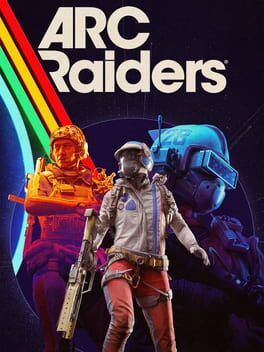
Embark Studios is testing PvE-only matchmaking in Arc Raiders, raising big questions about extraction tension, player retention, matchmaking, and whether a permanent PvE split can work.
Image: IGDB
Store links: ARC Raiders on Steam
Embark is testing the split players have already made
Embark Studios is preparing a limited Arc Raiders PvE matchmaking test from October 13 to October 20, and executive producer Aleksander Grøndal has openly said a future split between PvE and PvP play is possible. That is the concrete development here: the studio is no longer treating PvE-only Arc Raiders as a message-board fantasy. It is putting a version of the idea in front of players and watching what breaks.
In comments to GamesRadar+ reported by Eurogamer, Grøndal said, “I mean, the community is already split along those lines.” Asked whether the game could eventually represent that divide, he answered, “Quite possibly.” He added that Embark needs to respect how players want to enjoy the game, even when that does not fully match how the studio originally designed Arc Raiders to work.
The confirmed test is narrower than a full Arc Raiders PvE mode. According to Eurogamer’s report and Embark’s own blog post, the test toggles an option to opt into PvE matchmaking, where Raiders cannot damage each other. Solos, duos, and trios will still be matched into the same sessions. Night Raids and the upcoming Frigate are not part of the test. Embark has also warned that the trial is “somewhat limited around some of the higher-end stuff” because the mode has a chance of affecting the broader experience.
That last caveat is the story. An Arc Raiders PvP split could give co-op players a cleaner way to fight ARC machines and extract without being hunted by other squads, but extraction shooters are built on pressure. Remove hostile players and the game has to find a new source of tension, a new economy balance, and a new reason for squads to keep coming back.
What Grøndal actually said, and what he did not promise
The strongest quote from Grøndal is also the easiest one to overread. “Quite possibly” is not a product announcement. It is an executive producer acknowledging that the player base may already be divided enough for the game to eventually support that divide in its structure.
Eurogamer reports that Grøndal framed the idea as possible, then immediately pointed to the design cost. “Of course, it creates some challenges on our end,” he said. “We need to figure out what we really mean by that.” Insider Gaming, also citing the GamesRadar+ interview, highlights the same concern around tension, economy, and the player base ahead of the October test.
Embark’s blog is even more cautious. The studio says plainly that “it’s possible that this will not work” and that the test “is not a promise that there will be a PvE mode in the future.” It also says players should take the test as an indication that Embark is “seriously considering it.” That is the line to hold: Arc Raiders PvE is under active consideration, and a test is scheduled, but a permanent separate mode is unannounced.
For players deciding whether to reinstall, squad up, or wait, the practical answer is simple. The October test is the thing to watch. A permanent PvE playlist, separate progression rules, loot restrictions, exclusive rewards, or a full Arc Raiders PvP split have not been confirmed in the provided source material.
The PvE push comes from Arc Raiders’ own history
The PvE demand is not coming out of nowhere. Embark’s blog says Arc Raiders was conceived seven years ago with a very different shape: a raid-based PvE co-op game with looting mechanics. The studio says that concept showed promise but ran into significant challenges, leading Embark to reset development and build the high-tension PvPvE extraction adventure players know today.
That history changes how the current debate lands. Players asking for a dedicated Arc Raiders PvE mode are not asking for a completely unrelated side activity. They are pushing toward an earlier version of the game’s identity, one where the main enemy pressure came from machines rather than other Raiders.
The current version of Arc Raiders, as described by Embark, is a PvPvE extraction adventure. That structure makes other players part of the map’s threat model. A gunfight is not only a test of aim and positioning. It is also a timing risk, because loud fights can drag attention toward your squad, burn resources, and turn a clean extraction route into a third-party mess.
A PvE-only toggle changes that loop immediately. The ARC machines still matter, but the mental stack is different when every human silhouette is no longer a potential ambush. For some players, that means less frustration and better co-op flow. For others, it cuts directly into the heartbeat of an extraction shooter.
The numbers explain why Embark is taking this seriously
Embark’s player data, as cited by Eurogamer, shows a community that is not cleanly aligned behind one style of play. The studio says 37 percent of players are friendly co-op players, 34 percent are pure PvP players, and 27 percent move between the two. Embark also says more than 70 percent of friendly players and even 40 percent of PvP players have expressed a desire for fewer hostile encounters, while 51 percent of the surveyed player base has expressed interest in a dedicated PvE option.
Those numbers are the business case for experimentation. If half the surveyed audience is interested in dedicated PvE, ignoring that signal risks bleeding players who like the world, guns, movement, and loot loop but dislike constant human pressure. In extraction shooters, churn can hit hard when newer or more casual squads feel they are serving as loot delivery for sharper teams.
At the same time, the data does not say the player base wants the same solution. “Fewer hostile encounters” is not identical to a fully separate PvE mode. Some players might want lower player density, smarter matchmaking, safer onboarding, reputation systems, event-based co-op, or separate queues only at certain times. Embark’s test will likely help define which version of the demand is real in practice.
For an FPS audience, the distinction matters. A mode that lowers hostility while preserving uncertainty plays very differently from a mode that disables Raider damage outright. One tunes the pacing. The other rewrites the social contract of the match.
Tension, economy, and matchmaking are the real pressure points
The cleanest argument for PvE-only Arc Raiders is accessibility. Extraction shooters can be brutal when one bad fight wipes a run, deletes your haul, and sends your squad back into the queue tilted. A separate PvE option could give co-op players a place to learn maps, test weapons, gather resources, and fight ARC enemies without being instantly punished by squads built for PvP.
The cost is that extraction tension depends on uncertainty. In PvPvE, a distant shot changes your route. Footsteps near a doorway force a decision. A squad that could kill you might also ignore you, negotiate, or panic. That human volatility creates the spikes that keep the genre alive. If Raiders cannot damage each other, Embark has to replace that volatility with AI pressure, objective friction, scarcity, timers, or encounter design strong enough to keep extraction from becoming routine farming.
The economy is the next problem. Grøndal told GamesRadar+, as reported by Insider Gaming, that the limited nature of the test around higher-end content is tied to the chance that PvE could affect the overall experience. If PvE shares the same progression and loot with PvPvE, a lower-risk queue could become the optimal way to farm gear. If PvE has separate rewards or reduced output, players may see it as a training lane rather than a full mode. Either path has tradeoffs.
Matchmaking also gets harder, not easier. Splitting queues can improve match quality for players who know what they want, but it can also thin population across solos, duos, trios, regions, time windows, and skill bands. Embark has confirmed that solos, duos, and trios will be placed into the same PvE sessions for the test, which suggests the studio is keeping the matchmaking pool broad while it gathers data.
A permanent split could help retention, if Embark protects the core loop
The upside of a permanent Arc Raiders PvE mode is long-term retention. Some players bounce off extraction shooters because the punishment curve is too steep, not because the shooting, world, or co-op fantasy fails. A PvE lane could keep those players active, give squads a lower-stress session option, and create a healthier ramp into higher-risk play.
There is also a social benefit. PvE lets mixed-skill groups stay together. In a PvPvE extraction shooter, one high-skill friend can carry fights, but one low-confidence player can also feel like a liability. A dedicated co-op space can turn Arc Raiders into a game groups keep installed between competitive sessions, especially if the AI combat and objectives hold up.
The risk is dilution. If PvE becomes the safest and most efficient progression route, PvPvE loses stakes. If PvP-focused players see fewer targets and longer queues, the main mode can feel emptier. If PvE lacks meaningful rewards, the audience asking for it may treat the test as a tease rather than a solution. Embark’s challenge is not simply whether to add the toggle. It is how to make both sides feel intentional.
For now, the best read is cautious optimism. Embark Studios has confirmed a limited PvE matchmaking test, shared data showing real interest in less hostile play, and acknowledged that a future split is possible. It has also said the test may fail and does not guarantee a permanent PvE mode. That is the right amount of uncertainty for an extraction shooter experiment with real consequences.