
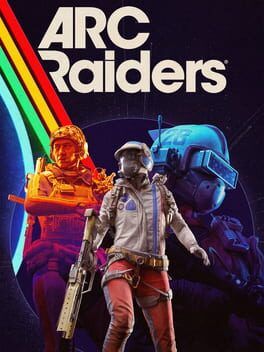
With ARC Raiders past 12 million sales, Embark Studios is talking openly about “escalating” PvE with much larger ARC threats. Here’s how supersized robots could reshape builds, co-op tactics, and even the game’s servers in Year Two.
ARC Raiders was always pitched as a world where the machines in the sky were the real enemy, and the players on the ground were just trying not to get stepped on. After a launch that has now surged past 12 million copies sold across platforms, that original pitch finally has the momentum and budget to grow teeth. Embark Studios is already talking about “escalating” the PvE experience with bigger ARCs and more dramatic robot encounters. The catch is that going bigger does not just mean higher health bars. It means new build demands, new co-op expectations, and a real risk of literally breaking the servers if they push too far too fast.
From a sales perspective, ARC Raiders is now firmly in the breakout-hit tier. Steam alone reportedly saw more than a million copies moved in December, which fed into a record revenue month for Valve’s platform. On top of that, Embark has celebrated crossing 12 million total copies by handing out a free in-game gift to everyone who logs in, a classic live service move that keeps lapsed Raiders checking in. That performance is not just a feel-good headline. It is why Embark can now talk in public about content that, only a year ago, would have sounded unrealistic for a brand-new extraction shooter.
Today’s top-end PvE in ARC Raiders is built around big-name threats like Queens and Matriarchs that already stress the sandbox. These fights force squads to balance damage, survivability, and utility in a landscape where human enemies can appear at any time. Players have become very good at deleting these bosses. Interviews with Embark’s design leadership make it clear that the studio is watching that mastery and asking how to keep PvE feeling dangerous again. The answer they keep circling is scale. Not just tougher variants of the same bosses, but ARC constructs closer in size and presence to the huge walkers that patrol the background of maps right now.
That jump in size has immediate consequences for buildcrafting. Current meta builds lean on high burst for burning boss weak points, reliable stuns or slows to manage adds, and enough mobility to reposition when another squad decides to third-party. If Embark delivers ARCs that tower over Queens and bring more moving parts to each encounter, players will need to think less like boss killers and more like raid engineers. That could mean a sharper divide between loadouts focused on structural damage and those tuned for crowd control, with utility modules that interact with specific ARC components rather than the whole health bar at once.
Imagine an encounter where an enormous walking ARC spans a ridge line, with multiple destructible subsystems hanging off its frame. One section might generate drones until it is disabled. Another might pulse area denial fields that punish static sniper teams. In that kind of fight, a squad stacked with four pure DPS builds would feel brittle and inflexible. Instead, Year Two theorycrafting is likely to revolve around role expression inside a shared gear pool. Players who have been hoarding high-tier support gadgets, defensive gear, or niche elemental effects may finally see those pieces move from novelty to necessity.
The PvPvE DNA of ARC Raiders adds another twist. Embark has repeatedly said the game is not pivoting to pure PvE, which means any escalation of the ARC threat has to coexist with other Raiders on the field. Bigger ARCs give the studio a tool to reshape how squads relate to each other. A truly colossal machine that roams a map could create a moving zone of extreme risk and extreme reward, pulling rival squads toward the same objective. That changes the default rhythm of extraction runs. Instead of small, isolated skirmishes around loot nodes, you get layered decisions about whether to cooperate temporarily under a giant robot’s shadow or try to backstab another team after they have done most of the work.
This is where behavior-based matchmaking and social systems start to matter more. If Year Two introduces events where multiple squads can meaningfully participate in a single ARC takedown, then Embark’s systems that try to group compatible playstyles will quietly shape how those moments feel. Aggressive players looking for constant conflict might be more likely to see chaotic multi-team brawls erupt under a walker’s legs. More cautious or extraction-focused players could end up in lobbies where silent cooperation emerges instead, as unspoken truces hold just long enough to bring the ARC down and grab what they can before the inevitable betrayals.
Technically, this vision is risky. Embark staff have been very clear in recent interviews that their internal conversations about supersized ARCs always end with the same question: will this blow up the server? Every extra moving limb, projectile, and AI agent has to be tracked and synchronized for every player in the instance. When you start layering several squads, swarms of adds, weather effects, and a machine the size of a small building onto the same server, the headroom that existed for tidy boss arenas shrinks fast.
The studio has already tasted both sides of that scale problem. Early server slam tests pushed capacity hard, with tens of thousands of players hitting the game at once. Live service holidays have highlighted how quickly things can wobble when concurrency spikes. At the same time, ARC Raiders is built on tech that wants to simulate convincing physics and reactive environments, so simply cutting fidelity is not an attractive long term option. Year Two’s bigger ARCs will likely arrive in carefully scoped formats that let Embark measure server strain in controlled doses, such as limited-time events or specific zones where only a set number of players and an oversized ARC are allowed to coexist.
For existing players, that probably means the first wave of escalated PvE arrives as opt-in content rather than something that takes over the entire game. Think new contract types on the board that flag the presence of experimental ARC variants, or event windows where a particularly huge machine is active on a single region. Those who enjoy the current power curve against Queens can keep farming them, while progression-minded Raiders head straight for the new threats and start figuring out which builds actually survive them.
Fence-sitters wondering whether to jump in for Year Two should expect a game that leans harder into its identity as a machine-haunted extraction shooter. The 12 million sales milestone and continued Steam revenue success mean ARC Raiders is not fighting for basic survival. Embark has room to experiment with elaborate boss encounters, larger maps, and more systemic events instead of just pumping out small balance passes. At the same time, all of these escalations will stay grounded in the core loop of gearing up, venturing out, reading the sky for danger, and trying to leave with more than you brought.
The clearest near term takeaway is that PvE in ARC Raiders is not about to get safer. Bigger ARCs point toward longer time to kill, denser bullet hell, and more mobility checks. Co-op squads that have been casually improvising their roles will feel pressure to coordinate earlier in each run, because walking into a giant ARC event with the wrong spread of tools could mean instant wipes and wasted extraction windows. Server-side, the dev team will be racing to find the line between spectacle and stability, instrumenting each new encounter to see how far they can push without lighting up red alerts in the backend.
If Embark can thread that needle, Year Two of ARC Raiders will be defined less by small tuning passes and more by landmark PvE encounters that give the whole community stories to tell. The machines in the distance may finally step out of the skybox and into your path. When they do, it will not just be another boss fight. It will be a test of how far ARC Raiders’ systems, players, and servers can bend before they break.