
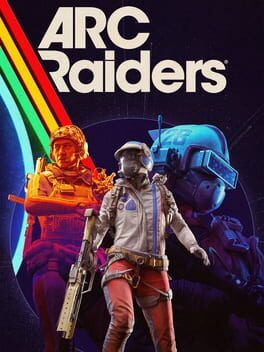
Flashpoint pushes ARC Raiders toward a nastier, more dynamic extraction loop with roaming Shredders, new map conditions, and fresh pressure points. We break down how the update lands, what it changes about moment‑to‑moment play, and whether it can slow the game’s player‑count slide.
ARC Raiders is about to find out how much punishment its players really want.
Flashpoint, the next major update, is not built around a shiny new region or a generous loot festival. Instead it tries to make the existing sandbox feel hostile again. Embark is taking enemies that used to be local threats, layering on a new global condition, and using both to turn routine routes into tense coin flips.
For a game that has bled more than half its launch‑month Steam peak according to PCGamesN, Flashpoint is very clearly a course correction. The question is whether sharper teeth, without a brand‑new map, is enough to pull lapsed Raiders back in.
Shredders off the leash
The headline change is simple on paper and messy in practice. Shredders, the heavy ARC units that were previously tied to Stella Montis, are being let loose on additional maps. Polygon’s breakdown and Embark’s own teases both frame this as the defining beat of Flashpoint.
In design terms, that one move hits several pressure points at once.
Stella Montis used to be the place you queued for if you were in the mood for high‑risk, high‑time‑to‑kill runs. You could route around Shredder patrols, learn their spawn habits, and build a loadout that respected their armor and stagger thresholds. By contrast, other maps became comfort picks, where the biggest variables were human opponents and weather.
Flashpoint deliberately erases that division. Once Shredders can show up on routes that previously felt predictable, every rotation, every extraction angle and even every third‑party attempt against another squad becomes more volatile. The psychological effect is significant. If you know any random Expedition might suddenly drop a Shredder between you and the evac beacon, you start packing more hard crowd‑control, more armor‑piercing tools, and fewer greedy economy picks.
It also quietly flattens the meta. When "play Blue Gate for a chill money run" is no longer a safe assumption, the gap between optimized farming routes and improvised scrambles closes. That is exactly the kind of systemic shakeup live‑service games lean on when they cannot ship a whole new destination every month.
Flashpoint’s new map condition and ambient danger
Flashpoint is not a pure enemy‑only patch. The roadmap and Polygon’s reporting point to a new map condition, visually teased with a lightning icon. Embark has not detailed the exact rules, but the messaging suggests a global modifier that can sit on top of any given run.
Taken at face value, it sounds like ARC Raiders stepping harder into the "roguelike extraction" space. One Expedition might play out under clean skies with standard patrol patterns, the next might roll the Flashpoint condition and suddenly elevate environmental or ARC interference across the board. When paired with roaming Shredders, this creates a layered difficulty profile that is less about static "easy" and "hard" maps and more about spikes that come from the matchmaker itself.
For returning players who bounced off Shrouded Sky because it felt comparatively tame, this is the key promise. Flashpoint wants to restore the early‑launch feeling where you had to read the horizon line and actually respect distant silhouettes instead of assuming you could brute force any patrol with a purple rifle.
Enemy pressure as content
A lot of extraction updates chase engagement by adding progression tracks or seasonal currencies. Flashpoint does include a new Player Project and associated rewards, but the more interesting design choice is to treat enemy pressure as the primary form of new content.
The expansion of Shredders and the likely arrival of additional ARC variants, such as the long‑teased Bishop, do not require players to learn a whole new tileset. They demand that you re‑learn the old ones. Routes that once felt like solved puzzles become partially scrambled.
When it works, this kind of refresh is efficient. Designers get to reuse a mature map library while still giving veterans fresh decision points. Encounter density and enemy mix become dials that can be turned every patch, similar to how Diablo‑style ARPGs remix affixes instead of shipping a new campaign each season.
The risk, though, is that a difficulty‑first update can feel like content subtraction for casual squads. If your comfort map now features Shredders and a heavier global condition but your stash does not contain high‑end tools, what felt like a nightly hangout can suddenly become a slog. Whether Flashpoint lands as thrilling escalation or fatiguing grind will depend almost entirely on how generous the tuning is around spawn frequency and reward scaling.
Timing and live‑service momentum
Flashpoint lands at a precarious moment for ARC Raiders. PCGamesN’s March snapshot notes that the game has fallen by more than 50% from its early peak on Steam, and Shrouded Sky failed to materially reverse that decline. The player base has not cratered, but it has clearly moved from viral breakout to established niche.
Dropping this update now is a statement of intent. Embark is shipping Flashpoint as the penultimate beat before April’s Riven Tides, which is confirmed to include a fully new map and a major ARC boss encounter. In other words, March is about re‑energizing the existing player ecosystem, April is about giving those energized players somewhere new to go.
Polygon’s release‑time guide also underlines a subtle but important point. By following the studio’s typical early‑morning UTC deployment window, Flashpoint rolls out in a way that lines up with daily reset culture across regions. That makes it easier to turn the update into an event, with streamers and clans planning day‑one runs and using the fresh danger to produce content.
In live‑service terms, that pairing of timing and cadence matters almost as much as the feature list. You want a patch like Flashpoint to hit just as players are debating whether to shelve the game for a season, not weeks after they already have.
Can Flashpoint fix the player‑count slide?
Realistically, Flashpoint on its own is unlikely to slingshot ARC Raiders back to launch‑week numbers. It does not have the single, easy‑to‑market headline of a new region that lapsed players can immediately visualize. From the outside, "more Shredders" is a harder sell than "brand‑new map."
Where it can move the needle is in retention and word‑of‑mouth. The March PCGamesN data paints a picture of a game losing players slowly, not imploding overnight. That suggests boredom more than backlash. A patch that meaningfully changes how every Expedition feels, and which makes familiar maps newly dangerous, is well aligned with that specific problem.
If returning players log in for Flashpoint and discover that their old comfort routes now have genuine teeth, they are more likely to stick around long enough to see Riven Tides in April. And if content creators can reliably generate close‑call highlight clips because Shredders keep crashing third‑parties, that can translate into a new layer of ambient marketing the game has been missing since its launch spike cooled.
The bigger question is sustainability. Flashpoint is the third major beat of the current season. To truly reverse the curve rather than simply flatten it, Embark will need to show that this kind of systemic shakeup is not a once‑per‑year event but a regular part of the game’s metabolism.
Verdict: a smart, sharp pivot, not a silver bullet
Viewed purely through a design lens, Flashpoint is a sharp move. It leans on ARC Raiders’ strengths – tense open‑environment combat and emergent chaos between squads and machines – by turning familiar ground unpredictable again. The new map condition and roaming Shredders give the game a more dynamic difficulty profile without demanding that the team ship another massive landmass overnight.
As an answer to the current player‑count slide, it looks like one half of a two‑step plan rather than the whole solution. Expect Flashpoint to re‑engage the faithful, make creator clips better, and stabilize daily peaks more than it dramatically inflates them. If Riven Tides lands hard with a genuinely fresh space and a marquee boss encounter, the combination could be enough to pull ARC Raiders back into the broader multiplayer conversation.
Taken alone, Flashpoint is best understood as a statement about how Embark wants to run this live game. Less about loot treadmills, more about fiddling with the threat model on a regular cadence. For a systemic extraction shooter, that is the right instinct. Now it just needs the player graphs to prove it.