
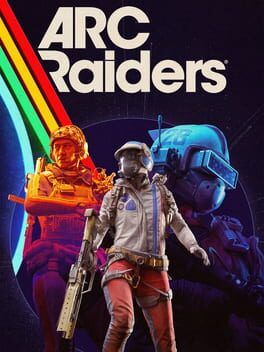
From Headwinds to a new map and giant ARCs, Embark’s January–April Escalation roadmap is a deliberate answer to Arc Raiders’ early endgame and variety problems. But is this monthly cadence enough to keep pace with DMZ’s heyday and the looming Marathon?
Arc Raiders has spent its first stretch trying to prove that a premium, PvE‑heavy extraction shooter can actually stick. With the newly revealed Escalation roadmap covering January through April, Embark is finally showing what “sticking” looks like for the rest of its first chapter.
Between Headwinds at the end of January and a new coastal‑feeling map in April, the plan is a month‑to‑month escalation of difficulty, variety and narrative stakes. For a game that launched with strong core gunfeel but thin long‑tail structure, this four month sprint is the closest thing Arc Raiders has had to a full reset of expectations.
What’s actually coming between January and April
Embark’s Escalation roadmap is structured as four themed drops: Headwinds, Shrouded Sky, Flashpoint and a finale built around a new map and giant ARC.
Headwinds – January’s systems‑first patch
Headwinds, landing January 27, is the most restrained of the updates on paper, but it quietly targets the players who have already hit Arc Raiders’ current ceiling.
First, it introduces a dedicated high‑level matchmaking pool for level 40+ Raiders. Up to now, topping out your account mostly meant running the same routes with less to chase. Headwinds makes endgame players match primarily with each other and tunes the experience around tougher runs and higher stakes. That should mean more aggressive ARC behavior, more lethal firefights and fewer lobbies where new players are dragged into content they are not ready for.
Alongside this, Headwinds adds a new map condition that can roll into raids. Conditions are Arc Raiders’ way of remixing familiar spaces, twisting visibility, traversal or enemy behavior across the whole run. Even a single strong condition, if it meaningfully alters how you read the sky or the ground, can do more to freshen routes than another side objective.
The update also launches a new Player Project, a long‑term community‑wide goal that tracks progress across the player base. These projects give high‑end players something persistent to chew through beyond their own inventories and may end up tying into how Escalation’s later narrative beats play out.
Shrouded Sky – February’s first real escalation
February’s Shrouded Sky is where the roadmap starts to look like a true live season instead of a balance pass.
Shrouded Sky brings another new map condition, but more importantly it adds a fresh ARC threat. Where current encounters sometimes blur together into variations of “big machine plus adds,” the new ARC type is pitched as a distinct menace, the kind of thing you will spot on the horizon and route around or toward.
A new Expedition Window arrives alongside it. Expeditions are Arc Raiders’ more curated sorties, and a dedicated window that shapes what is available at a given time is a lever for Embark to create mini‑seasons inside the season, with tighter loot tables and more explicit risk‑reward setups.
Shrouded Sky also folds in a new Raider Deck, essentially a seasonal progression track, and another Player Project. Combined with a still‑unspecified “map update,” February’s patch is the turning point where Escalation stops only reconfiguring knobs and starts sewing actual new objectives and routes into the Rustbelt.
Flashpoint – March’s high‑pressure layer
March’s Flashpoint update continues the monthly cadence with a focus on pressure and pacing.
Yet another new map condition is on the way, but the headliner is a separate ARC “menace” that Embark describes as a more aggressive battlefield disruptor. If the first new ARC threat in February is about creating distinct combat set pieces, this second one sounds closer to a roaming hazard that can destabilize even well‑planned runs.
Flashpoint keeps the live narrative thread moving, with Embark hinting at Shani and the Rustbelt being increasingly overrun. It also continues the Player Project cadence and includes an update to Scrappy, the AI companion that already acts as a kind of mascot and tutorial anchor. A smarter or more flexible Scrappy is not a bullet point in the way “new boss” is, but better support for solo or lightly coordinated squads could be crucial as difficulty ramps up.
April – a new map and a giant ARC to cap the chapter
Everything in Escalation is pointing to April, when a brand new map and a massive ARC enter rotation as the climax of this first post‑launch chapter.
The new map, teased as a more open, coastal‑adjacent space called Riven Tides in some previews, is meant to play very differently from the Rustbelt’s rust‑orange valleys. Wider sightlines, more vertical breaks and more complex extraction routes should all change how squads build for a run. If Embark sticks to its plan, the new area lands with its own map condition, bringing the total pool of possible twists across both maps up another notch.
Anchoring that map is a new, gigantic ARC. This is not just another elite; it is essentially a raid‑boss‑scale objective that is intended to give capped players something aspirational to hunt, in the vein of Tarkov’s dangerous bosses or DMZ’s hardest contracts. The key question is how tied this ARC is to routine play. If it is accessible and emergent rather than locked behind a narrow window, it could finally deliver the “oh no, it is here” moments the game’s marketing always promised.
Taken together, the January to April slate is a steady drumbeat: a new condition every month, two new ARC enemy types across February and March, a new curated Expedition layer, and then a whole new playground and mega‑boss in April, with the story watching the Rustbelt buckle under the pressure.
How this cadence stacks up against DMZ and Marathon
Extraction shooters have learned the hard way that pacing matters as much as gunplay. Sustained interest comes from a confident content rhythm, and this is where Embark’s plan invites comparisons to Call of Duty’s DMZ and Bungie’s upcoming Marathon.
During its prime, DMZ lived inside Warzone’s seasonal funnel. Major map updates, narrative beats and new missions arrived roughly once per big Call of Duty season, then were padded by weekly or biweekly tweaks. It was a heavy initial burst, followed by slower iteration, and then support was wound down entirely as Activision shifted focus. For players, that meant early seasons felt wild and experimental, but the mode eventually stagnated and was formally marked as no longer receiving content.
Arc Raiders’ Escalation phase is more concentrated. Four named updates in four months, each with at least one new systemic twist, plus a headline feature most months. That is a quicker tempo than late‑period DMZ, even if individual Arc Raiders patches are smaller than a full Warzone season. Crucially, Embark is committing to that cadence as a core pillar rather than an experiment bolted onto another flagship product.
Marathon sits in a different place: still unreleased but loudly marketed as a persistent extraction shooter with a long‑term seasonal model. Bungie has been clear that Marathon will live or die on regularly refreshed objectives, evolving zones and competitive stakes. It is also inheriting Destiny’s seasonal expectations, which means players will compare any early drought or thin season to years of finely tuned live service.
In that context, Arc Raiders is trying to plant a flag as the PvE‑forward alternative that still feels alive week to week. By lining up monthly drops and threading a single escalating story through them, Embark is implicitly promising something closer to a serial drama than the more fragmented, contract‑board feel of DMZ. Whether that is enough once Marathon arrives depends on how substantial each update actually feels under the hood.
Does Escalation fix Arc Raiders’ early problems?
Early criticisms of Arc Raiders clustered around two themes: an endgame that stalled out quickly and a sense that runs blurred together once you understood each hotspot. The Escalation roadmap reads like a direct response.
On the endgame front, high‑level matchmaking and the April mega‑ARC are the clearest answers. The former accepts that casual and capped players want different things from a 30‑minute drop, and tries to avoid the DMZ problem of lobbies mixing wildly divergent expectations. The latter finally gives Arc Raiders a true top‑end target, something you prep for over multiple nights instead of another slightly harder patrol.
The rest of the plan leans hard into variety. Monthly map conditions are structurally the right lever because they refresh every square meter of the map instead of adding a new icon in a corner you may ignore. New ARC threats, if they really alter how you move and fight, plug directly into that same fantasy. DMZ grew more complex over time, but its core loop never shifted far from contract chains in familiar buildings. Arc Raiders is trying to make the space itself feel less predictable.
There are still open questions. One new map across four months is a conservative pace, especially in a subgenre where discovery is half the appeal. If Riven Tides does not land with a strong identity and if the new large ARC feels too gated or too scripted, April could feel like a strong mid‑season event rather than a full chapter finale.
The other risk is in how deeply the new systems reach. A new Expedition Window or Raider Deck can either be a meaningful way to curate experiences or just another menu wrapper on what you already do. DMZ’s later seasons were full of restructured menus and mission boards that did little to change what your squad actually felt. Embark has to avoid that trap by making each monthly change visible in the first ten minutes of a run.
Still, judged as a “state of the game” check‑in, Escalation is the most confident Arc Raiders has looked since launch. There is a clear, time‑boxed story arc, a commitment to monthly systemic variety, and a tangible endgame target on the horizon. Compared to DMZ’s stop‑start experiment and Marathon’s future‑tense promises, Arc Raiders is doing the one thing extraction shooters often struggle with: showing, in detail, what you will be doing next month and the month after that.
If Embark can hit these dates and make each condition, ARC and Expedition feel distinct, the next four months could be enough to reposition Arc Raiders from a promising experiment into the PvE extraction shooter to beat, at least until Marathon finally lands and the genre’s next escalation begins.