
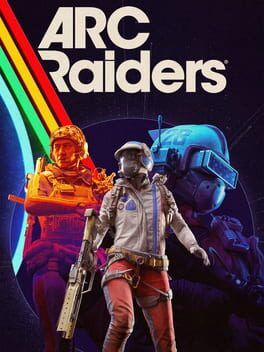
Embark’s Q1 2026 “Escalation” plan adds a new map, fresh ARCs, Expeditions, and high-level matchmaking in a bid to solve ARC Raiders’ retention problem and stake a claim in a crowded extraction shooter scene dominated by games like DMZ and Bungie’s Marathon reboot.
ARC Raiders has quietly become one of the more distinctive extraction shooters on the market, but like every game in the genre, it has run straight into the same wall: keeping people playing once the novelty wears off.
With the newly announced Q1 2026 “Escalation” roadmap, Embark Studios is trying to prove it has a long-term answer. Across four monthly updates from January through April, ARC Raiders is getting a new coastal map, multiple new ARC threats, changing map conditions, two Expeditions, a fresh Raider Deck, and a dedicated high-level matchmaking option. More importantly, the studio is using these pieces to tackle a familiar set of problems that have already chewed up projects like DMZ and now loom over Bungie’s Marathon reboot: endgame friction, stale maps, and progression that runs out of runway.
What Escalation Actually Adds
Escalation covers four named updates: Headwinds in January, Shrouded Sky in February, Flashpoint in March, and Riven Tides in April. Rather than one giant seasonal drop, Embark is opting for a monthly cadence that tries to give returning players a clear reason to log in every few weeks.
Headwinds is the systems-heavy opener. It introduces a new matchmaking option specifically for level 40 and above, along with a lighter new map condition and a fresh player project. The goal is to carve out space where high-level Raiders can reliably find like-skilled squads and appropriate danger without constantly stomping newcomers or sleepwalking through low-threat runs.
Shrouded Sky is where Escalation starts to feel like a proper mini-season. It adds a major new map condition in the spirit of the earlier Cold Snap event, a new ARC threat type, a map update, a fresh Expedition window, another player project, and a new Raider Deck that should push the meta in different directions. This mix of environment, enemy variety, and buildcraft is aimed at shaking up habitual routes and loadouts that have already settled into a comfortable rhythm.
Flashpoint is pitched as a scrappier but still meaningful beat, with yet another map condition, a new ARC threat, and another project. It is the glue month, designed less to wow on its own and more to keep the world in motion on the way to April.
Riven Tides is the clear tentpole. Embark is promising an entirely new map, a large ARC boss-tier machine, a new map condition, and a second Expedition window. In practical terms that means a fresh extraction space with its own sightlines, loot funnels, and PvPvE choke points, plus a marquee PvE threat that can anchor high-risk runs for geared squads.
Threaded through the whole Escalation phase are the quieter necessities of a live service: new quests, feats, trials, events, items and cosmetics, along with a steady drip of quality-of-life adjustments. On paper it looks like a full Q1 of reasons to return. The more interesting question is what this roadmap says about ARC Raiders and extraction shooters in 2026.
Fixing Retention Through High-Level Matchmaking
If there is one clear signal in Escalation, it is that Embark knows its long-term audience lives at the top of the progression curve. The dedicated matchmaking option for level 40+ players, arriving right at the start in Headwinds, is the most direct response yet to community concerns about match quality and enemy pressure.
ARC Raiders quietly experimented with aggression-based matchmaking before this point, trying to group players based on how much chaos they cause on the surface. Escalation pushes that philosophy further by acknowledging that veteran Raiders need both higher stakes and cleaner matches. By ring-fencing level 40 and above, Embark can safely tune ARC density, map conditions, and loot tables around players who already understand the rhythms of the Rustbelt.
Compare that to DMZ, which struggled with a broad, undifferentiated pool. High-end trios running meta setups could end up in the same lobbies as experimental duos or casual drop-ins, creating lopsided experiences that felt bad on both sides. ARC Raiders’ new bracket is closer to how Tarkov partitions the early wipe experience from the late-wipe one, even if it stops short of a full reset.
It also serves an important social purpose. Extraction shooters are at their best when you recognize names, spot familiar squads, and build informal rivalries. A high-level pool increases the odds that your endgame runs happen against players who are just as invested, rather than a revolving door of newcomers and tourists.
New Map, New ARCs, New Routes
The other major pillar of Escalation is the April map, Riven Tides. Embark has billed it as a coastal or beach-like space, which instantly changes some of the basic assumptions that define the current Rustbelt. Sightlines, verticality, and cover density all shift when derelicts and dunes replace frozen refineries and snowswept valleys.
For an extraction shooter, a fresh map is more than visual variety. It is the chance to redraw risk and reward. Where are the new high-value loot spawns that invite greedy drops and late-evac ambushes? How do the new ARC patrol routes intersect with popular PvP angles? What does a full server actually look and feel like when everyone is racing for the same extraction points in a map that empties into the sea instead of a mountain pass?
That question is sharpened further by the promise of a new large ARC. The current roster of machines already creates a hierarchy of risk: some threats are ambient noise, others are hard pivots that can derail an entire run. A new apex machine in Riven Tides gives Embark a blunt lever to pull for endgame pressure. Put it on critical routes, tie it to rare loot, or make it the centerpiece of certain Expeditions, and suddenly the whole server has to decide whether to route around it or coordinate to take it down.
This is where ARC Raiders tries to differentiate itself from more grounded peers. Where DMZ leaned on human factions and AI soldiers, and where Marathon is likely to emphasize Spartan-style players and sci-fi arenas, ARC Raiders’ mechanical menace is the star. Escalation doubles down on that identity by increasing the number of named ARC threats and using changing weather and map conditions as a secondary antagonist.
Expeditions As Seasonal Anchors
The two Expedition windows baked into Escalation, one in Shrouded Sky and one in Riven Tides, are another key retention tool. Expeditions already function as curated, time-limited goals that ask players to approach the same spaces with different incentives, whether that is chasing unique rewards or opting into higher-risk, higher-payoff routes.
By slotting Expeditions into the second and fourth months of the roadmap, Embark is creating a tempo for the season: new matchmaking baseline in January, a big curated slice of content in February, a smaller shake-up in March, and then another headliner in April when the new map lands. It mirrors how successful live games like Destiny structure their seasons, but filtered through extraction logic where every new objective has to coexist with the ever-present threat of exfil failure.
That structure matters because extraction shooters, more than most genres, punish repetition. If the optimal path through a map is too stable, the experience calcifies quickly; if it is too chaotic, players feel like nothing they learn matters. Expeditions and rotating map conditions are Embark’s way of steering between those extremes.
The Broader State Of Extraction Shooters
Seen against the rest of the field, Escalation looks like a statement of intent. DMZ has wound down, Tarkov continues to iterate for a hardcore niche, and Marathon is still a promise hanging over the horizon. Smaller contenders tend to live or die on one question: can they create a sense of evolving stakes without losing the clarity that makes extractions thrilling in the first place?
ARC Raiders’ answer is to treat conditions, ARCs, and maps as modular dials rather than wholesale resets. Where Tarkov uses wipes to reset the economy and progression, and where Marathon is expected to tie a lot of its stakes to seasonal story beats and long-running character arcs, Embark is aiming for a rolling escalation model. Each month ratchets up weather, enemy variety, and long-term projects while preserving your gear, your Raider Decks, and your familiarity with the Rustbelt.
That has trade-offs. Without full wipes, veterans can build enormous long-term advantages, which is exactly why the level 40+ matchmaking pool exists. On the other hand, it allows for a more MMO-like relationship with your Raider. You are not just a disposable operator starting over each season; you are a persistent scavenger watching the world bend around you.
It also positions ARC Raiders differently from the trend of folding extraction into existing shooters as a side mode. DMZ lived in Call of Duty’s shadow and struggled for clear ownership over players’ time. Marathon, as a Bungie project, will have to sit alongside or overlap with Destiny in a similar way. ARC Raiders, by contrast, is extraction-first. Escalation underlines that by focusing almost entirely on the pillars that define runs: matchmaking, map variance, enemy composition, and long-term projects.
Will Escalation Be Enough?
The big unknown is how all of this will feel months from now. More map conditions and new ARCs only fix retention if they meaningfully change the stories that come out of your sessions. A coastal map that funnels everyone into two obvious extractions or a large ARC that feels like a sack of hit points will not keep lapsed players around for long.
Still, there are some smart bets here. High-level matchmaking acknowledges the social reality of extraction endgames. Monthly beats keep the community conversation alive instead of frontloading everything into a monolithic season. Expeditions and projects give structure to that conversation, while the new map and boss-tier ARC offer obvious tentpoles for streamers and dedicated squads.
In other words, Escalation is ARC Raiders making a claim: this is not a novelty side project in a fad genre, but a live game that expects to still matter once Marathon finally lands and the next wave of extraction experiments appears. If Embark can turn this roadmap into memorable runs rather than just a checklist of features, 2026 might be the year ARC Raiders stops being an underdog and starts defining what extraction shooters look like in their second decade.