
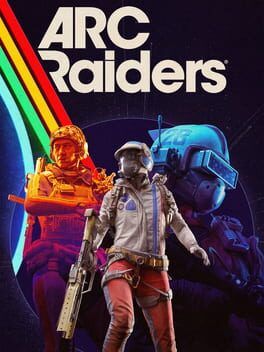
ARC Raiders turned a risky extraction experiment into a breakout hit. Here is how its design, events like Cold Snap, anti-cheat push, and unusually chill community are rewriting Embark’s roadmap for year two and beyond.
When ARC Raiders finally landed in late 2025, it had every reason to sink without a trace. The extraction space was already crowded and brutal, defined by unforgiving grinds and communities that often mirrored that hostility. Instead, Embark’s third person sci fi scavenger quickly sold over 12 million copies, settled into Steam’s most played charts, and pulled in a reputation as the “anti Tarkov.”
That success has already changed the studio’s plans. Design director Virgil Watkins now talks openly about a roadmap that is “more ambitious” than what the team had scoped before launch. The question is what that ambition can realistically look like in year two, especially as Cold Snap, anti cheat work, and constant community feedback begin to reshape the game’s identity.
A different flavor of extraction
The foundation of ARC Raiders’ success is that it understands why extraction shooters are stressful, then refuses to let that stress turn toxic. Tension in ARC comes from the same familiar sources as its peers. You are deep in hostile territory with gear you cannot afford to lose, ARCs are patrolling, rival Raiders are nearby, and extraction windows are finite. Embark leans into that pressure with dense sound design and sightlines that constantly threaten to expose you.
What is different is where the game chooses to relieve the pressure instead of doubling down on it. Time to kill against players is a touch more forgiving, encounter design encourages third person peeking and repositioning over instant deletion, and ARCs themselves are not just background noise. They are the spectacle that defines a raid. Fights against the big machines are dangerous enough that two squads will often cooperate on the fly, then ping each other goodbye and go their separate ways.
Watkins has said they want situations where players have to decide between tense alliances and nobody gets out alive outcomes. That push and pull is already happening organically because the core sandbox gives players room to communicate, gesture, and read intent rather than simply dumping them into instant kill ranges.
As Embark plots its second year, that social tension is likely to be the spine of any serious roadmap. Systems that deepen these emergent negotiations without undermining the extraction loop are the features worth betting on.
Post launch proof: Northline to Cold Snap
ARC Raiders’ first major updates have already shown how Embark thinks about growing the game. Northline brought the Stella Montis map and fresh ARCs, signaling that the studio is not interested in reskinning the same play space season after season. When Cold Snap arrived in December, it did something more important than simply change the scenery to snow.
Cold Snap layered new survival rules on top of familiar routes. Snowfall reduced visibility and changed how players valued elevation. New hazards forced Raiders to think about warmth, line of sight, and traversal in ways that made old extraction habits suddenly feel risky. Seasonal quests, the Flickering Flames events, and a themed Raider Deck tied progression to the event rather than treating it as a cosmetic overlay.
The event was far from perfect. Community breakdowns of Cold Snap called out uneven rewards for tackling the most dangerous ARCs and frustration with how optional Expedition resets were messaged. But as a design experiment it was a clear proof of concept that ARC Raiders can temporarily alter its rules in ways that matter moment to moment.
In a second year roadmap, this is likely to be the template. Not constant map churn, but recurring conditions that redefine existing spaces without invalidating player knowledge. A toxic storm rolling across Montis, a volcanic ash fall that changes thermal visibility, or blackout conditions that elevate audio over sight. These do not have to be fully new maps to feel like fundamentally new raids.
Community feedback as a steering wheel
The other surprise behind ARC Raiders’ breakout has been its community. PC Gamer highlighted how many solo players report positive, even wholesome, encounters during raids. Voice lines, pings, and the shared misery of dealing with ARCs create moments where squads opt to help instead of hunt. In a genre built on paranoia, ARC Raiders has somehow attracted players willing to holster their guns.
Embark has leaned into that culture with frequent experience surveys, regular megathreads, and visible community managers clarifying design intent. The studio’s communication around things like hidden nerfs, blueprint data, and event cadence has not always been perfect, but it has been direct enough that players feel entitled to push back.
Those pushes are shaping priorities. Community wishlists for 2026 repeatedly bring up three pillars. Better rewards and mechanical incentives for taking on large ARCs. Stronger support for duos and solos who want to avoid sweaty three stacks without losing progression efficiency. And clearer, less grindy paths to build experimentation so players can swap playstyles without wiping their entire locker.
Embark will not be able to grant every wish in year two, but the pattern is obvious. The game’s best stories come from social friction around extraction, not from spreadsheet perfect loadout optimization. Features that smooth out frustration without erasing that friction are likely to get greenlit first.
The anti cheat push and the integrity of the loop
All of that emergent storytelling relies on one fragile assumption. Everyone is playing by the same rules. As the game’s population exploded and the stakes of extractions grew, cheating became a critical threat to ARC Raiders’ long term health.
Embark has treated anti cheat less like a background service and more like a core feature. Regular ban wave summaries and technical breakdowns of exploit fixes are now part of the game’s news cycle. When a first person camera exploit briefly went viral, the studio responded with speed, closing off the advantage before it could normalize a meta that conflicted with the game’s camera design.
The reason this matters for the roadmap is simple. Extraction shooters collapse if players stop believing tight deaths are fair. Strong anti cheat work preserves the tension that underpins every raid. It also frees the team to invest in higher stakes mechanics, whether that is richer boss loot, more aggressive risk reward curves, or experimental rule sets in events.
Going into year two, expect anti cheat to stay visible. Embark has every incentive to keep broadcasting its efforts, both as a deterrent and as a reassurance to the community that their time and gear are not being wasted.
A cautious economy in a greedy genre
One of the most interesting notes in Watkins’ interview was his stance on trading. ARC Raiders lives in a genre that often gravitates toward player driven markets and meta gaming the economy. Watkins was blunt that this is not where he wants to take the game, especially once currency enters the picture.
The core fantasy of ARC Raiders is that every piece of gear you extract with is something you earned by surviving a hostile run. Turn that into a secondary game of market flipping and you risk shifting motivation away from the actual raids. The more power players can buy or arbitrage, the less they care about the moment they scooped that weapon out of a ruined hangar.
Instead, Embark is clearly leaning toward a richer but controlled NPC economy. More traders, each interested in different resources and item types. Progression paths that let you convert junk into targeted upgrades without flooding the environment with over tuned gear. Guardrails that keep the value of loot grounded in how it changes your odds during a raid rather than what it fetches on a market.
Year two seems like the right window to expand that system. The player base is large enough to support specialization, and the game’s mechanical depth benefits from letting people chase distinct builds. The trick will be giving traders personality and mechanical identity without turning visits to Speranza into a second job.
Speranza and the social hub question
Speranza itself might be the biggest question mark hanging over the next phase of ARC Raiders. Right now the underground colony functions mostly as a fiction wrapper for menus. You interact with it in cutscenes and UI screens rather than boots on the ground.
Internally, Embark nearly built a fully walkable hub. Time and scope killed that version, but Watkins is clear that the appetite is still there. He also knows what players hate about the worst examples of social hubs. Being forced to jog between vendors for basic tasks, bloated load times, and trivial systems stretched across a big empty space.
If a hub appears in year two, expect a hybrid solution. Speranza as a place you can walk through for socializing, showing off builds, or catching live event hooks, while still preserving fast menu access for quick sessions. Think of it as an optional layer of immersion on top of an efficient interface, not a replacement.
A hub could also be the perfect staging ground for future narrative events. Imagine raid groups forming in a physical space as sirens blare and an Arc incursion hits a particular sector, then everyone sprinting to the departure platform together. Used sparingly, that sort of spectacle could give live events a sense of occasion that a simple menu pop up cannot match.
Maps, conditions, and the spectrum of scale
What Embark has already confirmed is that 2026 will bring multiple new maps spanning a spectrum of size. Some will be smaller slices, others larger than anything currently in rotation. Just as important, Watkins stresses that every new playspace should arrive with thematically cohesive gameplay content, not just fresh terrain.
In practical terms, this likely means three parallel tracks for year two. Targeted refreshes of existing regions to keep routes and hot spots from going stale. A smaller new map tailored for faster, more intimate raids where early fights are almost guaranteed. And a larger, more sprawling environment built to support long range detection, protracted mech hunts, and multi squad standoffs.
Layered on top of those spaces will be conditions in the Cold Snap mold. Snowfall and blizzards were only the first test. A toxic swamp event that obscures vision but highlights machine silhouettes. Volcanic activity that reshapes traversal mid match. Orbital storms that intermittently knock out HUD elements and force squads to navigate by landmarks. None of these require permanent map additions, but together they can give ARC Raiders an impressive palette of scenarios without ballooning production costs.
What an ambitious but believable year two looks like
All of this paints a picture of a studio that is energized by success but still wary of overpromising. Watkins and his team are not talking about tearing up the rulebook. They are talking about turning the screws on systems that already work.
A realistic year two for ARC Raiders could look like this. A slate of map updates that include at least one compact new raid space and one marquee large scale environment. Recurring events in the spirit of Cold Snap that temporarily rewrite environmental rules and encourage players to relearn their habits. A significantly expanded NPC trader system that makes buildcrafting more intentional without devolving into an auction game.
On the social side, incremental steps toward a richer Speranza. Maybe that means limited access hub spaces tied to events first, then a broader rollout once the team proves they can avoid the classic pain points. Throughout, anti cheat remains a visible, ongoing campaign, allowing Embark to safely raise the stakes of raids without inviting exploitation.
Most importantly, every one of these moves is filtered through the identity that made ARC Raiders a breakout hit. An extraction shooter where cooperation is as memorable as betrayal, where the biggest threat in the room is often a machine rather than another player, and where the developers seem genuinely interested in listening when the community tells them what hurts.
If Embark can keep that balance intact while it chases its more ambitious roadmap, year two will not just be about retaining players. It will be about cementing ARC Raiders as the blueprint for what a modern extraction shooter can be when it values tension and humanity in equal measure.