
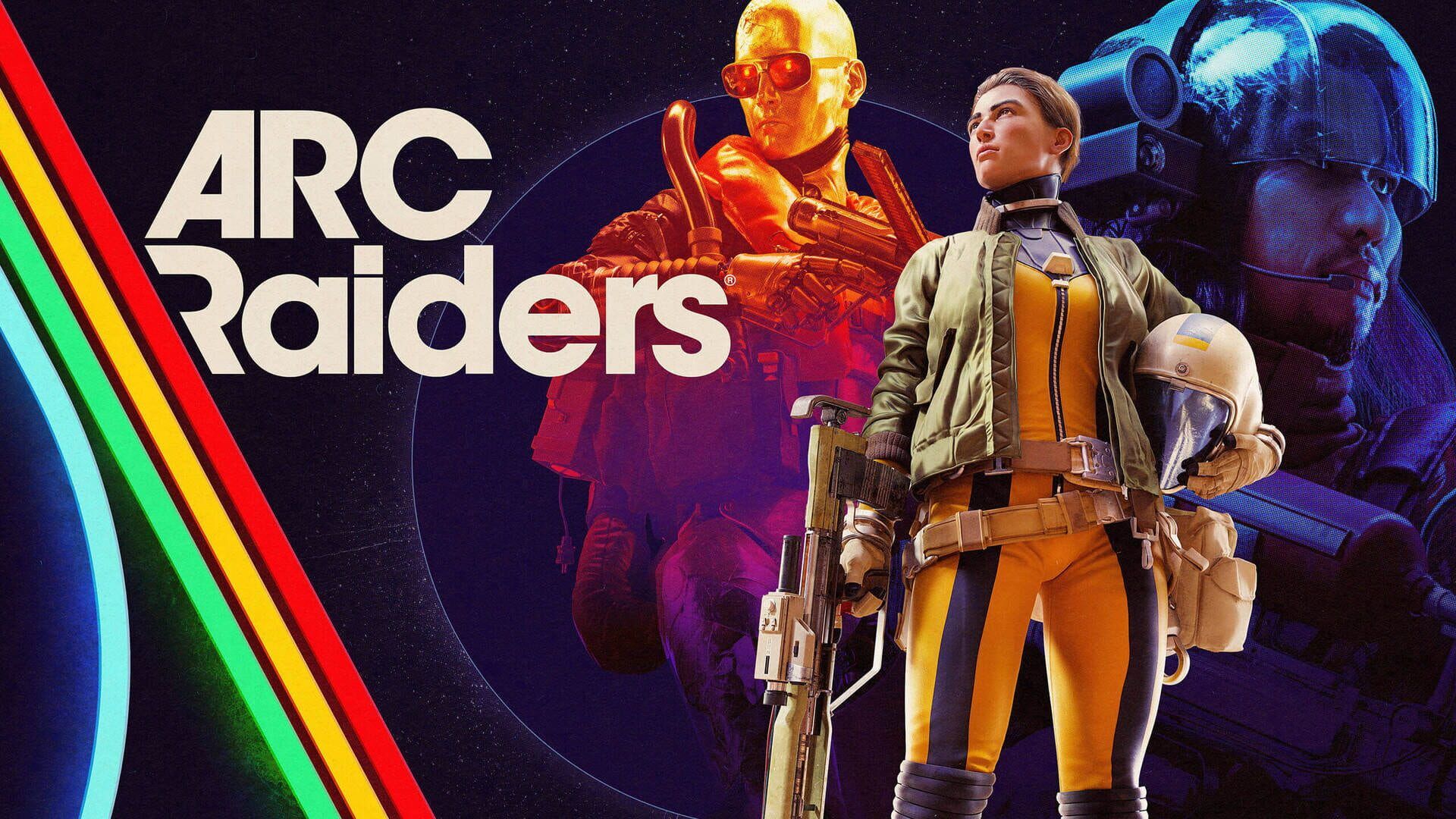

How Embark’s extraction shooter turned 3.2 million daily active users into a transmedia bidding war, and why Arc Raiders is suddenly one of gaming’s hottest IPs.
Arc Raiders was not supposed to be the safest bet in the room. A new IP from a new studio, releasing into a crowded field of live service shooters, launching as an extraction game rather than a battle royale or hero shooter. Yet within a year it has turned into the kind of breakout hit that analytics firms put in presentations and that TV executives name‑drop in pitch meetings.
According to analyst estimates, Arc Raiders has now pushed past 12 million copies sold, with around 3.2 million people logging in every day. In a market where even big sequels can struggle to hold attention, Embark Studios has turned its retro‑futurist co‑op shooter into a daily ritual for millions. That kind of stickiness is exactly what Hollywood is looking for, and the offers are already arriving.
From bold experiment to engagement monster
The most striking thing about Arc Raiders’ rise is that it grew, not just spiked. At launch it secured a strong foundation quickly. IGN’s 9/10 review called out its polished gunplay and “irresistible grind,” and the early player numbers backed that up, with several million copies sold and a peak approaching three‑quarters of a million concurrent players across platforms.
But live service success is about what happens after the launch weekend. That is where Arc Raiders separated itself. Throughout its first year Embark layered in seasonal updates, new extraction zones, and boss‑style encounters that gave the game a quasi‑raids cadence without breaking its drop‑in, drop‑out rhythm. Each update provided a clear reason to return and, critically, rewards worth grinding for.
The result is a curve that kept bending upward. Third‑party tracking from Alinea Analytics, cited by GamesIndustry.biz, pegs Arc Raiders at more than 12 million copies sold and roughly 3.2 million daily active users. Those are numbers in the Fortnite and Warzone conversation, especially for a brand with no legacy backlog to lean on.
Price has played a part. Analyst Rhys Elliott notes that a well‑timed 20 percent discount going into a major holiday window coincided with a surge in both sales and daily activity. But price cuts alone do not manufacture retention. Players only stick if they feel there is always one more meaningful drop or dramatic escape left in them, and Arc Raiders has leaned into that truth with a design that makes extraction itself the story.
Why Arc Raiders keeps people logging in
Mechanically, Arc Raiders borrows the broad extraction framework that has become familiar after Escape from Tarkov and DMZ. Squads deploy into a shared PvEvP space, race to gather loot and data, and then fight the clock and other players to get out alive.
What makes Arc Raiders different is how aggressively it layers spectacle and clarity on top. The towering mechanized Raiders that roam the maps are instantly readable threats, broadcasting danger and opportunity. Fights around them create natural hotspots that function almost like mobile control points, drawing in squads that know any successful takedown is going to be noisy and rewarding.
Embark then stacked a progression system that acknowledges the reality of modern gaming habits. Sessions are short enough to fit into an evening, but long enough that each run feels like a mini‑campaign, with incremental gear progression and base improvements visible after almost every successful extraction. It is the Destiny model tuned for people who might only have 45 minutes.
The studio’s controversial “aggression‑based matchmaking” in PvP also speaks to how intensely they think about engagement curves. By tuning lobbies dynamically around a player’s recent performance and aggression, the game nudges matches toward tense but winnable scenarios rather than stomps, which helps sustain that core feeling that you are always just on the edge of losing something valuable.
On top of all this, Arc Raiders has a visual identity that is instantly shareable. The mix of 70s‑inspired sci‑fi, chunky hardware, and ruinous vistas has made it a favorite across social feeds. Clips of last‑second extractions, squads being wiped by a stray Raider barrage, or perfectly timed ability chains travel well. That constant cycle of user‑generated moments feeds discovery, and discovery feeds sales.
The 3.2 million DAU moment
For a business story, the step from units sold to daily active users is where Arc Raiders truly becomes interesting. Selling 12 million copies in a modern marketplace is an achievement. Turning a quarter of that audience into people who log in virtually every day is the foundation of an IP.
The 3.2 million DAUs figure reported via Alinea tells us several things. First, retention is strong enough that a significant portion of launch‑period adopters are still playing alongside newer holiday buyers. Second, the game has achieved the critical mass necessary to keep matchmaking fast and varied across multiple regions and modes, which, in turn, reinforces retention. Third, Embark now sits on a live audience that can support aggressive experimentation with modes, collaborations, and events.
It is also a signal to potential partners that Arc Raiders is not just the hit of a quarter. DAU at that scale means a persistent social graph, in‑game economies that refresh every day, and a steady stream of data on what stories, enemies, and locations most fascinate players. In other words, the sort of ongoing relationship that movie and TV companies increasingly crave when they look at game properties.
Why Hollywood is circling Arc Raiders
Embark CEO Patrick Söderlund has already confirmed that “many” film and TV companies have approached the studio about adapting Arc Raiders. He has been careful to say that no one is officially working on a show or film yet, but he is also clear that the team is tempted and that he believes the universe “fits quite well” on screen.
This interest arrives in a broader context where game adaptations are no longer a curiosity. The success of The Last of Us and Fallout on streaming, plus the box office performance of Mario and Sonic, has shifted Hollywood’s risk calculus. Executives are actively hunting for properties that combine built‑in audiences with distinct worlds and clear visual hooks. Arc Raiders checks each of those boxes.
The game presents a near‑future Earth under siege by colossal automated invaders, framed through the eyes of underdog Raiders scraping together resistance in the ruins. It is an immediately understandable premise, easy to pitch in a sentence, with room for granular stories about individual crews and large‑scale arcs about the nature and origin of the machines overhead.
Visually, the game practically storyboards itself. Vast, desolate landscapes, improvised bases lit by flickering CRTs, and the towering silhouettes of Raiders cutting through clouds give cinematographers and VFX teams obvious toys to work with. The design language has enough retro flavor to stand apart from generic sci‑fi, but it is grounded enough to avoid becoming abstract or alienating.
Equally important, Arc Raiders arrives as a transmedia candidate at a moment when its community is still on the way up. The recent sales surge tied to pricing and holidays suggests plenty of new players are still onboarding. Social media is full of clips, fan art, and theories about the wider universe. For studios looking at multi‑year development timelines, that trajectory matters. The risk is lower when the curve is still climbing.
What a transmedia Arc Raiders could look like
Söderlund has hinted that Embark already has writers focused on the game’s universe, even if none are formally attached to TV or film projects. That internal narrative work is crucial to any adaptation. Arc Raiders’ in‑game storytelling is necessarily fragmentary, scattered across mission briefings, environmental detail, and community‑driven speculation. Turning that into a coherent series bible is the first step toward anything on screen.
A plausible path is a character‑driven streaming series that treats extraction runs as the episodic engine. Each episode could center on a specific op, balancing the weight of what is at stake in‑world against the more personal arcs of the crew. The looming threat of the Raiders becomes a constant pressure rather than the only spectacle, echoing how the game uses the machines as pacing devices instead of just boss fights.
Film is a trickier fit, but not out of the question. A two‑hour feature would likely focus on a pivotal moment in the war against the Raiders, probably an origin story or a last‑ditch offensive that forces disparate crews to work together. That would let a movie cash in on the game’s biggest set‑pieces while leaving room for sequels or tie‑in seasons.
From Embark’s perspective, the real opportunity is the loop between screen and game. Live service titles can respond to adaptations in real time, whether through crossover events, limited missions that tie into show plots, or cosmetic drops based on screen characters. If handled carefully, that kind of synergy deepens the world rather than cheapening it, and it keeps Arc Raiders in the cultural conversation throughout production cycles.
The risks of going Hollywood
None of this is guaranteed to happen. Söderlund has been explicit that any adaptation has to be done “in the right way,” which likely means creative control, respect for the game’s tone, and a schedule that does not cannibalize the live game’s development bandwidth.
There are also reputational risks. Game audiences have become more vocal about cash‑in adaptations that feel disconnected from what they actually play. For a studio that has built Arc Raiders’ success partly on transparency around updates, monetization, and balance changes, a misaligned TV or movie project could undermine trust.
On the flip side, saying no is not without consequence. In a marketplace where competing shooters are also courting transmedia deals, there is always the chance that another franchise becomes the de facto face of extraction‑style sci‑fi before Arc Raiders lands on air. That competitive pressure is part of why Hollywood is moving so quickly. Striking while the game is hot matters to both sides of the deal.
What Arc Raiders’ rise says about the industry
Beyond Embark itself, Arc Raiders is a case study in how a new IP can still break through in a mature live service ecosystem. Smart pricing, strong early reviews, and confident art direction gave it a launch platform. Carefully paced updates and a clear understanding of how people actually schedule their gaming time turned that into real engagement. The 12 million sold and 3.2 million daily active users are the quantifiable outputs of that strategy.
For Hollywood, it is another data point supporting the idea that game worlds are not just licensing catalogs but living, renewable audiences. For the industry, it is proof that there is still space for risky new multiplayer concepts if they are tuned for social spectacle and everyday play.
Whatever Embark decides to do with those movie and TV offers, Arc Raiders has already achieved something rarer than a good launch weekend. It has become a habit, and habits are what modern IP is built on.