
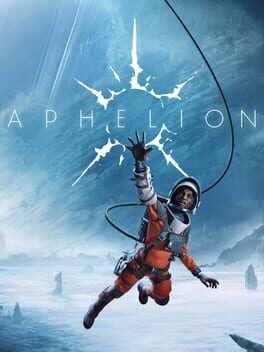

DON’T NOD has tapped César‑winning film composer Amine Bouhafa for Aphelion, and his approach to sound is quietly reshaping what this sci‑fi narrative adventure wants to be and who it is for.
DON’T NOD’s Aphelion has been introduced as a cinematic sci‑fi adventure about two astronauts stranded on a frozen world, but the studio’s latest spotlight makes something else clear: this game is being scored like a film first and a video game second.
At the center of that decision is Amine Bouhafa, the French‑Tunisian composer best known for his César‑winning work on films such as Timbuktu and the dizzying mountaineering drama The Summit of the Gods. Aphelion is his first video game, yet DON’T NOD is already pushing him to the front of the conversation through the New Game+ Showcase trailer and the “A Musical Journey” featurette that tours his studio and process. For a developer associated with character‑driven stories like Life is Strange and Jusant, attaching a decorated arthouse composer sends a strong signal about tone, audience, and ambition.
A film composer in a frozen corridor of space
Bouhafa’s filmography is steeped in extreme places and fragile people. Timbuktu filters political violence through intimate, almost hushed moments. The Summit of the Gods turns vast mountains into emotional pressure cookers where each gust of wind feels loaded with memory and regret. Those scores lean on lyrical themes, subtle dissonance and long, patient crescendos that give landscapes the weight of characters.
Aphelion’s premise, as DON’T NOD describes it, fits neatly into that wheelhouse. Astronaut Ariane is stranded on a hostile, frozen planet and must cross shifting, lethal terrain to reach her badly wounded partner, Thomas. It is science fiction, but structurally it resembles Bouhafa’s previous work: two people in a harsh, indifferent environment where the real drama is psychological. Instead of snow‑blasted Everest ridges or sun‑bleached desert, Aphelion’s frozen world becomes the new stage for his interest in isolation and inner turmoil.
That is already audible in the reveal trailer. Rather than leaning into big, bombastic “space opera” brass, Aphelion opens with sparse, almost brittle piano phrases and sustained strings that circle diminished harmonies. The melodies feel slightly off center, never fully resolving, which mirrors the game’s themes of uncertainty and disorientation. Underneath, there is room for the game’s sci‑fi sound design to breathe: low rumbles, intermittent mechanical pulses and what DON’T NOD has described as technological warbles glide past the score rather than compete with it.
Building music around story, not systems
Bouhafa has been clear in interviews and the behind‑the‑scenes trailer that he builds his music around story structure. On film, that means mapping cues directly to character arcs and emotional beats. On Aphelion, he approaches the project in a similar way, talking about “sections of music” as if he were scoring discrete chapters of a movie.
For a narrative adventure, that bias is crucial. Instead of constructing endlessly looping background tracks, Bouhafa is treating scenes as dramatic units that need a beginning, middle and end. The New Game+ feature hints at cues that grow from almost silent, textural ambience into louder, more melodic statements as Ariane pushes deeper into the planet’s mysteries or as her memories of Thomas surface. You can hear him searching for a thematic language that can recur across contexts: a small motif for Ariane’s resolve, an interval that signals the planet’s alien presence, or a chord color that only appears when the relationship between the two astronauts is front and center.
DON’T NOD’s creative director Florent Guillaume has said that Bouhafa caught their attention primarily through The Summit of the Gods, praising the way he manages to keep characters feeling intimate even when they are swallowed by huge environments and high stakes. That is exactly the balance Aphelion seems to be chasing. The frozen planet is vast, the stakes are clearly life or death, yet the score keeps folding back down to fragile, almost chamber‑like textures that sit very close to the player’s emotions.
The big question for any film composer entering games is how their linear instincts translate to interactive pacing. Aphelion appears to be answering this with what Guillaume calls a living, pulsating soundtrack. Instead of static loops, musical sections are written to flex with traversal and stealth, stretching or contracting dynamically as players choose routes, explore outcroppings or linger on a vista. It is less about big adaptive systems and more about aligning game rhythm with story rhythm so that the emotional throughline never gets lost, even if you take a detour.
An alien instrument for an alien world
Several outlets and DON’T NOD’s own materials highlight an “alien” instrument Bouhafa brought into the studio to capture Aphelion’s frozen atmosphere. Details suggest a hybrid of unusual acoustic sources and electronic processing, a way to create sounds that feel half organic, half synthetic. It is the kind of technique you see in his film scores, where bowed metal, prepared piano or distorted strings become recurring sonic signatures.
For Aphelion, that approach serves both worldbuilding and emotional framing. The frozen planet is not just cold; it is strange. The timbres that define its soundscape should not map neatly onto familiar orchestral palettes. By running unconventional instruments through modular effects and granular processing, Bouhafa can create the sensation that the environment is constantly shifting under your feet. Sub‑harmonic swells might hint at tectonic movement beneath the ice. Glassy, detuned harmonics might stand in for faint auroras or magnetic storms overhead.
Crucially, these sounds do not sit apart from the score. They are woven into melodic lines and harmonic beds, blurring the line between music and ambient noise. This is where Bouhafa’s film background pays off; he is comfortable letting the boundary between score and sound design dissolve, something that suits Aphelion’s focus on immersion over spectacle. When Ariane trudges across a wind‑scoured ridge, the howl in your ears might be both the storm and the orchestra, a unified emotional texture instead of discrete audio layers.
What this says about DON’T NOD’s production values
Hiring a César winner for your first trailer about music is not a small gesture. DON’T NOD is positioning Aphelion as a prestige project, not just another mid‑budget sci‑fi game. The studio is highlighting the composer as a creative partner, dedicating a full behind‑the‑scenes piece to his process long before talking deeply about combat or progression systems. In an industry where music trailers usually come late, that is a statement.
It suggests a production that values atmosphere and emotional coherence as much as technical features. The footage they have shown so far emphasizes slow traversal across colossal ice fields, careful stealth through derelict facilities and intimate dialogue between Ariane and Thomas. The score reinforces that focus. Rather than wallpapering over scenes with generic sci‑fi pads, DON’T NOD is investing in bespoke themes, live recording and sound experimentation.
You can also read it as a sign of confidence. Bringing in a film composer with awards and a global reputation is expensive in both budget and schedule. You only make that choice if you believe your game can support a score worthy of that talent and if you want Aphelion to stand in the same conversation as auteur‑driven sci‑fi cinema. The game’s frozen vistas, measured pacing and emphasis on psychological tension all seem designed to give Bouhafa’s music room to breathe.
There is also a clear continuity with DON’T NOD’s earlier work. Life is Strange became synonymous with its licensed indie tracks and its delicate original scoring. Jusant built an entire emotional arc out of wordless climbing and a meditative soundtrack. Aphelion extends that tradition into a colder, more hostile setting but doubles down on the idea that sound is not just a layer on top of gameplay. It is one of the primary ways the studio communicates character, theme and tone.
Aiming squarely at the narrative‑driven sci‑fi crowd
The choice of Bouhafa, combined with how DON’T NOD is marketing him, tells you who Aphelion is speaking to. This is not the audience chasing endless loot cycles or twitchy competitive multiplayer. It is the crowd that shows up for story‑first sci‑fi like Arrival, Ad Astra or Moon, and for games that privilege mood and character over raw mechanical density.
In that context, Bouhafa’s quietly tense, emotionally literate style functions as a beacon. Players who recognize his name from festival films will expect a certain seriousness of tone. Those who do not will still feel the difference in how the game sounds. The music is not just there to make traversal more epic; it is there to make you feel the weight of silence between radio calls, the sinking dread when the planet shifts under you, the fragile hope when a theme resurfaces in a new key.
Aphelion is still some distance from release, but its soundtrack is already acting as a kind of thesis statement. DON’T NOD wants to make a sci‑fi game where the biggest set piece is two people trying to hold on to each other at the edge of nowhere, and they have hired a composer who has spent his career turning that kind of fragile human drama into sound. If the rest of the production lives up to the music that has been shown so far, Aphelion could carve out a distinct space in the crowded landscape of sci‑fi adventures as a game that truly sounds like the lonely, beautiful, terrifying edge of space.