

How Sayonara Wild Hearts, Lorelei and the Laser Eyes, Stray, and more define Nintendo’s new console as the go to place for artful indie games, and why free upgrades matter.
Annapurna Interactive has never chased the biggest box‑office blockbusters. Its catalogue lives in that space between film festival darlings and cult classic games, where striking aesthetics and sharp ideas matter more than raw scale. With its newly announced wave of Nintendo Switch 2 titles, Annapurna is doubling down on that identity and, at the same time, helping to shape what the Switch 2 is going to mean for indie players.
Instead of treating Nintendo’s new hardware as a clean slate, the publisher is using it as a second debut for some of its defining games. Sayonara Wild Hearts and Lorelei and the Laser Eyes are hitting Switch 2 in upgraded “editions” with 4K resolution and 120 frames per second support, and both are positioned as native parts of the system’s early library rather than leftovers from the original Switch era. They are not tech showpieces in the traditional sense, yet they sell the fantasy that Switch 2 can offer the same high fidelity indie experiences that once felt PC and PlayStation centric.
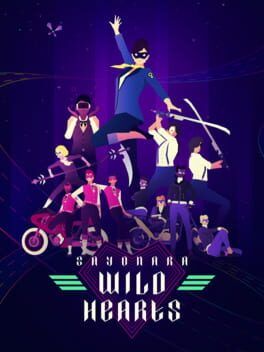
Sayonara Wild Hearts is almost tailor‑made for this kind of relaunch. It is a pop album turned playable greatest hits, a neon highway of rhythm and reaction where every second is about flow. On original Switch it already ran cleanly, but at 4K and 120 fps the game’s razor sharp visual design finally matches the mental image that lives in players’ heads. When the camera whips through a city of pink and cyan or locks behind a motorcycle at impossible speeds, the extra clarity turns stylish chaos into something legible. In a launch window where most of the visual conversation revolves around big budget lighting and foliage, Annapurna is quietly arguing that motion, color and music can be the Switch 2’s real flex.
Lorelei and the Laser Eyes makes an even stronger case for the system as a home for experimental work. Simogo’s puzzle labyrinth thrives on tiny visual details, sly camera tricks and a deliberate sense of disorientation. Higher resolution and frame rates are not about spectacle here; they protect the integrity of those details. Clean text, crisp symbols and glitch‑sharp transitions matter when the whole game asks you to notice patterns and decode visual language. On Switch 2, Lorelei feels less like a compromised handheld port and more like a native art object, something you can comfortably play on a big TV without losing the tactile weirdness that defined it on PC.
Framing these two games as early Switch 2 staples helps Nintendo in a way that first party releases alone cannot. For a lot of players, the original Switch was the place where indie games lived. It was where Hollow Knight could sit next to Mario, where Dead Cells and Celeste felt as important as any tentpole exclusive. That identity does not automatically carry over to new hardware. You have to rebuild it, and Annapurna’s lineup is a clear signal flare that the new console is not just about bigger Mario and shinier Zelda, but about giving prestige indies a stage with fewer compromises.
The rest of Annapurna’s announced slate pushes that message further. Stray’s arrival on Switch 2 brings one of the last generation’s most visible indie success stories into Nintendo’s ecosystem at a technical standard closer to its original PS5 and PC versions. A moody cybercity, a protagonist cat with finely animated fur, and a focus on environmental storytelling all benefit from the bump to 4K and a steadier frame rate. It sends a subtle message: even visually ambitious indies no longer have to be visibly downgraded to exist on Nintendo hardware.
Then there are the new games building their audience on Switch 2 from day one. To a T, from Katamari creator Keita Takahashi, and Wanderstop, the cozy narrative game from The Stanley Parable’s Davey Wreden, show Annapurna using the platform as a first‑run destination rather than an afterthought. These are not ports of five‑year‑old cult hits looking for a final home. They are part of the console’s story near the start of its life, games that can grow up alongside the system’s user base the way early Switch indies did.
Mixtape sitting on the calendar as another stylish coming‑of‑age anthology only reinforces this sense of curation. In aggregate, Annapurna’s Switch 2 lineup looks almost like a film festival program. There is the crowd‑pleasing musical headliner in Sayonara, the cerebral puzzle piece in Lorelei, the buzzed‑about narrative experiments in Wanderstop and Mixtape, and the visually forward Stray tying it all together with an instantly recognizable mascot. For players shopping the eShop in the system’s early years, that cluster provides a shorthand: this is where you go for games that feel authored.
All of that would be less convincing if Annapurna were treating existing Switch owners as restart customers. The decision to offer free upgrades for at least some of these titles, notably Sayonara Wild Hearts and Lorelei and the Laser Eyes in supported regions, is crucial. It turns the Switch 2 versions from simple resales into platform loyalty perks. If you bought into Annapurna’s catalogue early, your investment carries forward. That builds goodwill toward both publisher and platform, and it undercuts the resentment that often bubbles up whenever remasters and “ultimate editions” start to fill a new console’s storefront.
Free upgrades also do something subtler: they keep communities intact. Sayonara Wild Hearts in particular has a strong score‑chasing and replay culture. Telling those players that they can move to Switch 2 for no extra cost increases the odds that leaderboards, social clips and word of mouth stick with Nintendo’s ecosystem instead of fracturing across platforms. For a console that wants to recapture the Switch era’s social energy around indie discoveries, that continuity matters more than the one‑time revenue of a paid upgrade fee.
There are still open questions around how universally Annapurna will apply that policy, especially with Stray and the later releases. If the publisher can align its strategy across territories and titles, though, it has a chance to set a de facto standard that other indie labels may feel pressure to follow. On a platform where digital libraries grow fast and storage is tight, the promise that your existing purchases will simply look and run better on new hardware is a powerful argument for staying in one ecosystem rather than scattering your indie collection across every box under the TV.
Looked at from Nintendo’s side, Annapurna’s Switch 2 push fills in a gap that hardware specs and first party showpieces cannot address alone. Big exclusives define a console’s peaks, but the day‑to‑day identity of a system is built by what fills its quieter months and its eShop charts. If players come to associate Switch 2 with a steady flow of artful, tightly curated indies, that memory will be rooted in moves like this. Sayonara Wild Hearts and Lorelei and the Laser Eyes becoming early success stories again, Stray arriving without feeling like a compromised side version, Wanderstop and to a T using the platform as a first home, and Mixtape waiting just offstage; together they sketch a picture of a console where the interesting stuff is never far from the front page.
Annapurna is not single‑handedly defining Switch 2, but its publishing strategy hints at what the console wants to be. A place where experimental design can live next to Mario without looking out of place, where your earlier purchases are respected instead of recycled, and where the phrase “Switch 2 edition” signals care rather than cash‑grab. If that vision sticks, the console’s indie identity will feel less like marketing copy and more like the natural way you talk about what lives on your home screen.