
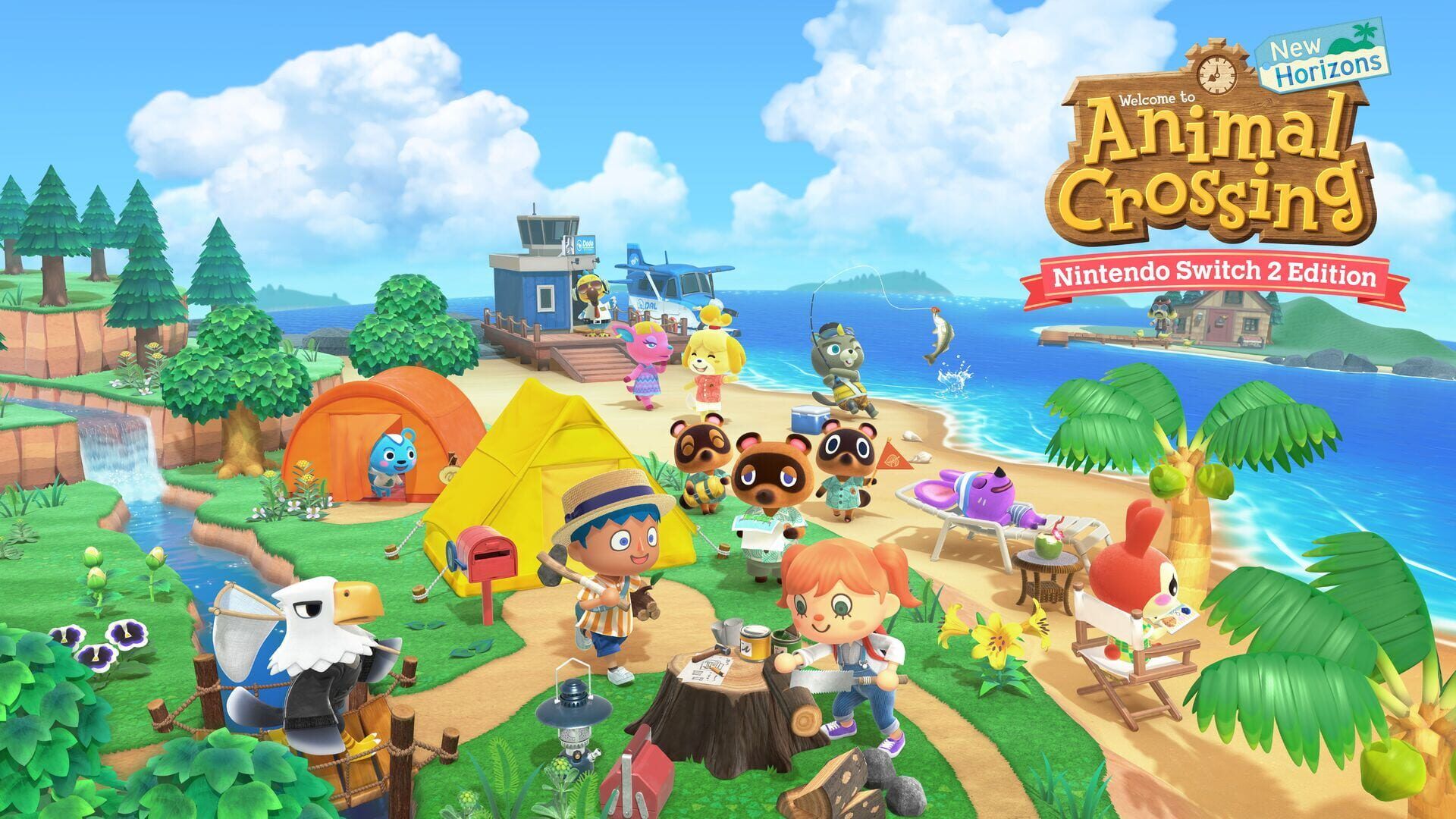
Everything lapsed players need to know about Animal Crossing: New Horizons’ Nintendo Switch 2 Edition and the free 3.0 update: visual upgrades, the Kapp’n family resort hotel, new multiplayer tools, and crossover content.
If your island has been quietly gathering weeds since 2021, Nintendo’s giving you the best excuse yet to dust off your passport. Animal Crossing: New Horizons is getting a native Nintendo Switch 2 Edition alongside a massive free Version 3.0 update, turning 2026 into a surprise second launch window for one of the Switch’s biggest games.
This guide breaks down exactly what’s new, what you have to pay for, and which features matter most if you’re a lapsed player deciding whether to come back.
The basics: release date, price, and how upgrades work
Animal Crossing: New Horizons – Nintendo Switch 2 Edition and the free Version 3.0 update both arrive on January 15, 2026.
If you already own New Horizons on the original Switch, you have three paths:
- Keep playing on Switch 1 and download the free 3.0 update. You get all the new content, minus the Switch 2-specific tech upgrades.
- Move to a Switch 2, download the free update, and enjoy slightly cleaner visuals thanks to general system-side optimizations.
- Pay for the dedicated Switch 2 Edition upgrade. This is a $5 add-on, Nintendo’s cheapest paid upgrade yet, which unlocks higher resolution, new control schemes, and expanded online features.
New players on Switch 2 can buy the full New Horizons Switch 2 Edition for the standard $65 price.
Visual and technical upgrades: how different does it look on Switch 2?
New Horizons was already one of the cleanest-looking games on the original Switch. On Switch 2, the dedicated edition mainly sharpens what is already there rather than reinventing the art style.
The Switch 2 Edition raises the resolution up to 4K in TV mode, giving distant trees, shoreline details, and roof shingles a noticeably crisper look on big screens. Textures and foliage pop more cleanly, and aliasing on fences and power lines is reduced compared with the base release.
Even if you do not pay for the $5 upgrade, running the game on Switch 2 with the free patch still gives you improved image quality tuned for the new hardware screen. The paid edition simply goes further, especially when docked.
There are no sweeping changes to lighting or animation, so returning players can expect their island to look exactly as they remember, just significantly sharper and cleaner.
New control tricks: Joy-Con 2 "mouse" mode and quality-of-life tools
The Switch 2 Edition leans on the updated Joy-Con to smooth out some of New Horizons’ most fiddly tasks.
A new mouse-style control mode lets you move a pointer around the screen with more precision when decorating interiors, laying out furniture, and working in the Custom Designs app. It turns room design into something closer to a lightweight interior design program than a controller-bound console game.
The bulletin board also benefits from this input method. Writing and sketching by hand feels closer to using a simple stylus, making doodling for friends or leaving elaborate welcome messages less of a chore.
The other standout addition is the Megaphone, an item that takes advantage of the Switch 2’s built-in microphone. You can call out to island residents using GameChat voice and quickly gather them or trigger a response, a small but characterful touch that plays nicely with New Horizons’ social vibe.
None of these systems fundamentally change how you play, but if you remember fighting with the cursor while trying to rotate a sofa into place, the Switch 2 control improvements are exactly the kind of friction removers that make coming back feel smoother.
Multiplayer in 2026: bigger online sessions and CameraPlay
If your Animal Crossing memories are tied to visiting friends and hosting catalog parties, the Switch 2 Edition quietly delivers one of the game’s biggest upgrades: more players and better communication tools.
Online play now supports up to 12 players on a single island when everyone is using the Switch 2 Edition. That is a notable jump from the original online limit and makes big events like meteor showers, turnip markets, fashion shows, or seasonal festivals feel more like actual gatherings than small meetups.
Local wireless play still tops out at eight players, but the Switch 2 Edition layers in GameChat voice support, letting you talk in real time without relying on external apps. For lapsed players who remember juggling smartphone voice chat or third-party services, this built-in solution finally matches the cozy co-op fantasy that New Horizons has always sold.
There is also a new optional feature called CameraPlay. By plugging in a compatible USB camera, such as the Switch 2 camera accessory, you can display real-time video reactions for up to four players right inside the game. It is a novelty, but one that lines up perfectly with Animal Crossing’s culture of sharing expressions, posing for group photos, and turning island tours into social hangouts.
If your main reason for returning is to reconnect with a full friend group, the expanded online headcount and integrated voice chat are some of the strongest incentives to upgrade.
The Kapp’n family resort hotel: a new endgame destination
The centerpiece of the free 3.0 update is a brand new resort hotel run by Kapp’n’s family. For lapsed players who have already filled their museums, maxed out their house upgrades, and completed K.K. Slider’s concert, this resort acts as a fresh, evergreen target for creativity.
Once unlocked, you can travel to the resort and take on the role of a kind of island concierge. Guests arrive as tourists, and your job is to shape their vacation. You design themed rooms tailored to their requests, from minimalist zen suites to maximalist toy-filled family rooms, set outfits for visiting characters, and craft and deliver custom DIY goods sourced from your home island.
Completing requests rewards you with tickets, a new currency that can be exchanged for exclusive souvenirs and collectibles in the resort’s shop. These items then feed back into your main island’s décor, creating a steady loop of creative challenges and cosmetic rewards.
If you enjoyed the fantasy of Happy Home Paradise but wished it had more direct ties into your main island life, the Kapp’n family resort is that idea folded into the base game structure. It is a flexible sandbox that encourages experimentation without tearing up your carefully curated town layout.
Slumber Islands: shared dreamscape building with friends
Dreaming returns in Version 3.0 with an expanded twist called Slumber Islands. These are shared dreamscape versions of islands that Nintendo Switch Online subscribers can invite friends into.
In practice, a Slumber Island is a safe space where you and your friends can collaboratively rearrange layouts, try wild terraforming ideas, or experiment with furniture and pathing designs without risking your live island’s progress. Once everyone is happy, you can take screenshots, trade inspiration, and then apply your favorite ideas back home for real.
For returning players overwhelmed by the thought of fixing a cluttered or half-finished island, Slumber Islands double as a social brainstorming tool. Rather than facing a solo grind, you can turn cleanup and redesign into a co-op project, which fits neatly with the way many players already used community discords and social media for design advice.
Resetti’s Reset Service: finally, a clean way to clean up
If the thing stopping you from returning to New Horizons is the mess, Nintendo clearly heard you. Version 3.0 introduces Resetti’s Reset Service as an in-game way to quickly tidy and reorganize large parts of your island.
While Nintendo has not given exhaustive technical details, the service is framed as a streamlined cleanup and layout-tidying feature. Expect options to bulk-move or store items, clear stray dropped objects, and reset certain terrain features or infrastructure without manually touching every tile.
In other words, you are not starting from zero, but you are getting a powerful broom. For players whose islands are covered in turnip remnants, event furniture, and half-demolished pathwork, Resetti’s new job might be the single most important reason to log back in.
Crossover content and collectibles: Nintendo, LEGO, Zelda, and Splatoon
New Horizons has always been a celebration of Nintendo nostalgia, and Version 3.0 leans into that with a mix of free crossover goodies.
You can collect new in-game Nintendo consoles as decorative furniture, echoing the classic Animal Crossing titles. A selection of these items offer more than just nostalgia: for Nintendo Switch Online subscribers, certain consoles double as portals to play select classic Nintendo games directly in-game. It is a playful callback to the GameCube original’s unlockable NES titles, now reimagined through NSO.
A LEGO collaboration brings brick-inspired décor into the mix. Expect blocky furniture, playful patterns, and building-themed pieces that mesh surprisingly well with New Horizons’ soft, toy-like art direction. For players who enjoy theme islands, a LEGO district or kids’ play area practically designs itself.
Finally, amiibo support gets expanded again. Scanning select The Legend of Zelda and Splatoon amiibo will invite new visiting characters to your island and unlock themed items. Whether it is Hylian-inspired furniture or Inkopolis-flavored streetwear, these crossovers are the kind of low-pressure, high-charm unlocks that reward dipping back into the game, even if you only play in short bursts.
Is it worth coming back in 2026?
If you walked away from New Horizons after the 2.0 update and Happy Home Paradise, you might be wondering whether this new wave of content is a true return ticket or just a nostalgic stopover. The answer depends on how you like to play.
For creative builders, the resort hotel and Slumber Islands together form a substantial new playground. You get a fresh canvas for themed builds, a safe lab for big ideas, and a steady stream of exclusive décor to chase. Combined with better decorating controls on Switch 2, the design side of New Horizons has never been more robust.
For social players, the pitch is even clearer. Twelve-player online islands, integrated GameChat, and CameraPlay make it much easier to recreate the communal magic of 2020’s island tours, but in a more stable, better-connected environment. Seasonal events and casual hangouts both benefit from the higher player cap.
For lapsed completionists, Resetti’s Reset Service and the expanded crossover catalog offer a soft re-entry. You can clean up, set a few new collection goals, and then dip in and out at your own pace rather than feeling like you have to rebuild from scratch.
The most important detail is the cost of re-entry. Because the free 3.0 update delivers the bulk of the new content and the Switch 2 Edition upgrade is only $5, the ask is relatively small compared with other first-party Switch 2 upgrades. You are not being asked to rebuy the game to enjoy its second wind.
If your fondest gaming memories of the early 2020s involve visiting friends’ islands, sharing turnip prices, or chasing shooting stars together, Animal Crossing: New Horizons’ Switch 2 Edition and Version 3.0 update feel explicitly designed as an invitation to come back. Your island is still there, your villagers still remember you, and in 2026 there are more reasons than ever to pay them another visit.