
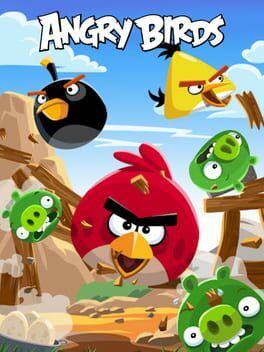

A retrospective on how Rovio’s slingshot sensation helped define the early App Store era, rewrote mobile business models, and became one of gaming’s first true cross‑media smartphone brands.
In 2009, Angry Birds landed on the iPhone with a thud that shook far more than rickety pig forts. It marked a turning point for mobile games, touch interfaces, and even how players thought about paying for software. Now, its induction into the World Video Game Hall of Fame at The Strong National Museum of Play feels less like a surprise and more like an overdue acknowledgment of how much one simple slingshot game reshaped the medium.
From 99 cents to 5 billion downloads
When Rovio released Angry Birds on the App Store, mobile gaming was still shaking off the legacy of Java flip‑phone titles and carrier decks. The iPhone had already spawned a wave of experiments, but many early hits still felt like miniaturized console ideas. Angry Birds was built for the touchscreen from the ground up.
The genius was in its simplicity. You pulled back on the slingshot with a finger, arced it with that same motion, then watched a little red bird sail into improvised architecture. The rules were crystal clear: topple the pigs, break the glass, wood, and stone, and chase three‑star scores. Underneath the cartoon chaos was a picky physics model that rewarded precision without ever feeling intimidating.
That ease of understanding, combined with a sub‑one‑dollar price point on iOS, turned Angry Birds into a phenomenon. The Strong notes that the series has surpassed 5 billion downloads across platforms, a number that only makes sense when you remember how aggressively it spread to Android, PC, and consoles after its initial success. Angry Birds was not just a hit game on phones. For many people, it was the first smartphone game they cared about at all.
Defining the early App Store era
Angry Birds became shorthand for what an App Store success looked like. Its icon was everywhere, its characters were instantly recognizable, and its structure fit perfectly into the rhythms of mobile life. Each level took seconds to learn and about a minute to attempt, which made it ideal for bus rides, commercial breaks, and those early years when pulling out your phone to pass the time was still a novelty.
Design‑wise, it also codified a certain philosophy for mobile puzzle games. Levels were bite‑sized but plentiful, organized into themed chapters that dripped out new mechanics just fast enough to feel fresh. The three‑star system pushed players to replay stages without demanding it. Angry Birds showed that replayability on mobile could come from mastery and optimization, not just endless procedural content.
The game also highlighted how tactile a touchscreen experience could feel. Dragging back the slingshot and watching the birds stretch provided an immediate physical feedback loop that buttons could not quite match. That sense of “toy‑like” interaction became a template for countless physics puzzlers and casual games that followed.
A bridge to free‑to‑play
Although the original Angry Birds launched as a premium app, its long‑term influence is tied to the industry’s gradual turn toward free‑to‑play. As Android adoption exploded and competition on the App Store intensified, Rovio began experimenting with free, ad‑supported versions and spin‑offs that leaned into in‑app purchases.
Angry Birds Free, Angry Birds Seasons, and later Angry Birds 2 shifted toward a model where access was wide open but progression, retries, or cosmetic unlocks created monetization opportunities. They were not the first free‑to‑play titles on mobile, but they brought the model to an audience who associated Angry Birds with the “classic” 99‑cent success story.
That tension between the original premium roots and the new free‑to‑play reality mirrored the shift happening across the mobile industry. Other developers watched Rovio move into timers, currencies, and gacha‑style systems, and took note of how a massive casual audience responded. In that sense, Angry Birds helped normalize the idea that a mobile hit could start as a simple paid download and eventually evolve into a service built on retention and recurring revenue.
Spin‑offs and experiments
Part of what kept the slingshot formula relevant was Rovio’s willingness to treat Angry Birds as a platform rather than a single game. Angry Birds Rio tied into a film collaboration, Angry Birds Space reimagined the core physics with orbital gravity, and Angry Birds Star Wars layered lightsabers, the Force, and familiar Star Wars iconography onto the base design.
Each of these titles did more than reskin the same puzzles. They showed how a mobile brand could adapt and experiment without leaving players behind. You still dragged, aimed, and smashed structures, but you also learned to slingshot around planets, carve through enemy fortresses, or use series‑specific powers that kept levels from feeling interchangeable. This approach foreshadowed how mobile franchises like Candy Crush and Clash of Clans would later expand into side games and genre hybrids to maintain interest.
Outside of the core puzzle lineage, Rovio pushed into kart racing, RPG elements, and competitive structures with titles like Angry Birds Go and Angry Birds Friends. Not all of these experiments lasted, but together they underscored the idea that a smartphone game could sustain an ecosystem of related experiences, not just a string of numbered sequels.
Cross‑media domination on a phone screen
If the World Video Game Hall of Fame focuses on games that “have enjoyed popularity over a sustained period and have exerted influence on the industry or popular culture,” Angry Birds clears that bar in part because it refused to stay confined to app stores.
The characters migrated to plush toys, T‑shirts, board games, and lunchboxes. Rovio pursued aggressive licensing deals and turned the birds and pigs into mascots that children recognized even if they had never played a level. The Angry Birds Toons animated shorts and the eventual feature films built out a light comedic universe around what began as simple 2D sprites.
For the broader game industry, this was a proof of concept. Angry Birds showed that a mobile‑first property could command the kind of cross‑media presence that had traditionally been reserved for console icons like Mario or Sonic. It redefined what counted as a “major” gaming brand at a time when many still dismissed smartphone titles as disposable.
The cross‑branding even looped back into the games themselves. Movie tie‑ins, event levels, and seasonal updates kept the original apps feeling connected to whatever was happening in theaters or on TV. This tight integration of content updates and external media would become standard for mobile live service games, from character banners to pop‑culture collaborations.
Cementing mobile’s place in gaming history
Angry Birds entering the World Video Game Hall of Fame is also, implicitly, a recognition of mobile gaming’s legitimacy. The Strong’s list has traditionally skewed toward arcade classics, console landmarks, and formative PC titles. With Angry Birds joining fellow 2026 inductees like Dragon Quest and Silent Hill, the museum is acknowledging that the history of games cannot be told without the phone in your pocket.
Angry Birds helped change who saw themselves as “gamers.” Its one‑finger controls and forgiving early levels welcomed players who would never pick up a controller or learn complex input patterns. Parents played it while waiting in lines, kids passed tablets back and forth to chase three‑star scores, and busy commuters squeezed in a few levels on trains. This diffuse, everyday presence is part of why the series stuck in the cultural memory long after the initial hype cooled.
It also nudged hardware makers and platform holders to take gaming more seriously as a pillar of their ecosystems. The App Store and Google Play would go on to center games as a primary revenue driver, while phone marketing increasingly leaned on performance and screen quality for play. Angry Birds did not create that shift alone, but it was one of the clearest early examples companies could point to when arguing that mobile gaming was not a fad.
A legacy of touch, timing, and tone
Looking back, the hallmarks of Angry Birds’ success seem almost obvious. The tactile pleasure of pulling and releasing the slingshot. The satisfying collapse of wooden structures into chaos. The short, punchy audio cues and wordless personality that made every bird feel distinct. The tone walked a line between slapstick and earnest determination, making every failed attempt feel more like part of the joke than a punishment.
Those elements continue to echo across mobile design. Modern hits may lean harder on elaborate progression systems and social hooks, but they still chase that sense of low‑friction delight that Angry Birds captured. At a time when monetization debates swirl around free‑to‑play mobile design, it is telling that so many players remember the original iOS release with such fondness: a tiny, self‑contained toy box you could buy outright and play for as long as your battery lasted.
That mix of accessibility, depth, commercial savvy, and cross‑media ambition is why Angry Birds fits so naturally in the World Video Game Hall of Fame. It helped define what smartphone gaming was, then proved that a little red bird could fly far beyond the app store chart it started on.