
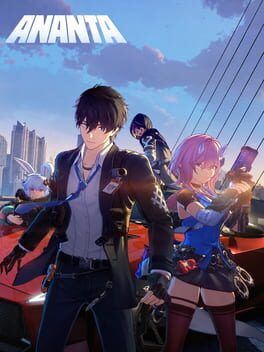
NetEase Games and Naked Rain have dated Ananta for a global January 15, 2027 launch, while the new Chongxiao trailer sharpens the pitch for its urban open world.
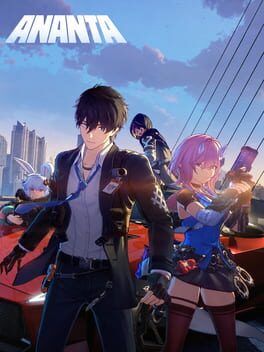
Image: IGDB
Store links: Ananta on Steam
Ananta finally has a date, and the bigger question is scale
Ananta now has a global release date: January 15, 2027. NetEase Games and Naked Rain announced the date alongside a new story trailer during the Gamescom 2026 cycle, according to reports from Siliconera, MonsterVine, Noisy Pixel, Shacknews, Game Informer, Digital Trends, and Niche Gamer. For a game that has spent much of its public life being discussed as Project Mugen, then as the newly branded Ananta, that date gives the ambitious urban open-world RPG a hard target after months of trailer-driven speculation.
The immediate tension is whether Ananta can turn its pitch into a coherent launch product. The confirmed framework is enormous: a free-to-play urban RPG, multiple major cities, social-media-driven progression, playable agents, martial arts combat, interactive environments, daily-life activities, and traversal that ranges from cars and motorcycles to helicopters, yachts, subways, hang gliders, and other methods. MonsterVine and Noisy Pixel both report that pre-registration is open now and that Ananta has passed 17 million global pre-registrations across 110 countries and regions, a number attributed to the game’s current pre-launch campaign.
That level of interest explains why the Ananta release date is bigger than a calendar note. It is a promise attached to an unusually broad design brief. The new footage does not narrow Ananta into a familiar lane. Instead, it reinforces the idea that Naked Rain is chasing the rhythm of a city game: sudden crises, odd jobs, reputation systems, hangout spaces, and fights that spill through everyday locations. The date clarifies when players can test that fantasy, but it also starts the countdown on whether all of those systems can survive contact with launch-day reality.
The global release plan is clear, but platform wording still has gaps
The safest version of the Ananta global release plan is this: the game is scheduled for January 15, 2027, and it is planned for PlayStation 5, PC, iOS, and Android. Siliconera and Shacknews list PS5, PC, Android, and iOS. MonsterVine and Noisy Pixel add that the PC version will be available through Steam and Ananta’s official PC client. Niche Gamer also lists Windows PC via Steam, PS5, iOS, Android, and cloud platforms.
There is one platform-detail wrinkle worth keeping visible. Digital Trends describes Ananta as launching as a “PS5 console exclusive” alongside PC and mobile versions. The other provided reports do not frame the platform plan that way, instead listing PS5 without addressing Xbox or other console availability. Based on the supplied source material, Xbox and Nintendo platforms are not announced, and the PS5 console-exclusivity language should be treated as Digital Trends’ reported characterization rather than a detail repeated across every source.
The pricing model is less ambiguous. MonsterVine, Noisy Pixel, Game Informer, Shacknews, and MMORPG.com identify Ananta as free-to-play. That matters for practical expectations around launch. A free-to-play open world with mobile, PC, and PS5 support carries a different set of questions than a boxed action-adventure release: monetization, cross-platform accounts, progression pacing, performance across device classes, and long-term event cadence. None of the provided sources confirm cross-save, cross-play, PC requirements, console performance targets, controller details, or monetization specifics beyond the free-to-play label. Players interested in pre-registering can do so through Ananta’s official site, according to MonsterVine and Noisy Pixel, but anyone waiting on technical details still has major unanswered questions.
Chongxiao changes the shape of the open world
The new Ananta Chongxiao trailer is important because it moves the game beyond Nova City. Noisy Pixel reports that Chongxiao joins Nova City as one of Ananta’s main urban locations, while Digital Trends specifies that the story unfolds between Nova City and Chongxiao’s Lingyun City, echoing the wording from the official Ananta social post quoted in its report. Shacknews also cites developer Naked Rain as promising two full cities to explore at Gamescom 2026.
Chongxiao is described by MonsterVine and Noisy Pixel as Ananta’s second major city, with inspirations including Shanghai, Hangzhou, and Tokyo. That mix is doing a lot of work for the game’s appeal. Shanghai and Hangzhou point toward a modern Chinese metropolitan texture, while Tokyo adds a wider East Asian urban reference point familiar to players through anime, nightlife districts, transit hubs, arcades, and dense commercial streets. The result, at least in the reported trailer framing, is a world built around city personality rather than a single interchangeable map.
The activity list is the clearest window into that design. MonsterVine reports that players can visit cinemas, mahjong parlors, arcades, cat cafés, maid cafés, gyms, restaurants, clothing stores, open-air hot springs, and other locations. Noisy Pixel includes many of the same spaces and adds that more than 100 NPCs will have individual stories and quests, with relationships potentially leading to allies, items, badges, and combat abilities. If that structure holds, Chongxiao is being positioned as a social and navigational space as much as a combat zone.
From an action-adventure perspective, that is where the pacing challenge sits. A city only works if the quiet spaces and the set pieces feed each other. The trailer’s promise is not simply that players can move from fight to fight across neon streets. It is that a mahjong parlor, a delivery route, a city incident, a selfie, and a martial arts brawl all belong to the same loop. That is a difficult rhythm to land, but it is also the reason the footage is drawing attention.
The influencer premise gives Ananta its strangest hook
Ananta’s story setup has a sharper identity than the early “anime GTA” shorthand suggests. Game Informer reports that players control a protagonist known as Captain, a member of a struggling peacekeeping agency called the ACD. Siliconera describes the role as an Anti-Chaos Directorate Task Force Captain working with coworkers Richie and Taffy to keep the city safe from ordinary and unusual threats. Game Informer adds that the Captain is trying to rebuild the ACD and find a missing father while navigating a world driven by algorithms and online culture.
The progression pitch is built around visibility. MonsterVine describes the premise as “going viral to save the city,” with players taking on the role of an influencer in a modern urban setting shaped by algorithms, social attention, and online culture. Noisy Pixel similarly reports that completing missions, responding to incidents, and joining city activities can build reputation, grow social influence, unlock resources, and open influencer-specific perks. Game Informer says fame can be gained through story missions, bounties, side quests, and smaller interactions such as taking selfies with citizens.
That premise could easily tip into parody, but the reported design gives it useful mechanical stakes. Reputation is not being described as a background number. According to the supplied reports, it is tied to access, resources, and progression. The city becomes a stage where every intervention, performance, rescue, and odd public interaction can feed the player’s reach. For an open-world action game, that gives side content a clearer narrative excuse: the Captain is not wandering because the map needs icons, but because attention itself is part of the job.
There are still boundaries to draw. None of the provided sources confirm how influencer perks are balanced, whether reputation can meaningfully change story outcomes, or how aggressively the free-to-play model will intersect with character recruitment and progression. The idea is distinctive, but the implementation remains the real test.
Combat and traversal are selling motion first
The Chongxiao reveal also keeps Ananta’s action identity in view. Noisy Pixel reports that combat uses martial arts, interactive environments, improvised weapons, enemy weapon grabs, dodging, blocking, and counterattacks. MonsterVine also notes that ordinary objects can become weapons during fights. That suggests encounters designed around flow and spatial awareness rather than fixed attack strings alone.
For a game built on urban movement, that combat language matters. A martial arts system gains texture when a player can redirect a fight through a street corner, restaurant, alley, or station-adjacent plaza and have the environment answer back. Improvised objects are not new to action games, but in Ananta they appear to be part of a wider urban fantasy: the city is both playground and arsenal.
Traversal is pitched with similar breadth. MonsterVine reports a “go where you can see” approach, while Noisy Pixel lists cars, motorcycles, helicopters, yachts, the subway, hang gliders, and other transportation options. Digital Trends frames the appeal around living in the city rather than passing through it on the way to the next boss fight. Those are ambitious claims because traversal systems can fight each other if the world is not tuned around them. A subway is useful for scale, a motorcycle is useful for street-level speed, a helicopter changes skyline readability, and a hang glider demands vertical route design.
This is where the Chinese-inspired open world is driving interest beyond surface aesthetics. Chongxiao’s appeal comes from density: shops, social interiors, transit, public spaces, and the promise of multiple lifestyles in one city. Players are reacting to the possibility of an open world with the compression and tempo of a real metropolis, filtered through anime-styled character work and paranormal urban chaos. The footage points toward set pieces that can start as routine city business and escalate into combat, chase, or social spectacle without leaving the neighborhood.
The A.C.D. team could decide whether the story has weight
Ananta is also leaning on an ensemble structure. MonsterVine and Noisy Pixel report that players can recruit agents to rebuild the A.C.D. team and switch between playable characters. Each character is said to bring a different viewpoint, story path, and approach to movement and combat. The currently reported roles include NCCA officer, hacker, delivery rider, and content creator, each opening different ways to interact with the city.
That variety gives Naked Rain a practical narrative tool. An open world this broad needs more than one lens. A hacker can make the city feel like a network. A delivery rider can make traffic, alleys, timing, and local businesses matter. A content creator can turn public attention into play. An officer can frame the city through crisis response. If those roles are meaningfully distinct, the A.C.D. team may help Ananta avoid the flatness that can creep into open worlds where every mission is solved by the same verb.
Siliconera’s report also points to Ananta’s stranger tone, noting that the world is not a one-to-one match for reality, with Taffy described as a rabbit-girl and Richie having oni-style horns. That detail is small, but it clarifies the game’s register. Ananta is not presenting a grounded life sim, even when it borrows from real metropolitan spaces. It is staging civic chaos, internet fame, supernatural oddity, and martial arts action inside a city that looks recognizable until it swerves.
The strongest version of that setup would give each agent a different tempo. A good action-adventure cast should change how a player reads a street before the first punch is thrown. The sources confirm the recruitment and character-switching concept, but they do not yet confirm roster size, gacha involvement, character acquisition rules, or whether every agent is available through story play. Those details will heavily shape how players judge the team-building promise.
What to watch before January 15, 2027
For now, the practical guidance is straightforward. If you want Ananta on PS5, PC, iOS, or Android, January 15, 2027 is the date to circle. If you specifically want Steam, MonsterVine, Noisy Pixel, and Niche Gamer all report Steam availability, with MonsterVine and Noisy Pixel also naming an official PC client. If you are waiting for Xbox, Switch, or other console news, the provided sources do not announce those platforms. If you are watching from cloud platforms, Niche Gamer reports cloud support, but that detail is not repeated across the other supplied reports.
The remaining pre-launch questions are the important ones. NetEase Games and Naked Rain still need to show how Ananta runs across mobile, PC, and PS5, how its free-to-play economy works, whether character recruitment affects combat access, how dense Chongxiao and Nova City feel outside trailers, and how the influencer progression loop avoids becoming a checklist. Those are not minor footnotes. They are the systems that will decide whether the Ananta open world feels alive or merely busy.
Still, the Gamescom 2026 reveal gives the game a clearer silhouette. Ananta January 15 2027 is now the target. Chongxiao gives the world a second major urban identity. The A.C.D. premise gives the player a reason to move through chaos. The social-media progression gives side activity a modern hook. The combat and traversal pitch give the trailer its speed.
Interest is high because Ananta is selling a rare combination: a free-to-play global launch, an anime-styled urban action framework, and a city influenced by Chinese and wider East Asian metropolitan life rather than another fantasy wilderness. The next reveals need to trade montage for structure. After the Chongxiao trailer, players know where Ananta wants to go. Now they need to see how it all holds together minute by minute.