

Amazon has scrapped its ambitious Lord of the Rings MMO but insists a new Middle-earth game is still coming. We break down why big Tolkien online worlds keep collapsing, what Amazon is likely to pivot toward next, and why the franchise may work better outside the MMO format.
Amazon has quietly driven a stake through the heart of its latest Lord of the Rings MMO, even as it insists that a new Middle-earth game is still in the works. After years of false starts, shifting partners and studio layoffs, the cancellation raises a bigger question than “what happened to this one project?”
It forces a look at whether Tolkien’s world is even a good fit for the modern, live-service MMO model that Amazon has been chasing.
What Amazon Just Cancelled
According to detailed reporting from Eurogamer and GamesIndustry.biz, Amazon’s in-development Lord of the Rings MMO has been halted as part of a broader retrenchment around first party MMOs.
The project was being led by Amazon Games Orange County, the studio behind New World. Sources say the game was only in pre-production but already absorbing serious resources, with hundreds of developers transitioning off New World toward the new Middle-earth title. Then came major layoffs across Amazon’s games business in late 2025, and the MMO was one of the first big casualties.
Jeff Gattis, Amazon’s head of games, declined to explicitly say “the MMO is cancelled” when speaking to Eurogamer, but his comments made the direction clear. He described Amazon as no longer pursuing that specific MMO and instead “continuing to explore a compelling new game experience that does justice to Tolkien’s world,” in partnership with Middle-earth Enterprises.
This is not the first time Amazon has walked away from a Middle-earth MMO. An earlier online project announced in 2019 with Leyou Technologies collapsed after Tencent acquired Leyou and the deal structure broke down. In 2023 Amazon tried again, this time with Embracer Group, which owns Middle-earth Enterprises. That second attempt has now met the same fate, only this time it seems tied directly to Amazon’s cooling enthusiasm for large scale MMOs.
Why Big Lord of the Rings MMOs Keep Falling Apart
On paper, Middle-earth looks perfect for MMO treatment: giant wars, legendary factions, highly defined geography and a massive cast of races and cultures. In practice, several forces keep grinding these projects down.
First is the state of the MMO market itself. Outside of giants like Final Fantasy 14 and World of Warcraft, competition is brutal and player expectations are unforgiving. Launching a new subscription or live-service MMO means years of content creation, server investment, live ops teams and a commitment to constant updates just to stay visible. That is an enormous financial risk even for a company the size of Amazon.
Second is the licensing puzzle around Tolkien’s work. The Lord of the Rings Online has been running since 2007 and continues to hold specific rights and long running community goodwill. Any new official Lord of the Rings MMO is competing not just with genre peers but with an existing, entrenched Middle-earth online world and with the expectations of decades of fans who have already imagined what “their” version of the Third Age should look like.
Third is Amazon’s own uneven track record with online worlds. New World launched with a spike of interest but struggled to retain players over time, and now has a planned shutdown date. Internally, that makes another all-in MMO bet much harder to justify. Reports from inside the company suggest leadership has been re-evaluating how much of its games strategy should hinge on expensive persistent worlds.
Layered on to that is Amazon’s evolving attitude toward technology. Some insiders tied the layoffs and cancellations to an internal AI push, with projects like the generative AI focused “Project Trident” hovering over every staffing conversation. Gattis has publicly pushed back on AI being the direct cause, framing the cuts as part of a “strategic shift,” but even that wording implies a desire to move away from the resource heavy MMO model toward games that can be supported with leaner teams and more flexible tools.
All of those pressures collide in Tolkien’s universe. It is a premium, tightly controlled IP wrapped in decades of fan expectations. The margin for error is tiny, the cost to enter is huge and the MMO space is more hostile than ever.
The Shadow of Previous Middle-earth Games
Amazon’s struggle with a Lord of the Rings MMO also sits in the shadow of other big Middle-earth projects that have faltered.
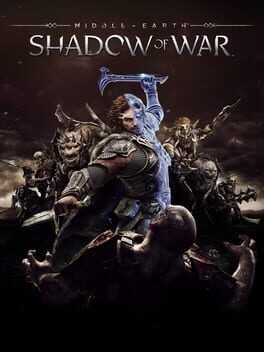
Monolith’s Middle-earth: Shadow of Mordor and Shadow of War proved that you can build a successful AAA series in this universe, especially when you focus on tight third person action and a clear, authored campaign. Shadow of War’s expanded Nemesis System showed how systemic storytelling could fit Tolkien’s world, even if controversial monetization dulled its impact at launch.
More recently, The Lord of the Rings: Gollum showed the flip side. A high profile license could not save a game that shipped with weak design and technical flaws. Critical reception was brutal and the game quickly became a cautionary tale about misusing the IP, particularly when a single peripheral character has to carry an entire experience.
The Lord of the Rings Online remains the outlier, a long running, lower key success that survived by focusing on community, role play and deep lore fidelity rather than chasing every new live service trend. It has never matched the explosive commercial heights of the biggest MMOs, but its stability is a reminder that Middle-earth thrives when it is treated as a place to inhabit, not a platform to aggressively monetize.
In that context, an Amazon funded MMO was always going to walk a tightrope between the expectations of a modern live service business model and the gentler, slower burn that has historically worked for Tolkien based games.
What Amazon’s Next Middle-earth Game Might Look Like
Gattis talks about pursuing a “compelling new game experience” rather than a specific genre. When you look at Amazon’s recent history, the state of the market and the nature of the Tolkien license, a few directions start to look far more realistic than another all out MMO.
One natural pivot would be toward a co op or shared world action RPG, something closer to Destiny sized hubs or a Diablo style structure than a traditional open MMO. That kind of design lets Amazon reuse some of its online tech from New World and its cancelled MMO work, but with tighter scope, fewer simultaneous players and more emphasis on curated missions and handcrafted story beats.
Another strong candidate is a story driven, mostly single player action adventure that leans into cinematic presentation. Amazon has the budget to chase prestige, and Middle-earth lends itself extremely well to focused character arcs set against familiar historical beats. A title in the tone of Shadow of Mordor, but aligned more explicitly with Amazon’s Rings of Power era, could give the company a flagship game that also supports its streaming ambitions without the constant live content treadmill.
There is also room for a hybrid approach: a primarily single player campaign with optional co op and light online features built around fortresses, skirmishes or social hubs. That would echo the layered structure of many modern action games without demanding the never ending content cadence that sunk so many live services.
Whatever the exact shape, the key takeaway is that Amazon is unlikely to greenlight anything that looks like a full traditional MMO again in the short term. The risk profile is too high, and the studio infrastructure that would have supported that project has just been cut back.
Why Middle-earth Might Work Better Outside The MMO Format
Stepping back from the specifics of Amazon, it is worth asking how Tolkien’s world plays to the strengths of other genres.
Middle-earth is built on intimacy as much as on spectacle. The core of The Lord of the Rings is a small group of characters with sharply defined relationships, moving through a dangerous world that feels vast precisely because we experience it through their eyes. That scale is hard to preserve when thousands of players are all supposed to be legendary heroes at once, each demanding their own epics.
In a tightly scoped single player or small group co op game, designers can make the player feel appropriately small next to the great powers in the world, then let them carve out a personal story that complements the canon rather than constantly bumping into it. Systems like the Nemesis feature in Monolith’s games show how even a modest cast of enemies and allies can feel rich when their interactions are deeply simulated instead of spread across an entire server.
There is also the question of tone. Tolkien’s work lingers on quiet moments, on songs, on landscapes and on the weight of history. MMOs excel at combat rotations, loot cycles and social spectacle. They can evoke sweeping battles, but they struggle to serve the smaller, more reflective beats without players simply sprinting past them.
Other formats let the games linger. A narrative adventure can spend time in the Shire or Rivendell without turning every hillside into a checklist. A tactics game could explore the strategic side of the War of the Ring in a way that respects its grim cost, rather than turning every siege into an endlessly repeatable raid. Even city building or survival titles, like the dwarf focused Return to Moria, can dig into specific cultures and corners of the map that a broad MMO would only ever skim.
In many ways, it is a better fit to treat Middle-earth as a collection of rich, focused stories and systems than as a single giant social hub.
Where This Leaves Lord of the Rings Fans
For players, the immediate result of Amazon’s latest cancellation is simple: whatever massive Middle-earth MMO you might have been imagining is not happening, at least not under Amazon’s watch. Those hoping for a sleek, modern successor to The Lord of the Rings Online will likely need to keep looking to other publishers or to the existing game itself.
The cautious upside is that Amazon still appears committed to doing something with the license, just in a more sustainable form. Without the pressure to support a true MMO, the next Lord of the Rings project has a better chance of being scoped around what makes Tolkien’s world special rather than what makes a metrics dashboard happy.
If Amazon can align a smaller, better focused game with the strengths of Middle-earth, this cancelled MMO might end up being a turning point rather than just another line on a growing list of abandoned Tolkien projects. The world does not need another shaky live service built on recognizable names.
It needs Middle-earth to feel like a place worth visiting again.