
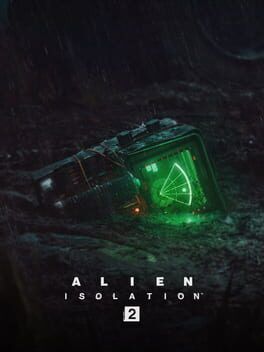

After playing Alien: Isolation 2 at Summer Game Fest, we break down how Creative Assembly is evolving its sci-fi survival horror classic with a new protagonist, a storm‑ravaged colony world, and a smarter xenomorph that keeps the tension razor‑tight.
Alien: Isolation 2 does not open in a sterile corridor lit by dying fluorescents. It starts in the woods.
The hands‑on demo Sega brought to Summer Game Fest trades Sevastopol’s floating tomb for a storm‑lashed colony world, and it takes only a few minutes to realize that Creative Assembly is not just reskinning its cult horror hit. The oxygen‑thin dread that made the original a classic is still here, but it now shares top billing with the planet itself, an uncooperative character that wants you dead just as much as the xenomorph does.
A new survivor, not a new superhero
Amanda Ripley’s story is not the focus this time. The sequel introduces a fresh protagonist, a working‑class colonist drawn into Weyland‑Yutani’s orbit through Kurosaki Station, a remote corporate outpost that serves as the game’s new hub. In the SGF demo, you arrive alongside a small crew, including a weary worker named Otto, just as a mysterious ship punches through the clouds and crashes somewhere in the forest.
The key point is that this new lead is not a soldier, not a special forces operative, not even a seasoned engineer with Ripley lineage to fall back on. In conversation and animation they feel more like another body on the company payroll, someone who is in over their head before they even step off the dropship. It is a smart pivot that lets Creative Assembly keep the tone grounded. The character is capable enough to crawl through ducts, hot‑wire doors and improvise tools, but they still flinch, swear and hesitate in ways that constantly remind you they are barely holding it together.
This shift also gives the sequel freedom to explore the longer fallout of Sevastopol without being handcuffed to canon beats. Polygon and Kotaku both describe the setup as a direct continuation of the first game’s disaster: a fragment of Sevastopol, or at least a Weyland‑Yutani vessel tied to those events, finds its way to this colony and brings the nightmare planet‑side. It feels less like a big franchise retcon and more like a nasty bit of corporate debris finally crashing down to Earth.
From haunted station to hostile world
The biggest change hits the moment you walk out into the forest. Trees sway violently in the wind, floodlights carve hazy cones through horizontal rain and every gust of the approaching storm sounds like something breathing just out of view. Polygon compared the mood to Predator rather than the original Alien, and that is exactly how it feels in motion: under‑equipped humans creeping through a jungle that is not on their side.
Kurosaki’s outskirts are dense and messy rather than pristine industrial. Fallen trunks and exposed roots create natural cover, but also snag you when you panic and try to sprint. The terrain slopes down into ravines and up over rocky ridges, and the sky is constantly bruised, hinting at the flooding to come later in the demo. It is an environment built to be read moment by moment. You are always looking for the next shadow to hide in or the next maintenance shack to duck into rather than following a simple critical path.
This could have easily broken the tight, claustrophobic design that powered the first game, but the level layout is surprisingly controlled. Visibility is low, sound travels strangely in the storm and the forest is threaded with small man‑made structures, drainage tunnels and maintenance corridors that reintroduce those familiar, suffocating bottlenecks. Even when the sky is technically open, the design funnels you into spaces where a single wrong step can still get you killed.
Later, the demo brings things back to more traditional Alien territory inside the crashed vessel. Here the palette snaps back to the retro‑future industrial design that Creative Assembly nailed before: clunky terminals, steel grates, humming bulkheads and flickering emergency strips. A damaged Working Joe android slumps in a corner, a reminder that the series’ other monsters are still around. It feels like coming home to a very bad place.
The key is that these interior sequences now punctuate, rather than define, the experience. The sequel uses the planet’s surface as a kind of pressure valve, letting the tension modulate between outdoor panic and indoor suffocation instead of locking you into one flavor of fear for fifteen hours straight.
The xenomorph learns new tricks
Of course, none of this matters if the alien itself is not terrifying.
Both Polygon and Kotaku describe Creative Assembly’s approach as evolutionary, not revolutionary. The xenomorph in Alien: Isolation 2 is still almost completely unkillable, still uninterested in fair fights and still the center of a dynamic AI system that reads your behavior, hunts you and adapts over time. But in practice the sequel’s creature feels quicker to punish bad habits and less predictable in how it moves through space.
In the crashed‑ship section of the demo, hiding in lockers and under desks is as essential as ever, but there is a new elasticity to how safe those spots feel. Staying hidden too long draws the alien into prolonged searches of your area, rattling doors and hissing inches away from your face. Rely on noise makers and flares too frequently and it begins to treat them less like distractions and more like breadcrumbs. The cat‑and‑mouse dance from the original is here, but the cat has clearly had some time to learn.
The outdoor sequences add another wrinkle. With rain slamming against the canopy and wind howling around exposed gantries, it becomes much harder to track the alien’s audio cues. Footsteps and ceiling vent thumps blur into the storm’s roar, and spotting the creature across a clearing is trickier when mist and whipping branches constantly slice up your view. You still have your motion tracker, but its familiar ping now competes with environmental noise, and in the chaos it is dangerously easy to misread the distance between you and death.
Importantly, Creative Assembly has resisted the temptation to turn any of this into a power fantasy. There are no scripted sequences where you suddenly get the upper hand. The few tools you have are fragile, noisy or both, and every close call reinforces that you are only surviving because the alien let you.
Survival horror, not stealth shooter
Hands on, Alien: Isolation 2 plays very much like a direct continuation of the original’s slow‑burn survival horror. Movement is deliberate. Sprinting is a rare, desperate choice rather than a default. Your field of view is narrow, your inventory is small and the best tool in your kit is still your own patience.
The sequel doubles down on the feeling that you are scraping by rather than progressing cleanly through levels. You are constantly scavenging for scrap in half‑flooded corridors, ducking into side rooms just to catch your breath and checking your tracker even when you know it will make noise. Save points remain a deliberate, nerve‑jangling commitment rather than a background process. The design is not interested in smoothing over the friction of the first game, and that is exactly why it feels authentic.
What does feel new is the way the environment joins in the cruelty. The demo’s finale turns the storm into a full‑blown antagonist. Floodwaters surge through the crash site, tearing open bulkheads and collapsing walkways while the alien prowls the same narrow bridges you use to escape. One misstep can mean either drowning or getting dragged off a railing by a tail you never saw coming. It is a setpiece that still respects player agency: you are not just watching a cinematic, you are wrestling with collapsing geometry, choking water levels and a monster that does not care that the world is ending around it.
This interplay between environmental and systemic threat is where Alien: Isolation 2 feels genuinely forward‑looking. The original was a masterclass in contained horror, but it was also static. Here, the world itself moves, floods, falls apart. The horror is not just in what might be around the next corner, but in the knowledge that the ground under that corner might not be there when you reach it.
Is the tension still intact?
The key question for any sequel to Alien: Isolation is whether it can preserve that unbearable, almost exhausting level of tension without feeling like a retread. Based on this early slice, Creative Assembly seems content to let the core formula stand while changing the context around it.
The new protagonist keeps things relatable and vulnerable rather than veering into action‑hero territory. Kurosaki Station and its surrounding wilderness provide a visual and structural break from endless space‑station corridors without sacrificing intimacy. The xenomorph’s AI feels sharper and less easily gamed, especially once weather and terrain get involved. And crucially, the studio still understands that the scariest moments are usually the ones where nothing happens for just a bit too long.
There are open questions. How long can the forest and storm sustain their novelty? Can Creative Assembly keep layering new threats and twists without overcomplicating the elegant simplicity of “you, the alien, and whatever you can grab”? Will the story justify coming back to this universe without leaning too heavily on fan‑service cameos or lore dumps? Those answers will only come with a full playthrough.
For now, though, Alien: Isolation 2 feels like the rare horror sequel that remembers exactly why people loved the original. It is not trying to outgun its predecessor with bigger weapons or louder setpieces. It is trying to put you, once again, in a place you do not belong, with a creature that does not negotiate, on a world that will kill you even if the alien does not get there first.
On paper that sounds like more of the same. In practice, it feels like coming back to a nightmare that has learned a few new ways to keep you from waking up.