
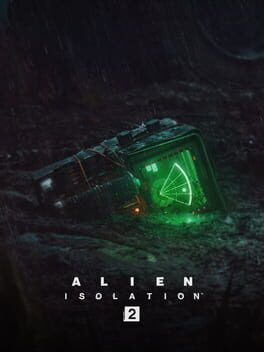

Gamescom 2026 hands-on reports suggest Alien Isolation 2 is keeping the stalker horror intact while testing whether Blake, a harsher setting, and modern presentation can carry the sequel beyond nostalgia.
Image: IGDB
Store links: Alien: Isolation 2 on Steam
Gamescom put the sequel in players’ hands, but not on the calendar
The strongest concrete development out of Gamescom 2026 is that Alien Isolation 2 was playable, and multiple hands-on reports describe a sequel that still builds fear around stealth, sound, limited control, and the Xenomorph’s ability to turn a hallway into a trap. The immediate tension is that Creative Assembly showed enough to convince previewers the old pressure is alive, while Sega and the studio still have not attached a release date to it.
GameNGuide reported before the show that Creative Assembly had confirmed a playable prologue for Gamescom, running from August 26 to 30, and that fans should not expect a release date announcement. The outlet cited a post from the official Alien: Isolation account saying, “Hello, you won’t get a release date next week.” GamesRadar also framed the same point around the developers confirming that the survival horror sequel’s release date would not be unveiled during Gamescom.
That matters for how to read the Alien Isolation 2 Gamescom buzz. This was not a launch-beat demo meant to lock in preorders, pricing, editions, or platform performance promises. It was a controlled proof of tone. Push Square played roughly 20 minutes on PC using a DualSense controller and came away calling it the writer’s favorite PS5 game at the show, while AllKeyShop described a 20-to-30-minute Gamescom demo focused on stealth, evasion, and environmental navigation over direct combat. Those are strong impressions, but they are still impressions from a short, curated slice.
For players tracking Alien Isolation 2 hands-on coverage because they want to know whether Creative Assembly has recaptured the first game’s dread, the answer from the preview circuit is encouraging. For players asking when they can buy it, how it performs on console, or whether it belongs on a list of PS5 horror games 2026 releases, the sourced answer is colder: no release date was announced in the provided material, and Push Square and GameSpot both discuss the game in terms of a 2027 arrival rather than a 2026 launch.
Creative Assembly is leaning into 1979 Alien, but the demo does not stay in the vents
The safest sequel would have rebuilt Sevastopol in higher resolution and let recognition do the work. The Gamescom material suggests Creative Assembly is walking close to that line without standing still on it. Push Square reported that Project Art Director Anastatia Sopikova said the studio has access to the 20th Century Studios archives, allowing the team to pull props from the original Alien. The same preview says Creative Assembly stressed that, despite the broader franchise’s recent activity, including Alien: Romulus and Aliens Fireteam Elite 2, this sequel is focused on Ridley Scott’s 1979 film.
That is the nostalgia play, and it is a powerful one. The first Alien: Isolation earned its cult standing because it understood chunky CRT interfaces, corporate grime, and analog machinery as survival tools, not background decoration. If a door opens slowly, if a monitor hums too loudly, if a motion tracker feels like a liability because of the sound it makes, production design becomes mechanics.
The notable shift is where Gamescom’s demo begins to pull against pure repetition. Push Square describes the player being pushed out of an APC and into a wind-lashed exterior environment after an object crash lands on a remote planet. The outlet’s account emphasizes brutal rain, rising storm conditions, dead woodland, snapped branches, lightning, and a red flare glow before the demo moves toward a vessel tied to the first game’s Sevastopol events. Wikipedia’s compiled entry, based on public information and previews, similarly describes exterior areas including a dead forest and a storm-threatened crash site alongside claustrophobic interior spaces.
That is the most interesting design risk currently visible. Alien horror is often strongest indoors, where architecture becomes a maze and every ceiling gap feels hungry. By opening the playable slice into a hostile outdoor soundscape, Creative Assembly appears to be testing whether exposure can be as frightening as confinement. The storm, according to Push Square, is not treated as normal Earth weather. It is another pressure system. If the final game uses that environment to complicate vision, sound, route planning, and resource recovery, the sequel could expand Isolation’s vocabulary without abandoning its grammar.
Blake is the clearest sign the sequel is not relying entirely on Amanda Ripley
The protagonist question is where fan expectation meets the practical reality of a sequel. GameSpot reports that Alien Isolation 2 stars a new protagonist named Blake, and that Creative Assembly has been clear about this across the summer. Principal environment artist Archie Whitehead told GameSpot at Gamescom that “the story focuses on Blake,” adding that she has been sent to the colony as a kind of penance after making a mistake.
That confirmation pushes back against one of the most understandable fan theories around the sequel: that Blake might be a short-lived setup before Amanda Ripley returns as the true playable lead. GameSpot’s Mark Delaney wrote that he had held onto that theory after playing the Summer Game Fest demo, partly because Ripley appeared to narrate the demo, but that repeated statements from Creative Assembly had finally made him drop it. He still considers it likely Amanda Ripley appears in some important capacity, whether through narration, audio logs, or another role, but he frames that as expectation rather than confirmed fact.
The confirmed version is narrower and more useful: Blake is the playable character shown in previews, and Creative Assembly is publicly centering her story. Wikipedia’s entry also states that the preview builds feature Blake as a member of a Weyland-Yutani survey team on a remote colony world, investigating a crashed vessel connected to Sevastopol Station.
For a cult sequel, that choice carries weight. Amanda Ripley gives the game instant emotional continuity, and the first game’s ending leaves room for players to want direct resolution. Blake gives Creative Assembly a different tool: vulnerability without guaranteed attachment. A new lead can make the player listen harder because they do not yet know her habits, limits, or place in the franchise. The danger is obvious too. If Blake feels like a placeholder while the script keeps gesturing toward Amanda, fans may read her as an obstruction. The Gamescom signal, as reported by GameSpot, is that Creative Assembly wants players to get comfortable with Blake before the Xenomorph starts deciding how comfortable anyone gets to be.
The hands-on loop still sounds like survival horror, not action horror
The core relief in the Alien Isolation 2 Gamescom coverage is that previewers are not describing a pivot into power fantasy. AllKeyShop says the demo prioritizes evasion over combat, with players using vents, darkness, and distraction items to survive. The same report says the Xenomorph hunts Blake through cramped corridors, forcing players to identify safe routes dynamically, and that thrown objects can create brief windows for movement. Wikipedia’s gameplay summary, drawing on hands-on previews, lists hiding under tables, moving through vents and floor grates, listening for the Alien’s movement, repairing damaged systems, and avoiding noise that could reveal the player’s position.
Those details matter because the first Alien: Isolation was built on a cruel bargain: the player was rarely helpless in an absolute sense, but every tool had a cost. A noisemaker could save you or betray your plan. A locker could hide you or turn into a coffin if you entered it too predictably. A flamethrower could buy space, but never ownership of the room. The sequel’s reported demo language, especially the emphasis on listening, hiding, repairing, and improvising, suggests Creative Assembly still understands survival horror as pressure management rather than enemy clearance.
AllKeyShop also reports that early moments have Blake gathering scrap and electronic components to restore power to the failing vessel. That is a small detail with large consequences if it reflects the broader design. Repair tasks force players to trade safety for progress. Looking for components means looking away from exits. Restoring power can illuminate a route, wake a system, or change the way sound carries through a space. A good survival horror sequel does not need to add dozens of systems if it can make one broken circuit feel like a moral problem.
The demo’s threat pacing also sounds deliberately layered. AllKeyShop describes a partially destroyed synthetic android delivering a jumpscare before the Xenomorph fully escalates the pressure. That suggests the sequel is not using the Alien as the only source of panic. It is using the world around the Alien to soften the player first, then punishing the noise, haste, and false confidence that come after.
Audio and haptics are emerging as the sequel’s most important technical promise
For horror, visual fidelity gets people to stop scrolling. Audio gets them killed. Push Square’s strongest praise from the Gamescom demo centered on sound design, especially once Blake steps outside into the rain and wind. The outlet describes a vast, harsh soundscape cut by rain and brutal gusts, with an approaching storm that the characters identify as something beyond ordinary Earth weather. Push Square also notes DualSense haptic feedback during the PC demo, saying it helped bring roaring thunder to life.
Weyland Uplink, a fan-focused Alien news site, reported that Alien Isolation 2 was nominated for Gamescom 2026 awards including Best Visuals, Best Audio, Best Gameplay, and Best PC Game. Because that source is not the Gamescom award organizer in the provided material, the safest attribution is to treat it as Weyland Uplink’s report rather than independently verified award documentation. Still, the categories line up with the preview emphasis: lighting, sound, and moment-to-moment stealth are the areas getting the most attention.
The technical caveat is important for PS5 players. Push Square’s session ran on PC with a DualSense controller, so its praise for controller feel does not confirm PS5 performance, resolution modes, frame rate targets, or feature parity. It does suggest Creative Assembly is already thinking about tactile feedback as part of the horror language. In a game where thunder can mask footsteps, where vents can turn directionality into a survival skill, and where the difference between a safe crawl and a fatal sprint can be one sound cue, audio design is not decoration.
If Alien Isolation 2 wants to satisfy veteran players, the Alien cannot simply be louder and the shadows cannot simply be darker. The player needs to believe the space is speaking honestly, even when it is trying to terrify them. The Gamescom hands-on reports suggest the sequel’s strongest early asset may be that physical sense of weather, machinery, and movement pressing against the player before the creature even appears.
The Sevastopol connection is confirmed, but the sequel’s independence is the real test
The demo’s story hook appears to connect directly back to the first game without trapping the sequel entirely inside it. Push Square reports that the object found in the Gamescom demo is an offshoot vessel that fans will recognize as the lab Amanda Ripley jettisoned from Sevastopol Station in Alien: Isolation. AllKeyShop similarly says the crashed vessel is tied to Sevastopol Station. Wikipedia’s entry states that Blake and her team investigate a crashed vessel connected to Sevastopol, bringing them into contact with the Xenomorph.
That connection is smart sequel architecture. It gives returning players an immediate chill because they understand what Blake does not. It also gives Creative Assembly a way to preserve continuity without requiring Amanda to be the playable lead. The first game’s trauma becomes environmental backstory. Blake is walking into someone else’s unfinished nightmare.
The risk is that Sevastopol nostalgia can become a ceiling. The first Alien: Isolation was not loved simply because it referenced Alien well. It was loved because it stretched fear across long periods of uncertainty, made resources feel finite, and let the Xenomorph’s presence reshape player behavior even offscreen. If the sequel’s Sevastopol tie becomes a parade of familiar props, it will satisfy recognition while weakening dread. If the connection functions as contamination, a past disaster physically dragging itself into a new colony, then the sequel has room to stand on its own.
The setting details currently point toward that second path. Weyland Uplink says the new game takes place at a Weyland-Yutani colony named Kurosaki Station on the dark planet LV-921. Wikipedia also names Kurosaki Station and describes the planet’s surface and outpost as a new hunting ground for the Alien, based on Sega’s description. Those are reported setting details, not proof of the final game’s scope. They do show the sequel is positioning itself around a new colony environment rather than simply returning players to Sevastopol with cleaner textures.
What to watch before treating the Gamescom buzz as a buying signal
The best reading of Alien Isolation 2 after Gamescom is cautious optimism. The confirmed and reported demo details point in the right direction for a survival horror sequel: Blake is vulnerable, the Alien remains a stalking threat rather than a target dummy, environmental repair and scavenging are present, audio is being treated as a weapon, and the 1979 film aesthetic remains central. Push Square’s enthusiastic PS5-focused reaction and AllKeyShop’s stealth-heavy account both suggest Creative Assembly has preserved the shape of Isolation’s fear.
The unanswered questions are still significant. The provided sources do not confirm a release date, price, editions, system requirements, console performance targets, or preorder timing. Wikipedia lists Alien: Isolation 2 as announced for Nintendo Switch 2, PlayStation 5, Windows, and Xbox Series X and Series S, but the Gamescom hands-on described by Push Square ran on PC with a DualSense controller. Anyone deciding between platforms should wait for direct console footage and technical details, especially if haptics, image quality, or performance modes are priorities.
Players should also keep the demo’s limits in mind. GameNGuide explicitly noted that the playable prologue may not fully represent the finished game. A 20-to-30-minute sequence can prove atmosphere, but it cannot prove whether the Alien’s behavior stays frightening over ten hours, whether resource scarcity remains balanced, or whether objectives avoid repetition. Those were the kinds of long-form pressures that defined the original game’s reputation, both for players who adored its sustained dread and for those who found its length and difficulty exhausting.
For now, Alien Isolation 2 Gamescom coverage gives horror fans something more useful than a nostalgia trailer: a glimpse of systems under stress. The sequel appears to understand that the Xenomorph is most frightening when the player is busy, under-equipped, and unsure whether the sound behind the wall is weather, machinery, or death learning the route. If Creative Assembly can carry that pressure beyond the prologue, Blake may not need to borrow Amanda Ripley’s shadow to survive the expectations around her.