
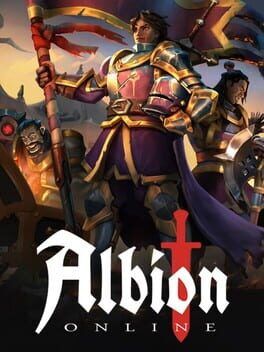

Albion Online hits Xbox Series X|S on April 21 with expanded controller support and full cross-progression. Here is how well its sandbox MMO design fits a console, and whether this launch can really grow Albion’s audience.
Albion Online is finally coming to Xbox Series X|S on April 21, 2026, nearly a decade after its original PC debut. For a game that has quietly built a loyal audience around its full-loot PvP, player-driven economy, and guild warfare, the Xbox launch is more than just a new platform. It is a test of whether a complex sandbox MMO can truly work in a gamepad-first, couch-friendly format while keeping parity with its established PC and mobile communities.
The Microsoft ecosystem offers Albion a much larger potential audience, especially with its free-to-play model and cross-play hooks. Xbox owners will be able to download the game at no cost and dive directly into the same persistent world as PC and mobile players. That shared environment is critical because Albion’s appeal scales with population density. More gatherers mean more materials on the market, more crafters mean cheaper gear, and more guilds mean more rivalries and wars. Full cross-play and cross-progression mean that none of that is siloed. Existing veterans can take their progress directly to Xbox, swapping between PC, mobile, and console at will without creating alts or losing time.
Cross-progression may quietly be the strongest card in this launch. Albion is a game where long-term investment matters more than quick seasonal resets. The Destiny Board, masteries, crafting specializations, and island upgrades all reward years of slow grinding and economic decision making. By letting players keep a single account identity across platforms, Sandbox Interactive eliminates one of the biggest barriers that kills MMO console ports: starting over. A lapsed PC crafter can log in on Xbox and immediately rejoin their guild, resume farming, and jump into ZvZ content on the TV. For fresh Xbox-only players, the guarantee that they will not be stuck on a smaller, console-only shard should also be appealing.
The more interesting question is how well Albion’s inherently click-heavy, menu-driven design adapts to a controller. Historically the game was built around mouse precision and keyboard hotkeys, with intense small-scale PvP skirmishes and large-scale ZvZ fights that demand fast targeting, movement, and cooldown management. The developers are leaning hard into a full controller overhaul for Xbox, not just bolting basic button mappings onto the PC client. They are introducing a new UI navigation flow, radial menus, a controller centric HUD, and a dedicated control scheme designed to make ability use, targeting, and inventory management viable from the couch.
That shift is also reflected in the broader controller expansion across platforms. Albion on PC and mobile has been rolling out improved gamepad support already, so the Xbox release feels like the culmination of that effort rather than a one-off port. The updated interface promises streamlined inventory access, easier marketplace browsing, and more readable menus when played at a distance on a TV. Those adjustments tackle one of Albion’s main friction points, even for PC users: the game is notoriously dense, with the Destiny Board, crafting trees, buy orders, and island management all layered across multiple UI screens.
Moment-to-moment combat is where the gamepad experiment will be judged. Albion’s combat is built around position, skill shots, and rigid cooldowns, especially in PvP. The move to controller friendly targeting and radial quick cast options should work smoothly in solo PvE and casual group dungeons, where enemy telegraphs and pack pulls are predictable. The real test will be high tier open world PvP and territory wars. In those scenarios, PC players leveraging mouse aim and fast keybinds could have a real edge, at least initially. Expanded controller support on PC somewhat narrows that gap by letting everyone test the same input scheme, but balance between input devices will remain a concern for competitive players joining from Xbox.
At the same time, Albion’s broader sandbox structure is a strong fit for gamepad-first play. Many of the core activities are slower paced and repetitive in a way that lends itself to a couch session. Gathering resources in the open world, transporting goods along trade routes, fishing, managing a farm island, and running casual dungeon loops are all comfortably playable with a controller. Console players who gravitate to chill grinds between more intense PvP sessions in other games may find Albion’s economy game particularly satisfying. The fact that nearly all gear and consumables are crafted and traded by players means there is always economic work to do, even if you are not diving into hardcore PvP.
The Xbox Series hardware itself also helps Albion’s case. Compared to its mobile version and even some lower end PCs, Series X|S should deliver a more stable frame rate and clearer visuals during crowded city hubs and large scale fights. That stability is important when the entire game’s identity is wrapped around shared servers and unpredictable open world encounters. A smooth experience on console makes it more likely that hesitant Xbox users will stick around long enough to grasp Albion’s learning curve, which can be unforgiving in its early hours.
In terms of audience growth, the timing of the Xbox launch lining up with the spring update cycle is smart. Visual and performance upgrades arriving just ahead of the console release help the game present its best self to a new crowd, and the promise of new PvP modes and seasonal events gives early adopters something to chase. The announcement messaging across outlets highlights that this is not Albion frozen in its 2017 state but a mature, regularly updated MMO newly opened to console.
The strongest growth vector likely lies with players who already enjoy survival and sandbox titles on Xbox but have not found a long term MMO home there. Albion’s full loot PvP and territorial warfare can appeal to fans of games like Rust or Ark who want similar stakes in a top down fantasy world, while its persistent economy and guild warfare may attract strategy minded players who enjoy long horizon planning. Being fully free to play lowers the risk of trying it for a night, and cross progression with mobile means Xbox players can continue their progression on the go.
There are still challenges. Albion’s tutorialization has improved over the years but remains steep for new players, and a console audience used to heavily guided theme park MMOs or action RPGs may bounce off the lack of quest rails and the harsh reality of losing gear in red and black zones. Controller support can remove input friction without solving conceptual friction. How well the onboarding experience communicates loss, risk, and the central role of the economy will heavily influence whether Xbox newcomers convert into long term players rather than churn after a few brutal ganks.
Even with those caveats, the overall picture is promising. By committing to serious controller support, fully unified cross play, and no progression splits, Sandbox Interactive is giving Albion Online a real shot at thriving on Xbox, not simply existing there as a stripped down port. Its sandbox MMO framework is inherently well suited to long, low pressure play sessions on a couch, punctuated by spikes of intense PvP for those who seek it out. If the new UI flow and control scheme deliver on their promise, the April 21 launch could meaningfully expand Albion’s audience and further solidify its status as one of the few truly cross platform, single shard sandbox MMOs in the genre.