
Sandbox Interactive’s officially named Dragonfire update brings Albion Online’s Ancient Lands on August 31, adding a portal-based endgame region with lethal PvP routes, Drake objectives, and high-risk rewards.
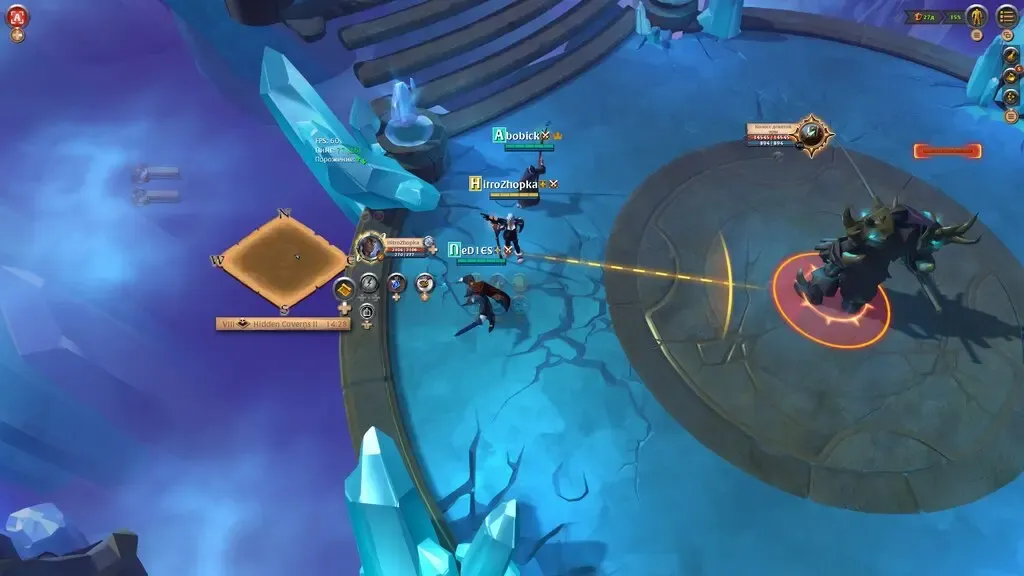
Image: mmos.com
Ancient Lands arrive on August 31, but the update name needs clearing up
Sandbox Interactive has dated Albion Online’s next major content update for August 31, 2026, and its official news posts call that update Dragonfire. That matters because some secondary coverage and the search term players are already using frame it as Albion Online Dragonflame, including MMOHuts’ headline for the Ancient Lands breakdown. The confirmed developer-facing name in Sandbox Interactive’s July 23 announcement and August 13 Dev Talk is Dragonfire, while the feature at the center of this week’s reveal is the Ancient Lands, a new region reached through portals in Albion’s open world.
The concrete development is simple: on August 31, Albion Online gets a new portal-based region built for exploration, PvE escalation, PvP collision, and endgame reward routing. The tension is in the design. Sandbox Interactive is not presenting the Ancient Lands as a safe quest hub or a linear dungeon wing. In its official Dev Talk, the studio describes a realm where parties begin separated on floating islands, open paths by completing objectives, and gradually create the conditions for player conflict by activating teleporters that other groups can also use.
That makes the Albion Online August 31 update especially relevant to veteran players who already understand that progression in Albion is rarely about raw item power alone. It is about knowing when to enter, when to push deeper, when to extract, and when another group’s pathing decision has quietly changed the risk profile of the map. The Ancient Lands appear designed around that exact pressure point.
The Ancient Lands are a new region built around controlled contact, not random chaos
According to Sandbox Interactive’s Ancient Lands Dev Talk, portals into the new region will appear throughout the open world, with portal size determining the type of group content inside. Small portals are intended for solo players and small groups and appear with little warning, which positions them as opportunistic expeditions rather than calendar-driven guild operations. Large portals support parties of up to 20 players and are announced in advance, giving organized groups time to prepare for bigger PvP encounters.
The matchmaking detail is important for anyone planning to treat the Albion Online new region as a progression target. Sandbox says parties are matched with groups of similar sizes within each portal size, and gives the example that a solo player will not suddenly face a full five-player party. That does not make the Ancient Lands safe, but it does suggest the region is trying to preserve role-appropriate pressure. A solo player is still entering a competitive space, yet the danger should come from equally scaled rivals, the region’s enemies, and the consequences of route decisions rather than from immediate numerical absurdity.
The PvP rules depend on where the portal appears. Sandbox Interactive says portals in the Outlands and Red Zones lead to lethal PvP versions of the Ancient Lands, while Yellow Zone portals lead to a non-lethal Orange Zone version. MMOHuts, citing the official post, frames the Yellow Zone route as a lower-risk way for groups to try the feature. For endgame players, the likely split is clear enough without overclaiming beyond the sources: Yellow Zone entries are where groups can learn the region’s movement logic and encounter flow, while Red Zone and Outlands portals are where the full-loot stakes make every Keystone and extraction decision more expensive.
That choice also gives Dragonfire a cleaner onboarding ladder than some older Albion systems. Players can sample the structure with reduced punishment, then graduate into lethal versions once their group has rehearsed target priority, revival discipline, and retreat calls. The sources do not give item power requirements or recommended compositions, so any exact build prescription would be premature. The confirmed mechanics, however, strongly favor parties that arrive with defined roles and a plan for contested movement.
Progression through the islands turns map control into the main encounter
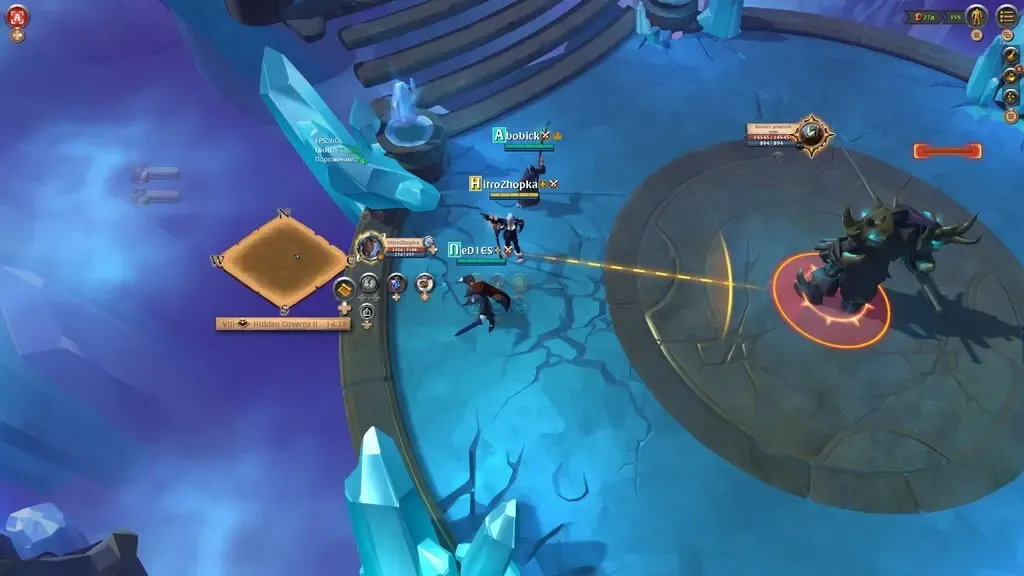
The Ancient Lands do not begin as an immediate free-for-all. Sandbox Interactive says each party starts on its own floating island at the outer edge of the region, separated from other groups. To advance, players must defeat Keeper mobs and complete Fame objectives. Completing an island quest causes a Keystone to appear, and that Keystone can be used to activate one of the island’s teleporters, opening a route to a neighboring island.
The system becomes more interesting because activated teleporters are usable by every group. Sandbox also says Keystones can be moved between teleporters to redirect available routes. In RPG progression terms, that makes the Keystone less like a dungeon key and more like a temporary piece of shared infrastructure. You are not only unlocking your path forward. You may also be changing how rival groups can approach you, how quickly they can contest a Drake island, and how safely your own party can retreat.
The official Dev Talk says the minimap distinguishes inactive, newly activated, and established connections. That is a quiet but significant systems detail. Albion groups that already use shot-calling, scouting, and route discipline in Roads of Avalon or Outlands play will likely recognize the language here. The Ancient Lands seem to turn navigation into the raid’s first boss. A group that kills efficiently but ignores connection states could invite a fight at the wrong moment. A group that over-focuses on PvE clear speed may find that the profitable route it opened has also become a highway for another party.
The exit rule adds another decision layer. Sandbox says players can extract their loot and leave through any entrance portal, returning to their original open-world entry point with temporary protection and invisibility. That gives parties a practical release valve, but only if they make the call before the route network collapses into danger. For completion-minded endgame players, the pre-August 31 homework is less about memorizing a fixed map and more about sharpening the habits that transfer into a shifting one: read the minimap, assign someone to track routes, and decide in advance what loot threshold justifies extraction.
Drake islands are the reward spine, with the Fire Drake at the center
Sandbox Interactive identifies four Drake islands on the Ancient Lands minimap, and these are the clearest confirmed targets for groups chasing Albion Online endgame rewards. The official Dev Talk says these islands contain some of the best rewards in the region, including Treasure Chests, Dragon Blood, and Spirit Waystone Fragments. Those fragments help unlock access to the Dragon Sanctuary, which places Drake objectives inside the broader Dragonfire reward chain rather than leaving them as optional side fights.
Once all four Drakes are defeated, the Fire Drake appears at the center of the region. Sandbox says the Fire Drake guards the Ancient Lands’ largest reward and can provide complete Spirit Waystones when defeated. That structure creates a natural escalation point. The deeper the region progresses, the more likely multiple groups are to understand where value is concentrating. By the time all four Drakes are down, the center of the map is no longer merely a PvE destination. It is the most legible place for rivals to converge.
The broader Dragonfire update extends that reward loop beyond the Ancient Lands. Sandbox Interactive’s July announcement says the Dragon Sanctuary is a new raid dungeon where groups can face imposing enemies, including the Ashborn leader, before earning the opportunity to fight Azaryon, the Fire Dragon. The same official post says Drake Eggs can be earned by defeating Azaryon and nurtured into a Fire Drake mount. It also confirms Dragon Bones and Wings can be fashioned into new armor items, while a new fish from the Ancient Lands can be prepared into food with strong healing properties and other ingredients can create a new potion.
MMOS.com describes the Dragon Sanctuary as a protected raid space that locks out outside players once inside, contrasting it with the contested open-world phase. That detail is not present in the excerpted official July post provided here, so it should be treated as reported context from MMOS rather than a separately quoted line from Sandbox in this material. If accurate, the structure gives the update a sharp funnel: survive contested Ancient Lands objectives, gather the materials or access pieces needed for the sanctuary, then transition into a coordinated PvE challenge where the opposition is the encounter rather than a third-party ambush.
Bleedout changes group responsibility inside the Ancient Lands
MMOHuts’ write-up of the official Ancient Lands post highlights a new Bleedout mechanic specific to the region. According to that report, a downed player can be revived during a short window if allies remain nearby, but the revive comes at a cost and the returning player is weakened by a persistent debuff. If teammates leave the player behind, the window closes and that player is out.
Even without full numerical values, the design implication is strong. Bleedout makes positioning and rescue calls part of the encounter economy. In standard Albion group content, a bad down is already costly. In the Ancient Lands, the reported mechanic appears to force parties to choose between preserving a member and maintaining tempo. Staying nearby to revive may expose the group to enemy pressure or slow a push toward a Keystone. Leaving may protect the remaining players’ loot and route control, but it reduces group strength for whatever comes next.
For RPG players who build around sustain, peel, and recovery windows, this is where preparation should become concrete. Sources do not confirm which weapons, armor pieces, or consumables will become optimal, so there is no responsible way to publish a definitive meta list before launch. Still, the confirmed and reported systems point toward familiar priorities: groups should bring enough defensive utility to stabilize after a down, enough mobility to disengage from bad teleporter routes, and enough communication to decide whether a weakened revive is worth the risk. The new healing food mentioned by Sandbox may also become part of the prep economy if its acquisition and crafting costs make sense after launch.
The Bleedout report also reinforces why the Ancient Lands are being positioned for veterans. A party that treats every down as automatically recoverable may feed tempo to rivals. A party that abandons every down may fail long objectives due to attrition. Good groups will need a middle language: revive if the fight is controlled, cut losses if the route has turned hostile, and avoid entering lethal portals with players who have not agreed on that discipline beforehand.
Dragonfire’s wider update loop gives the Ancient Lands a purpose beyond novelty
The Ancient Lands are one part of a larger dragon-themed update. Sandbox Interactive says the Ashborn have awakened dragons from Albion’s ancient past, bringing attacks to both the Royal Continent and the Outlands. The official July post says these open-world dragon attacks can create opportunities for players to cooperate or turn on one another, with rewards available to participants who help defeat the creatures. The Escapist reports, based on Sandbox Interactive confirmation, that the free Dragonfire update will be available across Albion Online’s currently supported versions, including PC through Steam and the Epic Games Store, Xbox, Android, and iOS. The same report lists the August 31 launch for PC, Xbox Series X|S, Android, and iOS.
There is a useful progression distinction between those open-world attacks and the Ancient Lands. Open-world dragon events sound like broad participation content, including spontaneous encounters for solo adventurers and larger guilds. The Ancient Lands, by contrast, are structured around portals, party-size matching, island objectives, Keystones, Drakes, Fire Drake escalation, and eventual access to the Dragon Sanctuary. If the Royal Continent attacks are the update’s public spectacle, the Ancient Lands are its systems test for endgame groups.
That helps explain why endgame players should prepare before August 31 rather than log in blind and chase the first portal. Dragonfire’s rewards are attached to contested chains. Dragon Blood, Spirit Waystone Fragments, complete Spirit Waystones, Dragon Bones, Wings, Drake Eggs, new consumables, and the Fire Drake mount all sit somewhere in a web of PvE difficulty, PvP exposure, and access gating. The exact drop rates, economy impact, and post-launch meta are still unannounced in the provided sources. What is confirmed is the shape of the pressure: the best rewards will not sit at the safest edge of the map.
That does not mean every player should rush lethal Ancient Lands on day one. Yellow Zone portals leading to the non-lethal Orange Zone version are likely the sensible first stop for groups learning teleporter behavior and island pacing. Lethal Red Zone and Outlands portals are where experienced parties can convert that knowledge into higher-stakes runs. Guilds aiming for Dragon Sanctuary progression should use the remaining time to organize 20-player rosters for large portals, practice objective splitting and regrouping, and decide who has authority to call extraction. Solo and small-group players should focus on fast objective clears, clean disengages, and knowing when a spontaneous small portal is an opportunity rather than a trap.
The important unanswered questions are the ones that always decide Albion’s long-term adoption of a system: how often portals appear, how rewarding Orange Zone runs feel compared with lethal versions, how costly the new consumables are to produce, and whether Spirit Waystone access creates healthy competition or a bottleneck. Sandbox Interactive has confirmed the date and the core mechanics. The economy, the meta, and the player politics arrive on August 31 with everyone else.