
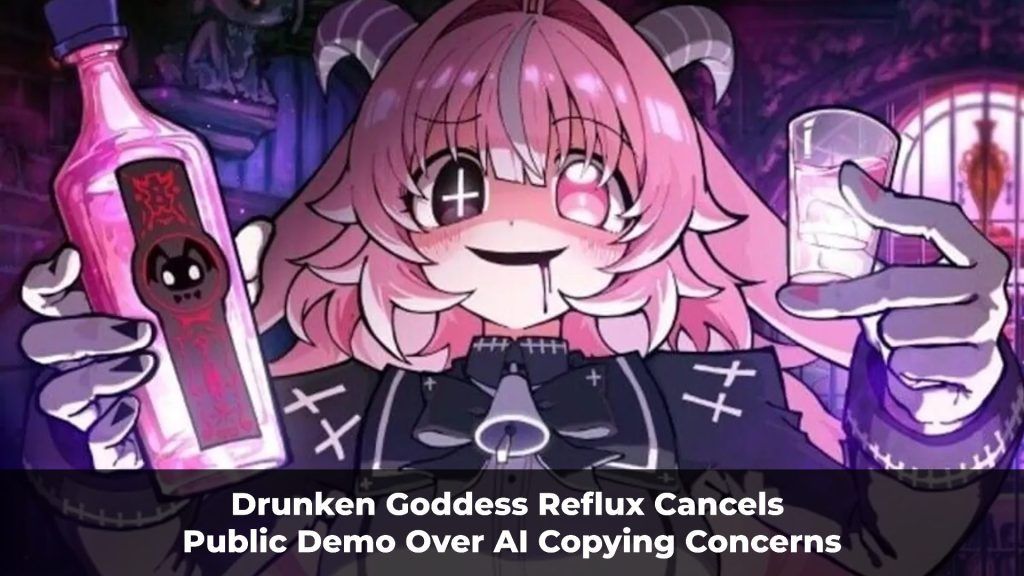

Alliance Arts has pulled the public Steam demo for horror drinking game Drunken Goddess Reflux, citing AI copycat fears and limited ability to police footage before launch.
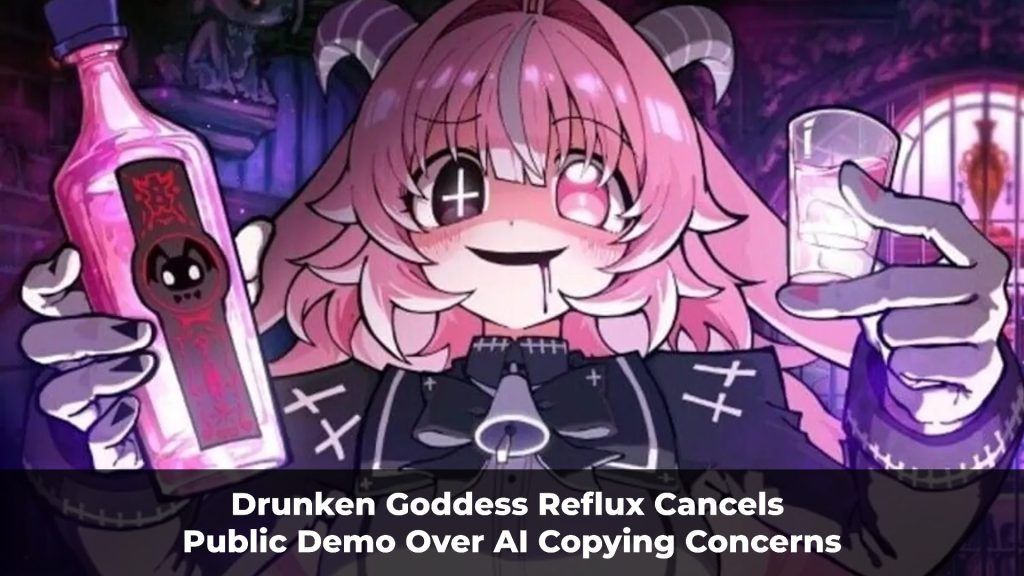
Image: keengamer.com
Drunken Goddess Reflux loses its public demo days before release
Alliance Arts has cancelled the planned public Steam demo for Drunken Goddess Reflux and will instead run closed online play sessions for a limited number of participants. The change was announced shortly before the demo’s scheduled October 19 release, according to the Steam update cited by IGN and the studio’s post on X cited by PC Gamer and Yahoo Tech. The immediate tension is simple: the horror drinking game was supposed to use a public demo to build momentum ahead of a December launch window reported by IGN, but the developer now sees that same exposure as a competitive risk.
The studio’s stated concern is specific. In the Steam update quoted by IGN, the developers said they were worried that, based on the demo’s contents, works imitating or replicating Drunken Goddess Reflux’s presentation and gameplay could be quickly produced using AI or other tools and released before the game itself. PC Gamer and Yahoo Tech quote the same reasoning from Alliance Arts, including the studio’s apology: “We sincerely apologize for the short notice.”
That makes this a useful case study in the new prelaunch problem facing small teams. Public demos have traditionally helped indie games convert curiosity into wishlists, footage, streamer attention, and community discussion. Here, Alliance Arts is treating the demo build as an information leak that could give an AI copycat game enough of a target to reach Steam first, or at least muddy the market before Drunken Goddess Reflux arrives.
What the developer says is changing
The public demo has not simply been delayed in the reporting available so far. Alliance Arts is replacing it with a closed play format. IGN quotes the developer as saying it will hold online play sessions in a closed environment for people who have reviewed and agreed in advance to participation requirements and rules on posting and streaming gameplay videos. ixbt.games also reports that access will be handled through the official Discord channel.
The AI cloning concern is only one part of the decision. The developer also said the demo would have included restrictions on posting and streaming gameplay videos, but that the team was “not currently in a position to properly handle and manage those restrictions,” according to IGN. PC Gamer and Yahoo Tech report the same point, noting that it is unclear which concern was the bigger factor: the inability to police footage, the fear of fast AI-assisted copying, or the combination of both.
That distinction matters because it keeps the story grounded. Alliance Arts has not, in the provided sources, accused any named person or studio of cloning Drunken Goddess Reflux. It has not said an imitation already exists. The confirmed fact is preventative action: a Steam demo cancelled before public release, replaced by limited closed sessions because the team believes public access could create an exploitable window.
A Russian roulette drinking game built around a risky hook
Drunken Goddess Reflux is described on its Steam page, as quoted by PC Gamer and Yahoo Tech, as a “shot glass Russian roulette” game. The premise puts the player opposite an anime demon girl in a horror drinking game where the rules reportedly become stranger as alcohol enters the match. PC Gamer describes the goal as getting the demon opponent drunk enough that she vomits up her soul, while IGN summarizes the pitch as “shot glass Russian roulette with a demon who loves you enough to kill you.”
That high-concept setup helps explain both the marketing upside and the copycat anxiety. A game with a sharp pitch, a legible table-game structure, and a distinctive visual identity is easier to communicate in a trailer or demo. It is also easier for an imitator to identify the visible pillars: demon partner, drinking-game escalation, Russian roulette framing, horror-anime presentation, and a streamer-friendly premise built around escalating risk.
From a strategy perspective, this is the trade. A public demo would likely let players test whether the rules have depth beyond the novelty of the pitch. It could also generate clips that sell the game’s tone better than screenshots. But if Alliance Arts believes the demo exposes too much of the rule set, UI cadence, writing style, and pacing, then the same material that helps the real game can become a design document for someone trying to move faster.
Steam visibility is becoming part of the risk calculation
Steam is the relevant battleground because Drunken Goddess Reflux is being promoted through its Steam page, with PC Gamer, Yahoo Tech, IGN, and ixbt.games all pointing readers there. ixbt.games reports that the game ranked 65th on the list of most anticipated Steam games, a signal that there was already measurable interest before the demo change. The developer’s choice therefore lands at an awkward moment: interest is high enough that a public demo could compound attention, but high enough that the team fears imitation could siphon some of that attention.
For indies, this is the new visibility economy problem. A small studio needs early exposure because Steam is crowded and players rarely buy what they never see. Demos can create feedback, wishlists, creator coverage, and social proof. At the same time, a public build gives outsiders direct access to the game’s loop, timing, assets, UI presentation, and content structure. Alliance Arts’ statement suggests the studio sees AI-assisted production as shortening the time between “someone understood our hook” and “a similar-looking product can appear elsewhere.”
This does not prove that Steam is failing Drunken Goddess Reflux, nor do the sources provide a Valve comment or a store-policy change tied to this case. What it does show is that at least one developer now views open prelaunch access as a possible liability. Yahoo Tech frames the broader concern around copycats on game stores, noting that games being copied is not new but that AI tools may accelerate the process. Alliance Arts’ cancelled demo is the practical version of that concern: less public access now, in exchange for tighter control before launch.
AI cloning fears are no longer theoretical for small studios
PC Gamer and Yahoo Tech both place Alliance Arts’ decision in a wider pattern of indie developers discussing rapid AI-assisted imitation. PC Gamer cites a March case in which a developer shared a game prototype online and a “vibecoded” knockoff appeared within five hours. Yahoo Tech also points to McPixel developer Sos Sosowski sharing examples on Bluesky of indie projects being copied and released on Steam. Those examples are reported as context, not as direct evidence that Drunken Goddess Reflux has been targeted.
The phrase “AI copycat game” can cover several different behaviors, and the sources do not specify which exact technical process Alliance Arts fears. The developer’s wording includes AI “or other tools,” which is broader than a claim that a single generative model can produce a full commercial clone from a demo. The concern is about speed and practical imitation: presentation, gameplay, and release timing.
That broader wording is important. Small studios do not need to believe that AI can perfectly rebuild their game to see a risk. A cheap clone only needs to confuse search, capture part of the novelty wave, or appear in recommendation paths while the original is still unreleased. For a December launch target, as reported by IGN, even a short lead-time disruption could matter. The race is not necessarily for quality parity. It is for occupying the idea first in front of enough players.
What players can actually do before launch
For players, the immediate answer is that the public Steam demo planned for October 19 is no longer the access route described by the developer. Anyone still interested in trying Drunken Goddess Reflux before release will need to look to the closed online sessions, with participation tied to advance agreement on requirements and posting or streaming rules, according to IGN’s account of the Steam update. ixbt.games reports that information is being distributed through the official Discord channel.
The game itself remains available to wishlist on Steam through the store page linked by PC Gamer, Yahoo Tech, IGN, and ixbt.games. No source material provided here gives a price, a full platform list beyond Steam, system requirements, or a precise December release date. Those details should be treated as unannounced until Alliance Arts, Who You, the Steam page, or the publisher clarifies them publicly.
The larger question is whether this becomes a one-off reaction or a pattern. If Drunken Goddess Reflux launches cleanly after a controlled test period, other small teams may see closed demos as a safer default for games with highly copyable hooks. If the lost public demo hurts awareness, developers will face a harder strategic choice: protect the idea longer, or expose it earlier and trust that authenticity, polish, community trust, and store enforcement can beat the copycats to launch.