
Paradox's Afterworld details how Motivation and Health make every wasteland band a strategic pressure point, from food and shelter to coercion, radiation, and rebellion risk.
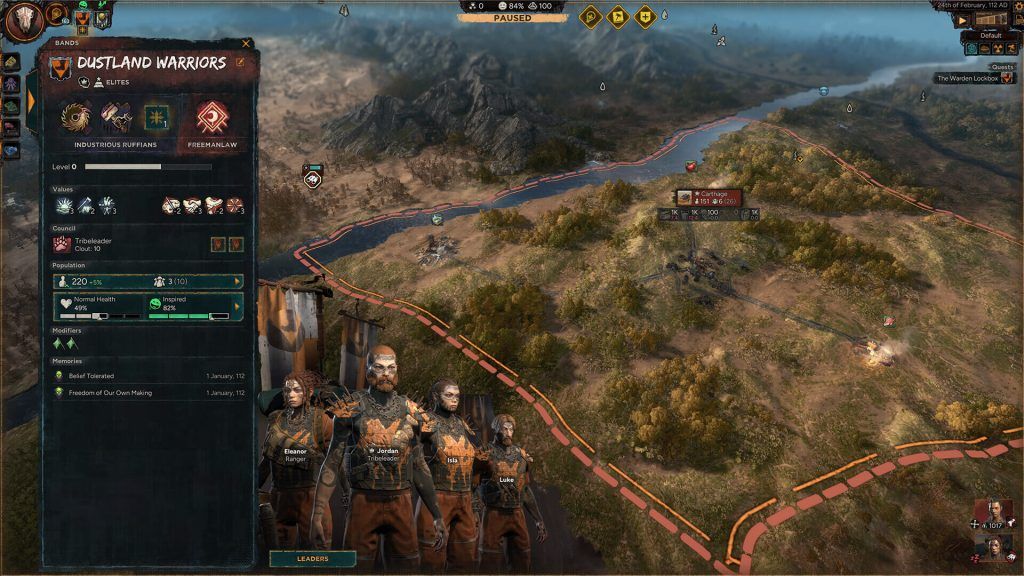
Image: turnbasedlovers.com
Afterworld puts the tribe under pressure one band at a time
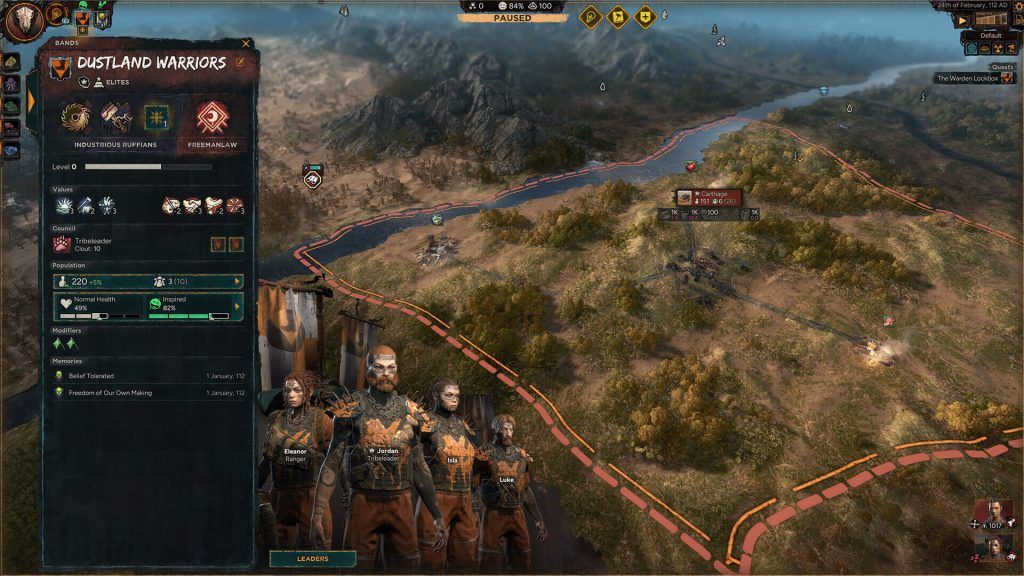
Paradox has detailed two of the core survival systems in Afterworld, its upcoming post-apocalyptic grand strategy game, and the interesting part is where the pressure lands. According to the latest developer diary covered by Rock Paper Shotgun and PCGamesN, Motivation and Health are tracked through individual bands inside a larger tribe, rather than treating your people as a single obedient population block.
That is the concrete shift behind the new Afterworld Motivation Health details. In Paradox Afterworld, the player is not simply steering a unified civilization across a ruined map. Rock Paper Shotgun describes the structure as a tribe built by befriending, conquering, or otherwise assimilating separate wasteland bands. PCGamesN reports that Paradox frames tribes as the overarching structure, while bands are more culturally homogeneous groups joined under that shared banner.
For grand strategy players, that changes the usual settlement-management question. The challenge is not only whether the tribe has enough food, shelter, medicine, or security in aggregate. It is whether the right bands feel cared for, respected, safe, or controlled enough to keep contributing to the larger project. Afterworld’s wasteland strategy sim pitch increasingly looks like a test of internal coalition management as much as expansion.
Motivation turns orders into a political economy
PCGamesN reports that Motivation represents “the mood of the band towards the tribe.” When Motivation is high, a band follows tribe law and works actively for the tribe’s improvement. When it drops, Paradox says bands can begin “dragging their feet,” and at lower levels the player may face disruption, infighting, or a band leaving the group entirely.
That gives Afterworld grand strategy a different kind of failure state from simply losing a battle or running out of a stockpiled resource. A band that is technically part of your society can become strategically unreliable. If Paradox makes that behavior visible and predictable enough, Motivation could become an internal logistics layer, where the player must decide which people receive attention because their work, location, or political value matters most.
The developer diary, as quoted by Rock Paper Shotgun, says players are “invited to pick which bands are important for your tribe’s goals.” That line is doing a lot of design work. It implies the system is not built around perfect satisfaction for every group at all times. It is built around triage. In other Paradox-style economies, players are used to optimizing provinces, pops, estates, classes, armies, or characters. Here, the unit of strain is the band, and its willingness to obey becomes an economy of its own.
Needs are universal until the wasteland makes them personal
The confirmed need categories include broad survival pressures. Rock Paper Shotgun lists shelter, nutrition, hydration, medicine, social standing, and security against threats. PCGamesN similarly cites nutrition, hydration, shelter, and trust as general needs that can help fulfil Motivation.
The sharper edge is that Paradox is tying needs to identity, origin, custom, and changing game state. Rock Paper Shotgun quotes the developers saying, “All needs can scale by band size, level or other game state elements that make sense.” The same developer explanation adds that different bands value different needs depending on who they are or what recently happened to them. A band that has experienced extreme hunger can draw more Motivation from nutrition, while a band on the council can expect more standing because of its social position.
This is where the system begins to look less like a static happiness meter. PCGamesN notes that one band might demand status and recognition, another might be content to come along, and another might demand a specific resource such as alcohol. The same article reports Paradox’s example of shifting priorities: famine can make food the central concern, but rumors of a “dustland horror” beyond the borders can make security feel more urgent and push food down the list.
For strategy-minded players, the important read is that Afterworld’s needs model appears designed to resist a single dominant build order. If Motivation priorities can change because of famine, fear, social rank, or recent trauma, then the best settlement layout in spring may become politically fragile by winter. That is a promising source of strategic friction, provided the interface explains those shifts clearly enough that players understand whether a band is angry because of scarcity, status, fear, or culture.
Cannibals, vegetarians, and the risk of a tribe that cannot agree on survival
The developer examples get deliberately extreme. Rock Paper Shotgun highlights a vegetarian band that excels at foraging and refuses even dried insects. The same coverage notes a cannibal band with a literal Human Flesh consumption gauge. PCGamesN reports the same contrast: cannibals are content with food in general but are more satisfied by human flesh, while vegetarians refuse meat products and strongly dislike the presence of such a group.
The confirmed fact is that Paradox is building bespoke demands and taboos into bands. The interpretation is that Afterworld may force players to manage ethical, cultural, and logistical contradictions inside the same tribe. Rock Paper Shotgun notes that it saw nothing in the diary forbidding players from assimilating both cannibals and vegetarians, but that is an observation from the outlet, not a stated rule from Paradox in the supplied text.
Even with that caveat, the examples clarify the design target. Afterworld strategy game management is not being pitched as a clean spreadsheet of calories and housing. Food type, social acceptance, and cultural disgust can become strategic variables. If Paradox follows through, expansion by assimilation could create long-term costs that are invisible at the moment of conquest. A powerful band may solve a labor or military problem while creating new pressure on supply chains, council politics, and neighboring groups.
The coercion system is the most volatile piece, and Paradox says it is still iterating
The most explicitly work-in-progress part of the system is how coercion interacts with Motivation. Rock Paper Shotgun reports that players can put troops in settlements to make bands feel “dominated.” According to the developer diary excerpt, domination can increase Motivation while bypassing needs, letting the player run some parts of the tribe with the stick while others get the carrot.
Paradox’s stated intent, as quoted by Rock Paper Shotgun, is for those tactics to offer “various degrees of sustainability” depending on the tribe’s setup and the bands involved. The risk is that coercion may function as a temporary patch rather than a stable solution. The supplied coverage says a coerced band can blow up in rebellion when the stick is removed.
The developer example is especially telling. Rock Paper Shotgun cites a scenario where a larger threatening tribe keeps lower classes under control through forced medical sedation, only for the system to collapse if the player sabotages or raids the source of those sedatives. That example suggests coercion is not only a domestic management tool, but also a strategic vulnerability. If Motivation can be artificially propped up by force, drugs, or garrison pressure, then enemy infrastructure, supply sources, and class control become legitimate targets.
As a balance question, this is the system to watch. If domination is too efficient, optimal players will use soldiers as morale infrastructure and ignore bespoke needs until rebellion math forces a correction. If it is too punishing, the system becomes a moral choice with an obvious mechanical answer. The interesting middle is where coercion buys time, creates exploitable weakness, and reshapes the player’s risk profile rather than acting as a universal shortcut.
Health adds a second layer that Motivation cannot fully cover
PCGamesN reports that Health tracks the physical condition of bands. It draws from needs such as nutrition, hydration, and shelter, then adds other factors including exposure to radiation. That makes Health adjacent to Motivation, but not identical to it.
This distinction matters for a wasteland strategy sim. A band might be motivated because it feels respected, safe, or well supplied with a culturally important good, while still being physically weakened by radiation, exposure, or poor long-term living conditions. Conversely, a healthy band may still be politically resentful if it lacks standing, trust, or the resources it uniquely values.
The best version of this design would make settlement management a two-axis read: can this band keep functioning, and does it still want to function for the tribe? The sources do not provide exact numbers, thresholds, UI details, or consequences for specific Health levels, so those remain unconfirmed. What is confirmed is the broad role of the system: Health measures physical condition at the band level, while Motivation measures mood toward the tribe.
For long-campaign players, the interaction between those meters could be where Afterworld finds its identity. A short-term famine response might keep key workers motivated through preferential nutrition. A radiation-heavy expansion route might open valuable territory while degrading the bands stationed there. A conquered group might obey while dominated, yet remain one garrison movement away from revolt. Those are interpretations based on the confirmed systems, not announced balance rules, but they follow directly from the pressures Paradox has described.
Release details remain thin, so the systems are the news for now
The available source material supports some basic context, but many practical details are still missing. Wikipedia’s article describes Afterworld as an upcoming grand strategy game developed by Paradox Development Studio and published by Paradox Interactive, set in post-apocalyptic North America. It also says the game was announced at Gamescom on August 25, 2026, with no set release date.
The same Wikipedia entry states that Afterworld represents a departure from Paradox’s historical grand strategy games and is the studio’s first original setting in a decade. It also says the game supports cooperative and competitive multiplayer modes at launch. Because those details come from Wikipedia in the supplied material rather than a direct publisher fact sheet, readers should treat them as attributed background rather than fresh confirmation from this Motivation and Health diary.
A Steam page is included in the provided source set, and we have linked it below for readers who want to track the listing. The extracted Steam text supplied for this assignment does not include price, system requirements, supported platforms beyond the Steam storefront context, or a release window. Those details should be considered unannounced for the purposes of this report.
For now, the practical takeaway is simple: if you are following Afterworld grand strategy developments, this diary is about internal management depth rather than launch logistics. Paradox is signaling that settlement growth will depend on understanding bands as political, cultural, and physical entities. Whether that becomes elegant strategy or heavy micromanagement will depend on interface clarity, AI behavior, and how costly it is to satisfy conflicting bands over a full campaign.