
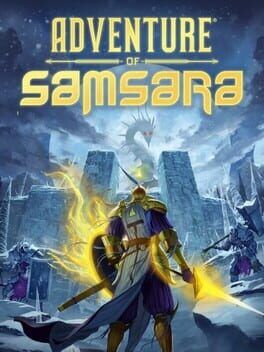
The massive 2.0 update for Adventure of Samsara overhauls boss design, tightens combat, and sands down its worst rough edges. Here is why players who bounced off at launch might want to give this multiverse Metroidvania another shot in 2026.
A soft relaunch for a cult favorite
Adventure of Samsara was easy to admire and hard to love at launch. The pitch was strong, with lush pixel art, a multiverse-spanning map, and a looping story about death and rebirth. Once you were actually in the world as the Solar Champion, the cracks showed. Dodge windows felt stingy, some bosses were more chores than climaxes, and progress could stall on unclear routes or camera quirks. In a year already stacked with indie Metroidvanias, many players bounced off after a few hours.
Update 2.0 is the developer’s attempt to treat that rocky debut as an early access phase in all but name. It folds in months of balance tweaks and bug fixes, then layers on entirely new content and quality-of-life systems. The result feels less like a routine patch and more like a soft relaunch, one trying to earn back the attention of players who moved on.
A new boss that sets a better standard
The headline addition is Buzz Killer Swarm, an optional boss encounter that turns three cybernetic insects into a kind of arena dance. On paper it is a modest addition compared with a new area or playable character, but in practice it works like a mission statement for how the team now thinks about boss design.
Where some of the launch bosses leaned on big health bars and repetitive patterns, Buzz Killer Swarm emphasizes tempo and clarity. Attacks telegraph more cleanly and invite you to read the swarm’s rhythm rather than just turtle behind a shield or spam your strongest ability. The arena layout creates natural lanes for dodging and repositioning, and the fight reacts well to your chosen build, with openings for melee-focused players and windows for ranged or ability-centric approaches.
If you remember early bosses such as Athalos or Dhar’klaw as punishing in a slightly messy way, the contrast is striking. Those encounters have been retuned in 2.0, with damage numbers smoothed and patterns adjusted, but Buzz Killer Swarm goes further by embodying a more modern Metroidvania philosophy. It is tough, but it is also legible. When you fail, you usually know why, and that makes retrying feel less like banging your head against a wall and more like refining a run.
Combat that finally matches the visuals
The other half of the relaunch pitch is combat feel. Pre-patch, Adventure of Samsara felt just a bit too stiff. Jumps had an awkward hang, dashes could drop inputs at the worst moments, and drinking a health potion during boss fights felt like asking to be punished. In a genre where games like Dead Cells and Hollow Knight have taught players to expect pinpoint control, that stiffness was a dealbreaker.
The 2.0 update tackles this head-on. Movement and combat have been tuned to make the Solar Champion feel faster and more responsive. There is a sharper snap to your initial dash, and recovering out of animations feels quicker without turning you into a flailing blur. Hitstop and impact feedback have been subtly improved, so each strike lands with a more convincing weight.
Defensive play has also been rethought. Dodging now buffers more reliably when you input it at the tail end of an attack or jump, and the invulnerability timing lines up more intuitively with enemy swings. Potions, previously a risky chore, can be woven into combat with a more forgiving use animation that still demands awareness but no longer punishes you for daring to heal.
On PC, full input remapping means you can finally align the controls with muscle memory from other Metroidvanias, which quietly lowers the friction of returning to the game. None of these tweaks radically reinvent Adventure of Samsara, but together they close much of the gap between the gorgeous sprite work and the on-pad feel.
Smarter bosses, fewer cheap deaths
Beyond Buzz Killer Swarm, 2.0 revisits several of the game’s key encounters. Athalos, Dhar’klaw, and Doctor Gwar’udum are specifically called out in the patch as beneficiaries of balance changes, with others folded into a wider sweep of tweaks.
The goal here is not to reduce difficulty so much as to rebalance where that difficulty comes from. Early complaints often centered on sudden damage spikes, cramped arenas that fought your visibility, and patterns that were tricky to read in the heat of the moment. The update softens some damage values, but more importantly it cleans up how attacks communicate their danger.
Hitboxes match visuals more consistently, and some boss patterns have been rearranged to avoid brutal combo chains that erased you in seconds. Camera adjustments help keep important telegraphs and off-screen projectiles in view. You still need to learn patterns and respect phases, yet the process now respects your time more and feels closer to the fair-but-demanding ethos that defines the genre’s modern classics.
For players who bounced off a specific boss wall and never came back, these changes might be the most important part of 2.0. Reinstalling and loading an old save now leads to encounters that feel tighter, not cheaper, which makes it easier to re-engage with the story and world.
A smoother journey through the multiverse
Even great combat cannot save a Metroidvania from poor navigation and rough edges. At launch, Adventure of Samsara struggled here as well. The map sometimes obscured more than it revealed, secrets felt arbitrary, and a handful of progression blockers turned backtracking into a chore.
The 2.0 update addresses this in several ways. Clearer map labels help you make sense of newly discovered areas, offering a better mental model of how zones connect. The game also leans further into its exploratory side with new secret rooms, hidden paths, and even invisible walls that hide meaningful upgrades. Rather than padding out playtime, these additions are tuned to reward curiosity and familiarity with the movement toolkit.
A new Bestiary slots neatly into this more readable world. Beyond offering art and flavor text for enemies, it reinforces that you are learning and cataloging the strange ecology of Samsara’s multiverse. For players who like to 100 percent their Metroidvanias, the Bestiary gives a satisfying checklist without turning the experience into homework.
Under the hood, fixes to camera behavior and progression issues clear out some of the launch-version rust. Sections that previously risked soft locks or awkward angle shifts now play more cleanly, which is crucial for anyone returning after months away. You can focus on relearning the routes and mechanics instead of fearing that a bug will undo your progress.
Finally, a simple but welcome touch: cutscenes are now replayable from the main menu. Given Adventure of Samsara’s narrative focus on loops of death and rebirth, being able to revisit key story beats helps recontextualize your journey and makes it easier for returning players to reconnect with the plot without starting over.
Does 2.0 earn a second chance in 2026?
The question for any “relaunch” update is not just whether it fixes problems. It is whether it can cut through a release calendar overflowing with inventive, polished indie games. In 2026, the bar for a Metroidvania is higher than ever, and Adventure of Samsara is no longer the new kid on the block.
What 2.0 does, convincingly, is bring the game’s moment-to-moment play up to the level of its strongest ideas. The art and setting were already standouts. Now the combat feels assertive instead of tentative, bosses are more about pattern mastery than attrition, and the world is easier to read and more fun to comb for secrets. Returning players will likely notice how many small frustrations have been sanded down, while newcomers can experience something closer to what Adventure of Samsara always aspired to be.
That does not automatically catapult it to the front of the indie conversation, but it does give the game a credible second shot at word-of-mouth success. For players who bounced off at launch because of clunky controls or a single punishing boss, 2.0 is a persuasive invitation to come back. For those who waited on the sidelines, this is the version to finally try.
In a crowded year, Adventure of Samsara 2.0 might not redefine the Metroidvania, yet it finally feels like a confident entry in the genre rather than an intriguing near miss. If you had written it off after its rough debut, this update is reason enough to resurrect your save and give the Solar Champion one more run at restoring balance to the multiverse.