
Activision's newly published AI NPC patent application describes training game characters on player voice chat, raising consent, moderation, Discord access, and multiplayer design questions.
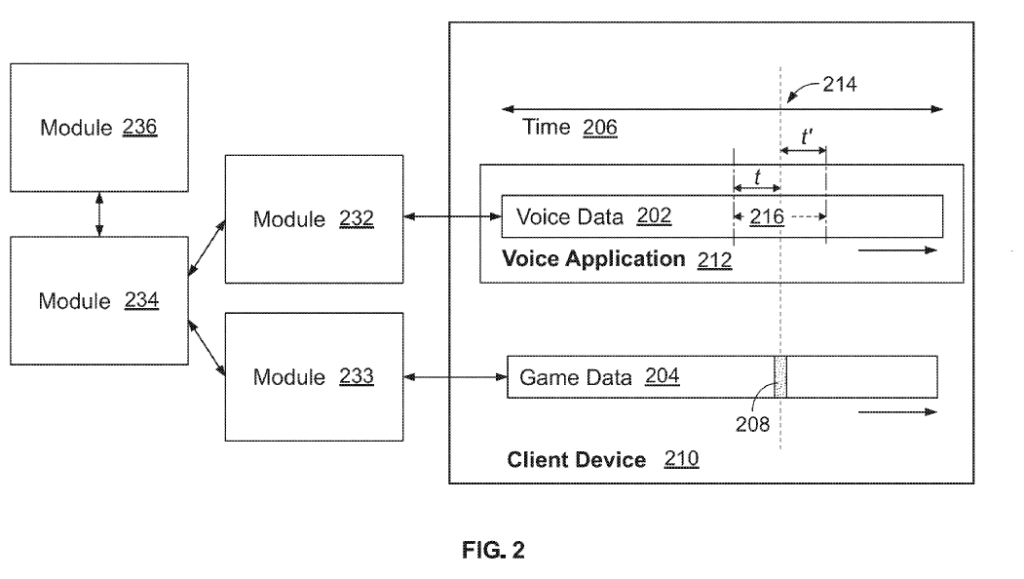
Image: insider-gaming.com
Activision’s AI NPC filing starts with a familiar multiplayer problem
Activision has filed a patent application for a system that would train non-player characters on real player voice chat, according to reports from Eurogamer and GamesIndustry.biz citing the published USPTO document. The application, titled "Methods and Systems for Applying Machine Learning to Generate Gameplay Audio," describes a neural network that captures player reactions around gameplay events, correlates those reactions with what happened in the match, then uses that training to generate audio for virtual characters in similar situations.
That is the confirmed development: a patent application, filed in July and published in November, has put Activision’s thinking on paper. It is not a product announcement, and GamesIndustry.biz notes that a patent filing does not guarantee implementation in a released game. Windows Report similarly states Activision has not announced plans to introduce the technology in Call of Duty or any other title.
The tension is immediate because the proposed solution targets one of multiplayer gaming’s oldest friction points, repetitive or generic character callouts, by drawing from one of its most sensitive data streams, live player speech. The Activision AI NPC patent is not framed as a simple dialogue generator. It is framed as a system that learns from how people actually react when they win, die, panic, celebrate, or trash-talk.
How the proposed system would learn from voice chat
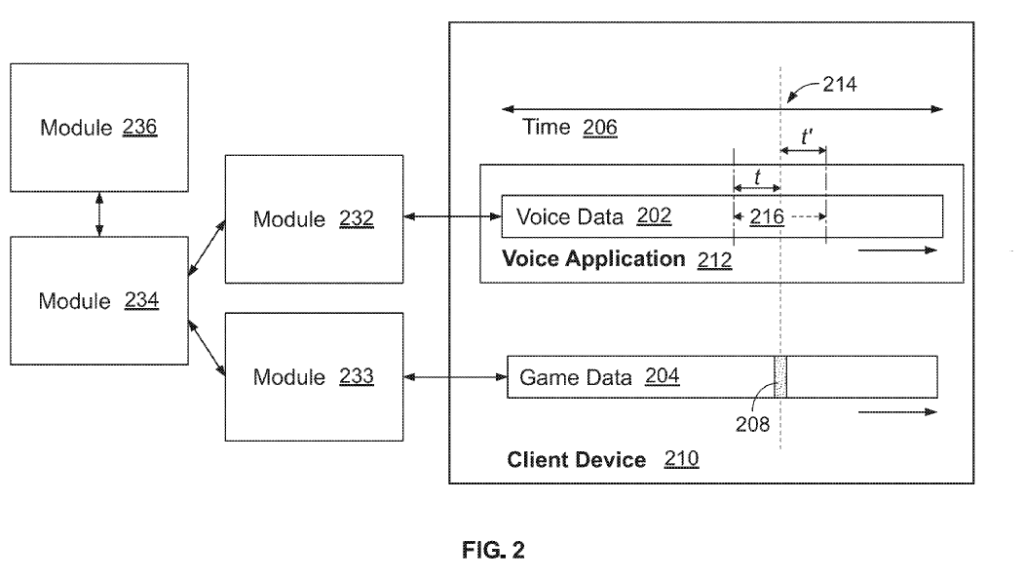
According to Eurogamer’s reading of the filing and its diagrams, the system watches for major gameplay moments such as kills, longshots, deaths, and similar events, then captures player voice reactions from shortly before and after those moments. Wccftech, citing the patent documentation, describes one example in which recordings are collected from ten seconds before an event until ten seconds afterward, using timestamps to link the audio to the gameplay trigger.
GamesIndustry.biz quotes the patent abstract as describing a "system and method to generate audio reactions for a virtual game character that closely resembles reactions of a human player in a multiplayer video game environment." The filing’s core loop is straightforward in concept: collect the human reaction, identify the in-game event that likely caused it, train a neural network on those pairings, and use that model to generate NPC audio when a comparable event occurs later.
Eurogamer reports that the system would not directly repeat a player’s own chat as a copied voice line. Instead, the filing describes generated responses informed by learned patterns. The patent also refers to large language models helping identify spoken language, allowing responses to remain tailored to a player profile, including language choice. Windows Report says the proposed player profiles could let NPCs adapt to a player’s communication patterns, though the practical limits of that adaptation remain unannounced.
From a systems design perspective, that distinction matters. A static callout library is predictable, limited, and expensive to refresh. A generated callout system promises variety and context awareness, but it shifts the risk from content production to data governance. The same mechanism that could help an AI teammate sound less robotic could also learn from the most volatile parts of multiplayer culture.
The filing reaches beyond normal game chat
Several reports flag one of the filing’s most consequential details: the proposed system may not be limited to built-in game voice chat. Eurogamer reports that the patent’s reach could extend to voice communications from major apps such as Discord. Wccftech also says the system contemplates analyzing player conversations conducted through third-party applications including Discord. Wisevoter frames the patent as extending the voice-chat ecosystem of services such as Discord and TeamSpeak into game AI.
That does not mean Activision is currently listening to Discord calls for NPC training. WindowsForum explicitly cautions that nothing in the filing proves player voice chats are currently being harvested for training, and neither Activision nor Microsoft has announced plans to ship the system. The confirmed fact is narrower: the patent application describes an architecture that could use voice data beyond in-game chat.
The consent question is therefore the strategic fault line. In-game voice chat already sits inside a publisher’s service environment, where terms of service, moderation policies, reporting tools, and platform rules may apply. Third-party voice apps involve different expectations. Players often use Discord because it feels separate from the match layer, even when it supports the same squad activity. If a future Activision voice chat AI system tried to incorporate that channel, players would need clear notice, opt-in controls, retention details, and boundaries on what is collected.
The sources do not provide those implementation details. They do not say how long captured audio would be stored, whether it would be anonymized, whether minors would be treated differently, whether team-only and party-only channels would be separated, or whether third-party integrations would require explicit user authorization. Those are open questions, not accusations. They are also exactly the questions that would decide whether such a system felt like smarter multiplayer ambience or surveillance dressed as immersion.
Moderation is built into the idea, but not solved by it
Eurogamer reports that the patent describes a filter intended to keep NPCs from learning offensive language such as slurs. Windows Report also notes that the proposed system includes filters meant to prevent AI-generated characters from using offensive language. That is an important acknowledgement inside the filing, because any model trained on competitive voice chat would encounter insults, harassment, profanity, and context-dependent language.
A filter, however, is a control layer rather than a full moderation strategy. The sources do not say how the filter distinguishes reclaimed language from abuse, regional slang from slurs, private joking from targeted harassment, or toxic phrasing that avoids banned words. They also do not describe whether filtered content is discarded before training, blocked only at generation time, or logged for later moderation.
This is where neural network NPC training becomes less like traditional voice design and closer to live-service trust and safety. In a normal pipeline, a studio writes lines, records actors, reviews content, localizes it, and ships controlled assets. In Activision’s described system, the raw inspiration comes from player behavior. That could make NPCs more responsive, but it also creates a moving meta around language. Players already test moderation systems with misspellings, coded phrases, and voice-chat edge cases. If generated NPC speech becomes another output surface, the moderation system must defend against both accidental contamination and adversarial input.
There is also a performance angle that strategy players will recognize from any live system: feedback loops matter. If players learn that dramatic reactions or certain phrases influence NPC dialogue, some will try to train the system. The patent describes self-learning behavior, according to Eurogamer, but the public reporting does not establish how Activision would prevent coordinated attempts to poison a model or bend NPC personality toward community in-jokes, harassment, or misinformation.
Generated squad chatter could change multiplayer readability
Activision’s stated goal in the filing, as reported by Eurogamer, is to create NPCs that speak naturally rather than relying on the same pre-recorded lines. The application appears focused on multiplayer games, including co-op, and Eurogamer points to contexts such as AI teammates calling out "cover me" or similar generic lines in PvE, battle royale, and PvP matches with large player counts.
That design target is understandable. Repeated callouts can become audio clutter after a few hours, and in competitive modes players often tune them out. A system that generates context-aware teammate reactions to a longshot, a death, a sudden ambush, or a narrow victory could make AI companions feel less like a script and more like part of the squad.
The risk is that multiplayer audio already competes for attention. Footsteps, pings, weapon reports, kill confirmations, party chat, proximity chat, announcer lines, and accessibility cues all fight for the same mental bandwidth. If AI NPCs games adopt generated speech at scale, the value will depend on restraint. A natural-sounding teammate who says the right thing at the wrong time is still noise. A trash-talking enemy bot may be entertaining once, then exhausting if it crowds out tactical information.
The filing also describes replacing generic messages for players who join a match without a microphone, according to Eurogamer, and suggests players could allow their avatars to use generated voices more broadly. That could be useful for players who cannot or do not want to speak, but it raises another clarity issue: teammates may need to know whether they are hearing a human, a generated avatar line, an NPC, or a system-composed proxy message. In competitive play, authorship affects trust.
Voice acting, labor, and the business incentive behind the patent
GamesIndustry.biz places the filing inside the broader industry debate over generative AI, especially around voice acting. The outlet notes that six European game workers’ unions recently published a manifesto examining generative AI’s impact on the industry, while the Japan Actors Union announced guidelines addressing unauthorized use of AI to replicate voice performances.
The Activision game voice chat patent is not described in the sources as cloning professional actors. Its training material, as reported, is ordinary player speech tied to gameplay events. That changes the labor question without removing it. If a publisher can generate large volumes of reactive character audio from player-derived patterns, it could reduce reliance on some categories of prerecorded barks and incidental dialogue. At the same time, high-quality authored performances, narrative scenes, and character-defining roles remain different from procedural multiplayer chatter.
The business incentive is clear even without a shipping product. Live multiplayer games need constant freshness, broad localization support, and scalable content pipelines. A model that can identify spoken language, tailor responses to player profiles, and generate situational audio could theoretically reduce repetition across modes and regions. The filing even points toward personalization, which is valuable in a live-service economy because it makes the game feel responsive to the individual.
Wisevoter reports an additional patent detail that player profiles may include spoken language and spend or engagement data to tune responses. That particular claim should be read cautiously because the other provided reports emphasize language and communication patterns rather than monetization variables. If such data were used in any future implementation, it would intensify scrutiny around personalization: players would want to know whether an NPC’s tone is based on match context, social behavior, engagement signals, or commercial profiling.
What is confirmed, and what players should watch next
The cleanest reading is this: Activision has a published patent application for AI-generated gameplay audio that can train NPC reactions from captured player voice chat around in-game events. Reports tie the publication to November, with Wccftech specifying November 12, 2026, under application number US 2026/0355629 A1. Eurogamer and GamesIndustry.biz say the filing was made in July, while Wccftech reports that it builds on an earlier application dating back to December 2023. WindowsForum adds that Patentlyze listed the application as containing 20 claims and awaiting a patent examiner at the time of publication.
What is unannounced is equally important. Activision has not announced a game using the system. The sources do not confirm a Call of Duty rollout. They do not confirm current collection of player voice chats for this purpose. They do not provide an opt-in design, retention policy, model architecture, moderation benchmark, latency target, or platform list.
For players, the practical guidance is to treat the Activision AI NPC patent as a signal of direction rather than an imminent feature. Patent filings often map out possibilities companies may never ship. Still, the filing is worth watching because it connects several live-service pressures at once: reducing repetitive NPC audio, personalizing multiplayer communication, making AI characters feel more reactive, and turning player behavior into training material.
If Activision or another publisher moves from patent to product, the decisive details will be mundane rather than flashy. Players should look for explicit consent controls, separate toggles for in-game and third-party voice sources, clear labeling of generated speech, strong filtering before and after generation, parental safeguards, data deletion options, and plain explanations of whether voice is stored, transcribed, anonymized, or used for future model training. Without those details, the promise of livelier AI NPCs will remain tied to unresolved questions about who gets to teach the game how to talk.