
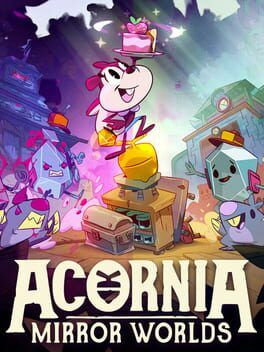

Splashteam’s Acornia: Mirror Worlds is coming in 2027, including Switch 2, with shop management, dimension hopping, and pastry-powered combat.
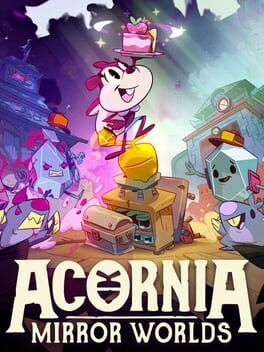
Image: IGDB
Store links: Acornia: Mirror Worlds on Steam
Splashteam’s next game has a date window, a platform spread, and a very specific hook
Acornia: Mirror Worlds, the new game from Tinykin developer Splashteam, has been announced for 2027, with Nintendo Switch 2 now part of the confirmed platform picture. Nintendo Everything reports that the game is headed to Switch 2 in 2027, while MonsterVine and Noisy Pixel attribute a broader launch plan to Splashteam and publisher The Arcade Crew: PC via Steam, PlayStation 5, Xbox Series X|S, and Nintendo Switch 2.
That gives Acornia: Mirror Worlds a clearer shape than many early indie reveals. It is not dated beyond the 2027 window, and none of the provided source material confirms a price, demo, physical edition, or platform-specific features. What is confirmed is the core premise: Splashteam is making a hybrid adventure about Alva, a squirrel who reopens her family dessert shop in a ruined tree village while diving into a dark mirror dimension called the Duramen.
The immediate tension is whether Acornia can make its cozy-life routines and action combat feed each other rather than compete for attention. Early preview coverage suggests that is exactly the design challenge Splashteam is leaning into. In this world, ingredients are business inventory, crafting materials, and ammunition. Every trip across the mirror asks the same deliciously mean question: do you spend what you gathered to rebuild the shop, or fire it from Alva’s cheek pouches at angry spirits?
The Acornia setup turns a dessert shop into a survival economy
According to the announcement overview published by Nintendo Everything, Acornia was once a prosperous tree village before the Duramen’s influence left it in ruins. Alva returns to reopen her family’s dessert shop, but the restoration work runs through two linked spaces. In the light dimension, she fills display cases and plates with desserts for customers. In the Duramen, she battles spirits using weaponized pastries and materials carried in her cheeks.
That one mechanical overlap is the clever bit. The Arcade Crew and Splashteam describe Acornia: Mirror Worlds as a “bake-and-brawl management adventure game,” and the early details back that label up. Players cook sweets, grow the shop’s reputation, cater to seasonal preferences, expand and customize the store, raise crops and animals, hire employees, and automate daily tasks. Those management systems are paired with dungeon runs where Alva explores multiple floors, dodge-rolls past traps, shoots enemies, and faces bosses.
Noisy Pixel reports that the money earned through the dessert business can be put toward rebuilding the community, while trips into Duramen send Alva through dungeons tied to the corruption affecting the village. MonsterVine similarly describes a loop built around growing and harvesting ingredients, baking desserts, serving customers, hiring employees, gathering resources, exploring dungeons, and cleansing Duramen corruption. The pitch is cozy on the surface, but the resource pressure underneath is the part that could give it teeth.
Early hands-on reports point to a strong resource tradeoff
The most useful early preview details come from outlets that played the beginning of Acornia: Mirror Worlds. Console Creatures says its preview section was set firmly at the start of the game, where the systems were still simple, but the outlet came away saying the daily cycle was fun, the combat had a strong twist, and the game “feels great to play.”
That preview describes Alva waking at 6 a.m. and needing to be in bed by midnight, giving each day a defined time budget. The shop begins in disarray, and early goals include collecting materials to build practical fixtures such as a fridge, chest, and tables. Those materials are found in the Duramen, which Alva can enter at any time, but the same resources used to build the business also become the ammo she fires at enemies.
Console Creatures’ example is the cleanest explanation of the hook. If a shelf requires wood, clay may be the safer combat resource to spend. If the next objective needs clay and stone for a cooktop, that calculation changes. Shooting enemies can help gather more, but every shot also consumes something Alva is carrying. That pushes Acornia away from a simple collectathon rhythm and toward small tactical decisions inside a familiar shopkeeping loop.
The preview also notes that Alva can stun enemies and shoot them back at others, matching the announcement overview’s claim that when Alva runs out of ammo, she can swallow enemies whole and use them against the next target. It is silly in the way good platformer-adventure verbs often are, but the silliness is doing mechanical work.
The shop sim side may be deeper than the cute art first suggests
TechRaptor’s preview frames Acornia: Mirror Worlds as a blend of shopping simulation and twin-stick shooting, based on a team briefing and hands-on time. The outlet says it was surprised by how quickly the shop systems opened up, moving within the first hour from selling cherries and pistachio nuts to rebuilding the general store, unlocking roughly two dozen crafting recipes, learning farming, and gaining access to more ingredients.
That depth comes with a caution. TechRaptor says it felt “spoiled for choice” and also somewhat paralyzed by the number of early options and limited shop space. It also reports that different customer species have food preferences that can earn the player more money. For management-game players, that sounds promising: preferences, space limits, recipe planning, and supply chains can turn a cute counter into a satisfying optimization puzzle. For players drawn mainly by the action-adventure side, it raises the question of how much menu and inventory friction Splashteam intends to keep.
GameSpew’s preview, based on the first couple of hours, lands in a similar place but with a different emphasis. The outlet compares the broad shop-and-materials structure to Moonlighter, then stresses that Acornia’s dimension switching sets it apart. In the regular world, players can collect fruit, meet townsfolk, run the shop, and relax. In the Duramen, the same map becomes dangerous and enemy-filled. GameSpew says the main focus appears to be running the shop, crafting items, and expanding the town, with excursions into the corrupted dimension serving the larger goal of gathering materials.
That has a practical implication for buyers watching Acornia 2027 news: this is being described less like a pure platformer and more like an indie adventure platformer with shop management and resource planning at its center. If you came to Splashteam through Tinykin’s movement and exploration, the art lineage may be familiar, but the daily routine looks much more structured.
Switching worlds at will is the feature to watch
Nintendo Everything’s announcement overview says players can “switch dimensions any time, anywhere” to play both sides of the complementary loop. GameSpew’s hands-on writeup supports that direction, saying the player can switch to the more dangerous world at any time with a button press and that the player’s control over when and how to switch “seems to work very well.”
That matters for pacing. In many dual-world adventures, the alternate space is a puzzle state or a gated dungeon. Based on the current descriptions, Acornia uses Duramen as an ever-present pressure layer sitting over the village. The same tree settlement can be a shop hub, a material route, and a combat space depending on which side of the mirror Alva occupies.
For a small-game specialist like Splashteam, that is a smart place to spend design budget. Recontextualizing one environment across two rulesets can make a compact world feel dense, provided the game avoids forcing players to comb the same corners without meaningful changes. GameSpew does note that Acornia can feel “a little repetitive at times,” while adding that players who enjoy gathering, crafting, and expanding loops may love it. That is a fair early signal rather than a verdict, since these impressions come from limited preview builds, not a finished review version.
The unanswered question is how the game scales. Early coverage confirms daily chores, customer service, crafting, farming, rebuilding, combat, dungeons, bosses, villagers, and seasonal events. The long-term feel will depend on how often those systems cross-pollinate. A new dessert recipe is more exciting if it changes both customer demand and dungeon strategy. A rebuilt village section lands harder if it alters the routes and risks on the Duramen side.
Villagers, seasons, and automation could keep the loop from flattening
The announcement overview cited by Nintendo Everything says Acornia: Mirror Worlds will feature more than 25 unique villagers, each with a backstory, role, daily routine, and dedicated side quests tied to their relationship with Alva. It also mentions seasonal visitors and seasonal events such as bug catching and flower decorating.
Those details are important because Acornia’s central loop could become too transactional if every day boils down to gather, bake, sell, repeat. Villagers with schedules and side quests can give restoration a social texture. Seasonal preferences, which the overview says can increase profit, also give players a reason to adjust the shop instead of finding one efficient product and spamming it forever.
Automation is another pressure valve. The announcement overview says players will be able to hire employees and automate daily tasks, while MonsterVine and Noisy Pixel both report that employees can help keep the business moving. That could be essential if the game expands as quickly as TechRaptor’s preview suggests. A shop sim that adds recipes, farming, customer preferences, rebuilding, and dungeon resources needs ways to reduce repetitive labor as the player’s responsibilities grow.
The current sources do not confirm how many employees can be hired, how automation is unlocked, whether villagers become workers, or how seasonal events affect progression. For now, the confirmed takeaway is narrower: Splashteam is building Acornia around a village restoration arc, and the dessert shop is the economic engine that powers it.
Platforms are clear, but key launch details remain unannounced
For readers tracking Acornia Mirror Worlds Switch 2 news specifically, the Switch 2 version is confirmed by Nintendo Everything’s report and echoed in the broader platform lists from MonsterVine and Noisy Pixel. The currently reported 2027 platforms are PC via Steam, PlayStation 5, Xbox Series X|S, and Nintendo Switch 2. MonsterVine links to Steam, PlayStation, and Xbox store pages or listings, while the provided source material does not include a Nintendo eShop page.
No source provided for this assignment confirms a release month, exact date, price, file size, frame rate target, resolution, handheld performance, physical release, collector’s edition, preorder plan, or cross-save support. There is also no confirmed statement here about whether the game will launch simultaneously across all listed platforms, though MonsterVine and Noisy Pixel both describe the platform plan as a 2027 release for the full set.
The best guidance right now is to treat Acornia: Mirror Worlds as a 2027 watchlist game rather than a near-term purchase decision. If you like Tinykin’s bright craft but want something with a shopkeeping backbone, this is the Tinykin developer new game to track. If you prefer platformers with minimal management, wait for longer previews or a demo confirmation before assuming the action side carries the whole experience.
What is already visible is a confident identity: a squirrel with cheek pouches, a ruined tree village, a dessert shop economy, and a mirror world where pastries become projectiles. Acornia: Mirror Worlds has the kind of odd, specific hook indie adventures need. The next round of information needs to show how that hook holds up after the first few hours, especially once the shop is busy, the village opens out, and the Duramen starts pushing back.