
Early Ace Combat 8 reviews are highly positive, but Wings of Theve's silent protagonist and first-person story scenes are becoming the game's sharpest design debate.
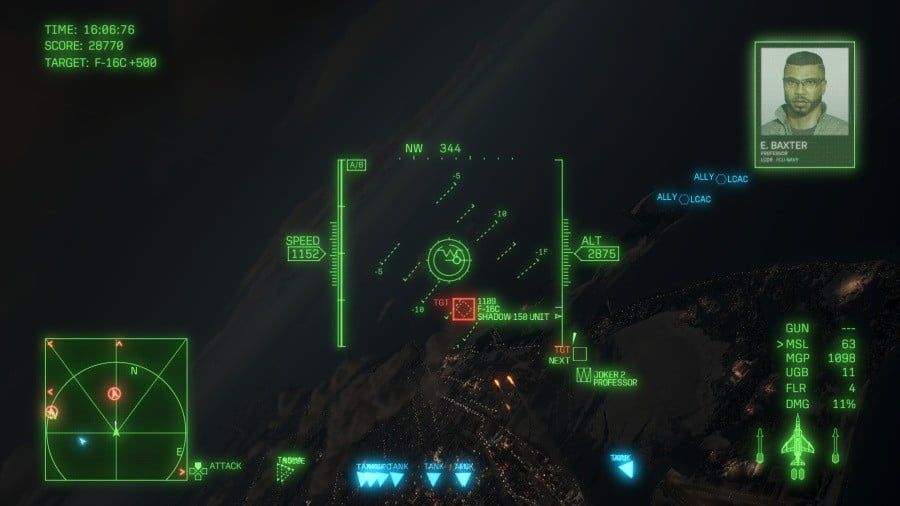
Image: pushsquare.com
A strong critical takeoff, with one design risk in view
Ace Combat 8: Wings of Theve has opened to strong early reviews, with Polygon reporting aggregate scores of 88 on Metacritic and 89 on OpenCritic as of its review roundup. Polygon also says that places Wings of Theve as the second-best reviewed game in the series behind Ace Combat 4: Shattered Skies. For a series returning after the 2019 release of Ace Combat 7: Skies Unknown, that is the clearest headline: critics broadly think Bandai Namco’s combat aviation series has landed its comeback. The more interesting tension is where that praise is concentrated. This Ace Combat 8 review roundup is less about whether the planes feel good, since the supplied reviews are consistently positive on the core air combat, and more about how much the series can change the space around the cockpit. Wings of Theve puts a silent protagonist, Rex, inside more interactive first-person story sequences than past entries, according to a PlayStation Blog preview summarized by HappyGamer and multiple reviews cited in the source material. That decision is now the obvious discussion point for longtime fans because Ace Combat has historically leaned on mythic call signs, radio chatter, and melodrama without asking the player’s avatar to carry this much close-up dramatic weight. The available sources do not include a measured fan poll or broad forum sampling, so any claim that the fanbase is split would go beyond the record. What is confirmed is that reviewers are responding directly to the change. Kotaku’s roundup says critics are praising Wings of Theve for its dogfighting and, unusually for the series, its storytelling. PlayStation Universe says the game’s narrative presentation has expanded through cutscenes, exposition, and intrigue, while also criticizing the early pacing of some cutscenes and the use of quick-time prompts. Polygon’s roundup similarly cites GamesRadar as saying lengthy cutscenes can drag down pacing at times. The result is a clean critical win with a visible design tradeoff: Ace Combat 8 reviews are celebrating the campaign’s emotional ambition, but that ambition depends on a protagonist who still does not speak.
The scores frame Wings of Theve as a major series return
The review picture, as reported across the supplied sources, is unusually aligned. Polygon’s aggregate snapshot of 88 on Metacritic and 89 on OpenCritic gives the broadest numerical frame. In the same roundup, Polygon cites IGN’s Will Borger giving the game a provisional 9/10 because of limited time with the multiplayer campaign. That caveat matters for buyers who primarily care about online play, since the early consensus is firmer around the campaign than the long-term multiplayer picture. The qualitative praise is also consistent. Polygon reports that IGN highlighted the marriage of air combat, story, soundtrack, and visual design, with particular attention to audio design and cockpit conversations. Polygon also cites Destructoid’s Andrej Barovic, a newcomer to the franchise, as being surprised by the quality of the series and calling Ace Combat 8 one of the best-looking games he had seen, extending that praise to fidelity, animation, and art direction. GamesRadar, as summarized by Polygon, praised the mission pace and the feeling of progression from inexperienced pilot to ace, while noting that cutscenes can affect pacing. Kotaku’s roundup presents a similar reading: after seven years, Bandai Namco has cleared Ace Combat 8 for takeoff with critics calling it a worthy successor to Ace Combat 7. Kotaku says the action has moved beyond the skies through interactive first-person narrative sequences built around Joker Flight, the central team of pilots. The review excerpts Kotaku includes describe the flight as a well-realized crew and call the game’s action smooth, varied across 30 missions, and supported by improved presentation. PlayStation Universe’s PS5 review is positive as well, calling Wings of Theve evidence that the long-running series still has life after its belated PlayStation 5 debut. Cubed3 calls the takeoff excellent and describes the campaign as a 20-plus-hour story. Across those sources, the critical agreement is strongest on three points: the flight combat has been refined, the presentation is elevated, and the campaign’s character focus is far more prominent than expected.
Rex is silent, but the game pushes him into the foreground
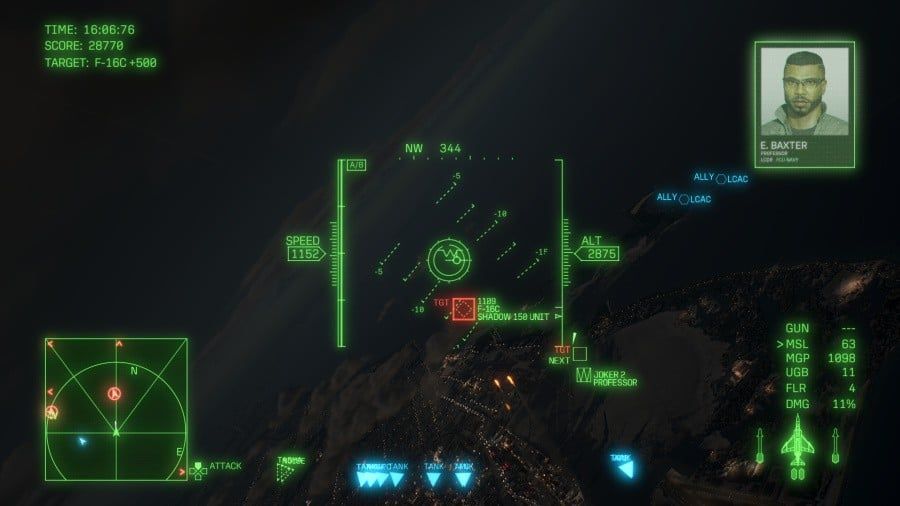
The Ace Combat 8 silent protagonist conversation starts with a premise that is confirmed across the preview and review material: Rex is silent, but the story is built directly around his inherited identity. HappyGamer, summarizing a PlayStation Blog preview published September 25, says the game opens with the player being found in a life raft after a battle by the Endurance, one of the Federation of Central Usea’s last remaining aircraft carriers. Once aboard, the player flies as navigator for Jan “Rex” Cope, the original Wings of Theve, a public hero named after the FCU’s capital. HappyGamer reports that Cope is killed after the two are shot down, and the navigator secretly takes over Cope’s call sign because the FCU cannot afford to lose its poster boy. PlayStation Universe’s review backs up the broad shape of that setup, saying the player covertly takes up the mantle of the Wings of Theve after an ace pilot is killed in action, with command preserving the name because of its morale value. Cubed3 also emphasizes that recognizable call signs are a series tradition and argues that Rex carries more initial weight than some earlier protagonist names because it is inherited from the previous Rex, whose reputation was heavily fabricated for morale. Destructoid’s account adds another layer, describing the player as a silent protagonist, Rex, accompanied by the apparent spirit of his killed-in-action comrade Jan Cope, whose introspective and retrospective commentary gives the anonymous character a face and voice. That framing is exactly why the choice is drawing attention. Ace Combat has used quiet or lightly characterized aces before, but Wings of Theve makes silence part of a deception, a propaganda machine, and a squad relationship story. A blank pilot in an arcade flight campaign is one thing. A blank pilot wearing a dead man’s identity while other characters respond to his leadership is a higher-load component, like asking a chassis designed for speed to absorb more lateral force than before. The sources agree that the story is stronger for many reviewers, but they also show why longtime players may scrutinize whether Rex’s silence deepens the myth or limits the drama.
First-person scenes turn tradition into a systems test
The new story format is the mechanical reason the silent protagonist stands out. According to HappyGamer’s summary of the PlayStation Blog preview, Ace Combat 8 uses four basic inputs in cutscenes: left or right on the D-pad for yes-or-no answers, the right stick to look around, and Triangle or Square to respond to prompts at key moments. The same preview says the story unfolds as if the player is living it in and out of the cockpit rather than having it narrated, and HappyGamer reports that DualSense haptic feedback is part of the pitch for making those moments feel more intense, especially in battle. Those are modest inputs, but they change the player’s position in the drama. Rex does not speak, which HappyGamer notes is in line with past games, but he can answer, look, and perform prompted actions. Joker Flight then responds to how Rex leads. The example HappyGamer highlights is Coster, a squadmate who wants to break formation briefly to help an allied group of pilots who are also a famous rock band. The player decides whether to allow it, and Coster appreciates being cleared to support his heroes. That is small-scale interactivity, but in an Ace Combat campaign it changes the texture of squad bonding. The open question is whether those inputs feel like meaningful command decisions or decorative confirmation prompts. PlayStation Universe lands on the cautious side for at least part of the implementation, saying early cutscene pacing can feel at odds with the kinetic pre- and post-mission briefings and criticizing momentary QTE prompts that often reaffirm actions the character is already expected to make. Kotaku’s roundup says some reviewers felt the new storytelling technique can stall the action a little. At the same time, Kotaku reports that critics found the first-person sequences helped immerse players in Joker Flight’s story, and Polygon cites IGN praising small character moments, including Coster meeting his musical heroes in the skies. The confirmed picture is not a rejection of the format. It is a tradeoff: first-person scenes give Rex and the squad more presence, but the limited interaction model risks feeling thin when the game slows down.
Critics are split less on combat than on pacing
The supplied reviews show very little disagreement about the flight model’s entertainment value. Destructoid says Ace Combat 8 directly upgrades its predecessor by refining combat and gameplay while expanding narrative scope. Cubed3 describes the combat loop as thrilling and expressive, built around balancing speed, targeting, and flair while dodging missiles and engaging air, ground, and naval targets. Kotaku’s review roundup includes praise that Wings of Theve might be the best the series has felt, with smooth action and a campaign that stays varied across 30 missions. Polygon cites GamesRadar praising breakneck mission pace and final missions that combine mechanical and narrative twists. That consistency is important because the story debate does not appear to be covering for weak flying. The core arcade combat seems to be the stable platform beneath a more experimental campaign shell. Where criticism enters is cadence. PlayStation Universe says the early cutscenes sometimes conflict with the kinetic nature of briefings and mission flow. Polygon reports GamesRadar had similar reservations about lengthy cutscenes dragging down pacing. Kotaku’s roundup echoes that some reviewers felt the storytelling technique can stall the action. That is the key buyer-facing caveat in the Ace Combat 8 reviews available here. If you come to Ace Combat mainly for sortie-to-sortie momentum, Wings of Theve may ask for more patience between engagements than Ace Combat 7 did. If you wanted the squadron drama to carry more weight, the same scenes are likely the reason critics are responding so warmly to the narrative. Destructoid’s review is the strongest example of the latter reading. Barovic writes from the position of a newcomer and praises the characters, relationships, and dark atmosphere, describing the game’s war story as philosophical and supported by believable, if heightened, personalities. That does not erase the pacing critiques, but it explains why they have not dragged down the overall review picture. Critics appear willing to accept some drag on the straights because the campaign gains grip in the corners, especially when character stakes feed back into the radio chatter and mission pressure.
Weather, clouds, and aircraft readability still carry the campaign
Marco “Apex” Vitelli’s racing brain hears a lot in the way reviewers talk about Ace Combat 8’s handling of airspace. The praise is often technical rather than abstract. Cubed3 says Wings of Theve builds on Ace Combat 7’s combat and uses weather hazards such as cloud icing and lightning strikes more widely and carefully than its predecessor. The same review says clouds can be used as tactical cover or smoke screens, giving players a way to slip out of dangerous dogfights or break pursuit. Polygon cites PC Gamer’s Nova Wright praising the dynamic weather system, with one highlighted scenario involving pursuers boxing the player into dense cloud cover and forcing a high-speed nose-down escape. Kotaku’s roundup includes a But Why Tho excerpt stating that Bandai Namco Aces built its own cloud engine and that clouds are a standout element. These details matter because arcade flight combat depends on legibility. The player needs fast target reading, reliable sense of closure speed, and terrain or weather that changes tactics without becoming visual noise. The early criticism does not suggest Ace Combat 8 has lost that balance. Instead, reviewers describe weather as a source of pressure and spectacle. Kotaku’s excerpted review material also points to a wide range of day, night, and weather conditions, with detailed aircraft and environments. The aircraft count appears in one Kotaku-included excerpt as around 30, with distinct roles that encourage variety in mission preparation. Cubed3 separately describes aircraft roles within Joker Flight, including fighters for air interception and attackers for ground work in the visible portion of its review. For practical players, that says the campaign is still built around the familiar Ace Combat rhythm of reading the mission, choosing the right machine, and adapting when the sky gets hostile. The silent protagonist debate sits on top of that foundation. If the dogfighting had failed, Rex’s identity twist would be a secondary concern. Because critics say the aircraft feel sharp, the argument can focus on whether the expanded narrative belongs in the same clean flight envelope.
Who should play now, and who may want to wait
Based on the supplied sources, Ace Combat 8: Wings of Theve looks like an easy recommendation for campaign-first players who wanted Ace Combat 7’s spectacle sharpened and wrapped in a more character-driven story. The critical floor is high in the material provided, with Polygon’s aggregate snapshot, Kotaku’s roundup, Destructoid’s full review, PlayStation Universe’s PS5 coverage, and Cubed3’s review all pointing in a positive direction. The practical cautions are also clear. IGN’s score is provisional in Polygon’s roundup because of limited time with the multiplayer campaign, so competitive or co-op-focused players may want to wait for fuller multiplayer impressions. The provided material also does not confirm pricing, PC requirements, upgrade paths, or a complete performance breakdown. PlayStation Universe specifically reviews the PS5 version, while Kotaku’s cited Anime News Network listing references PlayStation 5, Xbox Series X/S, and Windows, but the excerpts supplied here do not give enough detail to compare platform performance. The more personal decision is tolerance for narrative interruption. If you prefer Ace Combat as a pure sortie machine, the reports of heavier cutscenes and occasional QTE friction are worth taking seriously. If you enjoy the series’ melodrama, anti-war framing, and call-sign mythology, Wings of Theve appears to push those traits harder than usual. The silent Rex setup is central to that push. Confirmed details show a protagonist who inherits a dead ace’s identity, leads Joker Flight through light interactive choices, and remains silent while the game surrounds him with first-person scenes and squad reactions. The interpretation, supported by how reviewers discuss the campaign, is that Wings of Theve is testing how much authorship a silent Ace Combat lead can carry before the absence of a voice becomes conspicuous. Early critics largely think the test works. Longtime fans will likely keep arguing about the cost, because Rex’s silence is no longer background tradition. In Ace Combat 8 Wings of Theve, it is part of the aircraft’s loadout.