
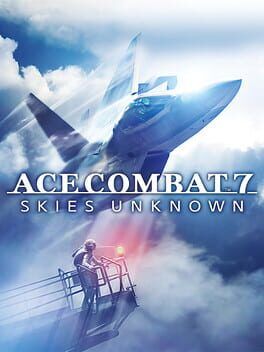

A retrospective on how Ace Combat 7 quietly sold 7 million copies in seven years through DLC, PC support, and word-of-mouth, and what that momentum means for the series on current‑gen hardware.
Bandai Namco’s announcement that Ace Combat 7: Skies Unknown has cleared 7 million copies sold, seven years after launch, feels almost too perfectly scripted. A niche, story‑driven air combat game, released in early 2019 on last‑gen consoles and PC, slowly climbs its way to the top of the series’ sales charts and becomes the standard bearer for a franchise that once looked grounded.
Behind the neat “7 in 7” headline is a much more interesting story about how Ace Combat 7 refused to fade, how smart post‑launch support and PC momentum turned a modest hit into a true long‑tail success, and why this milestone sets the tone for the future of the series on current‑generation machines.
A Slow Burner That Never Left The Radar
Ace Combat 7 launched in January 2019 on PlayStation 4 and Xbox One, with the PC version following a couple of weeks later. Initial reception was strong but not spectacular. Critics praised its intense dogfights, lavish clouds and storms, and the welcome return to Strangereal’s melodramatic storytelling. The consensus at the time was that this was a course correction after the misstep of Assault Horizon, a “fans are back in safe hands” entry more than a blockbuster reinvention.
The early sales reflected that. Ace Combat 7 comfortably outperformed its immediate predecessors and was quickly heralded as a return to form, but nothing suggested it would go on to average around a million copies a year. Yet that is exactly what happened. The game steadily marched past milestone after milestone, from 2.5 million to 5 million, then 6 million in early 2025, before finally clearing 7 million as it hit its seventh anniversary in 2026.
In an era where most boxed titles spike at launch then drop off a cliff, Ace Combat 7’s sales graph looks more like a long, shallow climb. To understand why, you have to look at what Project Aces and Bandai Namco did after launch rather than at release day alone.
Building A Second Wind With DLC
Post‑launch DLC is often little more than a content tax. In Ace Combat 7’s case it became a second chapter.
The Season Pass story missions carved out a side narrative that complemented the main campaign instead of feeling like cut content. These sorties leaned into spectacle, experimental hardware, and the series’ love of strange superweapons, giving veteran pilots new reasons to strap in. Crucially, they arrived at a measured pace that kept the game in the news cycle across 2019 and into 2020 rather than dumping everything in one burst.
Plane packs and additional skins did a different kind of work. They turned Ace Combat 7 into a hobby game. Regular injections of new aircraft offered fresh ways to replay beloved missions, while fan‑pleasing nods such as classic series liveries and crossover collaborations helped the game travel across social media. Twitter clips of low‑altitude canyon runs or storm‑piercing intercepts wearing a new skin acted as micro‑trailers, reinforcing the fantasy that Ace Combat uniquely nails.
It also mattered that the DLC was consistently priced and frequently discounted. Deep bundle sales made it easy for new players to jump straight into the “complete” experience, and returning players often came back to pick up the expansions when they saw glowing recommendations circulating on forums and Reddit.
PC Support Turned A Console Legacy Into A Platform Staple
The other pillar of Ace Combat 7’s long‑term success was PC. For decades Ace Combat was almost synonymous with PlayStation, with only occasional detours. The Steam release in 2019 did more than widen the audience; it changed the game’s commercial trajectory.
On PC, Ace Combat 7 found a second home alongside flight sims and space combat titles that appeal to a slightly different crowd. Mouse and keyboard support, robust controller options, and the ability to push resolution and frame rate helped the game circulate among players who might never have touched the older console‑only entries.
Perhaps more importantly, Bandai Namco treated the Steam version as a living product. Stability patches, ongoing DLC parity, and periodic deep discounts during major sales meant Ace Combat 7 resurfaced over and over on the store’s front page. At one point it became a near‑permanent fixture of “ridiculously good under‑$10” recommendation lists.
That discount strategy is an underappreciated part of the 7 million story. ResetEra and Reddit threads around the time Bandai Namco teased the 7 million milestone were full of players admitting they grabbed the game for the price of a coffee during sales, then fell in love with it and picked up the DLC later. The low entry cost transformed curious onlookers into evangelists.
Word Of Mouth As The Real Superweapon
Ace Combat has always been a little hard to sell in a bullet‑point press release. It is not a fully realistic sim, but it is far from an arcade throwaway. Its campaigns combine earnest military jargon, anime‑level drama, and utterly implausible superweapons with a straight face. None of that sounds fashionable on paper.
In practice, that unique tone is exactly what turned Ace Combat 7 into a word‑of‑mouth phenomenon over time.
Clips of lightning‑streaked dogfights, railguns arcing over oceans, or last‑second missile evades in the middle of a storm are inherently shareable. New players would fire it up expecting a straightforward jet game and instead find themselves caught up in a story about borders, drones, and the people living under contrails that stretch from one war to the next.
Fans became evangelists. Over the years a familiar pattern emerged: a sale would hit, YouTubers and streamers would revisit the game, and social feeds would fill with “how have I slept on this for so long?” posts. Each cycle added another layer of players contributing guides, photo‑mode shots, and mission challenges, which in turn made the game feel active and alive long after most 2019 releases had slipped into catalog obscurity.
By the time Bandai Namco celebrated the 7 million mark with commemorative artworks and a thank‑you message from series director Kazutoki Kono, it felt less like a publisher triumphantly announcing a hit and more like a community victory lap. This was a game that refused to go away because people would not stop talking about it.
Legacy On Last‑Gen, Expectations On Current‑Gen
Ace Combat 7 now stands as the best‑selling entry in the series and has helped push total franchise sales beyond 21 million copies. That kind of success changes expectations.
For Bandai Namco, it proves that there is a sizable, global audience for story‑driven air combat on home platforms and PC, even without a massive marketing blitz. It also shows that the series can sustain long‑term support, with Ace Combat 7 quietly becoming a catalog workhorse that sells year in, year out across platforms.
On the hardware side, it highlights just how much untapped potential remains as the series moves fully onto PlayStation 5, Xbox Series consoles, and contemporary PCs.
Ace Combat 7 already squeezed a lot out of Unreal Engine 4 on last‑gen machines, particularly with its weather systems and volumetric clouds. On current‑gen hardware, those ideas can be extended with higher density environments, more complex destruction, richer lighting, and better draw distances without sacrificing frame rate. The fantasy of screaming between skyscrapers in a storm, threading missiles and debris, is tailor‑made for the kind of CPU and SSD throughput that PS5 and Series X offer.
There is also the question of immersion. Ace Combat 7’s limited but stunning VR missions on PS4 became something of a cult favorite and a frequent “what if?” for the series. A full campaign in VR was out of reach on last‑gen, but modern headsets and hardware put that dream much closer to reality. Even without committing to full‑game VR, more expansive and technically ambitious setpieces now feel practical.
Finally, success across PC and multiple console generations gives Project Aces valuable data about how people actually play Ace Combat. They can see the appetite for post‑launch content, the impact of sales cycles, and how long players stay engaged. That knowledge can influence everything from mission structure and progression to how future DLC is rolled out on current‑gen.
What This Milestone Signals For The Future Of Ace Combat
So what does 7 million in 7 years really imply for the series going forward, beyond an eye‑catching symmetry and some commemorative key art?
First, it secures the franchise’s place in Bandai Namco’s portfolio. There was a time when Ace Combat’s future looked uncertain after experimental spin‑offs and long gaps between mainline releases. Ace Combat 7’s performance ends that conversation. With a proven audience and a track record of steady sales, the series is no longer a risky passion project but a reliable pillar.
Second, it raises the ceiling for what a current‑gen Ace Combat can be. Project Aces will build in the shadow of a game that thrived for years on comparatively modest hardware. That gives the team license to be more ambitious with mission density, enemy variety, narrative scope, and online features. If Ace Combat 7 could keep players coming back with storm clouds and razor‑tight dogfights on PS4, expectations for what those battles look like on PS5 and high‑end PCs are understandably higher.
Third, it all but guarantees that PC will remain a first‑class citizen. The Steam audience was too important to this long‑tail story to be treated as an afterthought in future entries. Feature parity, scalable performance, and ongoing discount cycles will likely stay central to the release strategy.
Finally, the way Ace Combat 7 grew suggests that Bandai Namco will double down on community engagement. Seasonal events, smarter integration of photo‑mode and replay tools, and more social‑friendly features could all help the next game harness that same word‑of‑mouth energy from day one, rather than discovering it gradually.
Ace Combat 7’s 7‑million milestone is not just a feel‑good statistic. It is proof that a focused, unapologetically specific game can thrive in the long run through a mix of strong fundamentals, smart support, and a community willing to shout about it from the rooftops. As the series taxis toward its fully current‑gen future, that is the real runway it is taking off from.