
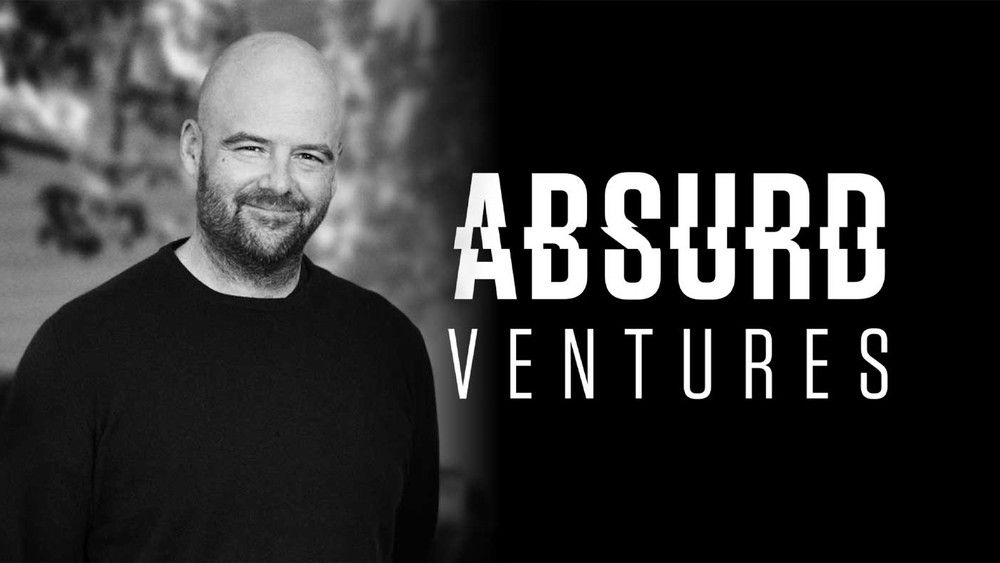
Dan Houser has confirmed an Absurd Ventures open-world comedy built around character memory, setting up a difficult test for the GTA co-creator’s new project: borrow the best lessons from Rockstar without becoming trapped by them.
Image: news.instant-gaming.com
Dan Houser’s next game finally has a shape, and it sounds uncomfortably close to home
Dan Houser has given the first substantial description of one of Absurd Ventures’ upcoming games: an open-world comedy focused on humor and “character memory.” Speaking on Variety’s Strictly Business podcast, the Rockstar Games co-founder and former head writer said Absurd is developing two titles, with more information on the open-world project expected “in the next few months.”
That is the strongest confirmed development around the Dan Houser new game slate so far, and it immediately creates the central tension around Absurd Ventures. Houser is one of the defining creative figures behind Grand Theft Auto and Red Dead Redemption, and Polygon notes that he is best known for co-founding Rockstar and creatively spearheading the first five Grand Theft Auto games. Now he is making an open-world comedy at a new company built around original IP, while trying to avoid simply producing a spiritual echo of the machine he helped build.
The confirmed description is brief, but loaded. “Open-world comedy” invites an unavoidable comparison to GTA’s long-running blend of criminal systems, urban satire, mission escalation, radio chatter, and absurd civilian detail. “Character memory” points toward a more specific design ambition: comedy that is not only written into a mission script, but carried forward through characters who remember what happened before. Houser has not explained how that system works, which platforms the game is targeting, how far along development is, or whether this is the Absurdaverse game previously teased by the company. Variety reports that Absurd is building multiple worlds, including A Better Paradise, American Caper, and the Absurdaverse, while Polygon says the comedic game is set in the Absurdaverse.
For now, the Absurd Ventures open world game is confirmed in concept, not in playable form. There is no trailer, no title, no release window, no price, no store page, and no platform list in the provided reporting. The interesting part is not that a GTA co-creator new project exists. It is that Houser has chosen the one genre where his past will be hardest to outrun.
The Rockstar inheritance is useful, but dangerous
The obvious inheritance is structure. Rockstar’s best-known open worlds are built around pacing: quiet traversal, sudden violence, side conversations, throwaway jokes, elaborate mission choreography, and the feeling that the city or frontier keeps performing after the player leaves the scene. Houser’s work at Rockstar helped define that rhythm for a generation of action-adventure players.
That history gives Absurd Ventures an advantage in one respect. The studio’s leadership includes people who understand that an open world is not carried by map size alone. Variety reports that Absurd’s team includes fellow Rockstar alumni Jeffrey “Lazlow” Jones and Michael Unsworth, along with Absurd’s game chief Greg Borrud. Houser’s new company is also not approaching games as isolated products. Variety describes Absurd Ventures as building original IP across graphic novels, comics, fiction podcasts, books, animated series, and planned games, with the company starting from three worlds: A Better Paradise, American Caper, and the Absurdaverse.
That transmedia foundation could help an open-world comedy arrive with a clearer voice than many new IP launches. If characters, factions, social rules, and tone are being tested through fiction before players ever pick up a controller, Absurd may have a deeper narrative bench than a typical first reveal suggests. In an action-adventure frame, that matters. Comedy lands differently when the world has a memory, when a side character’s grievance follows the player into a later mission, or when a throwaway bit becomes a consequence.
The danger is equally clear. Rockstar’s design language is so recognizable that any urban comedy with systemic chaos risks being read as GTA with the serial numbers filed down. Houser’s own comments show he understands the trap. Variety quotes him saying Absurd is trying to do innovative work with new IP, while Polygon reports that he wants the company’s first games to “find new things that haven’t been done before.” If the new project borrows Rockstar’s density, mission confidence, and satirical appetite, it still needs its own combat rhythm, traversal identity, social rules, and narrative camera.
Comedy is the promise, and the production problem
Houser’s description places comedy at the center, not around the edges. That is a meaningful distinction. Plenty of open-world games include jokes, parody brands, bizarre strangers, or radio gags. Fewer are built so humor becomes part of the player’s ongoing relationship with characters and place.
The phrase “character memory” is the most important technical and narrative clue. Houser did not define it in the sourced interviews, so it should not be treated as a confirmed feature list. Still, it suggests an ambition beyond one-off punchlines. If a character can remember player behavior, failed missions, betrayals, favors, choices, or repeated acts of chaos, comedy can come from accumulation. The joke becomes a relationship, not a bark line.
That is hard to execute in an open world because pacing is fragile. A cinematic comedy scene needs timing. A combat encounter needs readability. A systemic sandbox needs freedom. Those goals often pull in different directions. If a player arrives in a stolen vehicle, wearing the wrong outfit, chased by police, after skipping three side activities, the game still has to deliver a joke without breaking the mission’s pace. If the project has action-adventure ambitions, it must also keep shooting, driving, melee, stealth, or whatever its core verbs turn out to be from becoming dead air between punchlines.
PlayFront, in its coverage of the Variety interview, argued that humor in an open-world format can become tiring without precise timing. That is interpretation from that outlet, not a confirmed production issue at Absurd, but it is a fair lens for the genre. Comedy repeats poorly when systems loop too loudly. The same funny civilian reaction can become noise after the tenth time. The same satirical target can dull if the world does not evolve. Character memory, if real in a systemic sense, may be Houser’s answer to that problem.
Absurd’s second game clarifies the studio’s taste for self-aware worlds
The open-world comedy is only one of two games Houser discussed with Variety. The other is a dystopian sci-fi project “about a video game development gone very wrong” and “a rogue AI that discovered sentience.” Houser added that the AI was made by two people who did not like each other, “so it doesn’t like itself.”
That project matters to the open-world story because it reveals what Absurd is gravitating toward: worlds that turn creative systems, entertainment culture, and fractured personalities into story engines. Polygon reports that Absurd previously teased work with Smilegate on a AAA sci-fi game set in the A Better Paradise universe, while Variety identifies A Better Paradise as the inspiration for the dystopian sci-fi game Houser is now teasing.
The sci-fi game is not the same project as the open-world comedy based on the reporting provided. The sources describe two titles, and readers should keep them separate until Absurd says otherwise. The open-world comedy appears tied to the Absurdaverse in Polygon’s account, while the sci-fi project is tied to A Better Paradise in Variety’s reporting.
That split is useful. It suggests Absurd is not returning with one giant all-purpose GTA replacement. It is building a slate of worlds with different tones, formats, and media extensions. For players, that also means expectations should be restrained. A full Absurd Ventures game reveal may not answer every question about the company’s broader strategy. Houser has described two concepts, but the production realities remain hidden.
Houser says he is tuning out the genre he helped define
One of the more revealing details is Houser’s distance from modern open-world games. Polygon reports that, despite his track record on comedic open worlds, Houser said he does not really play that kind of game anymore. The outlet quotes him explaining that when he plays them, he starts deconstructing strengths and weaknesses in real time, thinking about animation teams, design choices, and the meetings that may have produced a feature.
That is a believable creative defense mechanism, but it carries risk. On one hand, stepping away from competitors may help Absurd avoid chasing the wrong benchmark. Open-world games have spent years inflating maps, checklists, crafting systems, progression economies, and cinematic mission templates. A studio trying to launch new IP might benefit from not building by reaction.
On the other hand, the genre has changed since Houser’s most influential Rockstar years. Player expectations around mission freedom, accessibility, traversal speed, co-op, systemic reactivity, performance modes, PC options, and content cadence have shifted. The sources do not say whether Absurd’s open-world comedy is single-player, multiplayer, live-service, linear-mission-driven, or systemic-first. Without those details, Houser’s distance from the field is both intriguing and unresolved.
Variety also reports that Houser is trying to create new IP in a new way, and VGTimes quotes him as saying, “The creative work is what matters, not what the market thinks of it.” That quote frames Absurd as artist-led, but games of this scale still meet the market eventually. Open worlds are expensive, players scrutinize performance, and a new studio does not get Rockstar’s legacy infrastructure by default.
The new identity has to be mechanical, not only tonal
If Absurd Ventures wants its open-world comedy to stand apart, tone alone will not be enough. The game cannot simply be funnier, stranger, or more self-aware than GTA. It needs mechanics that make its humor move differently.
The most promising confirmed phrase remains “character memory.” In action-adventure terms, that could become the difference between a sequence of authored gags and a world that edits itself around the player’s reputation. Imagine a chase where the joke changes because a supporting character remembers the last crash. Imagine combat dialogue that reflects previous cowardice or recklessness. Imagine mission staging where a character’s trust, resentment, embarrassment, or obsession changes the pace of a set piece. Those are possibilities, not confirmed features, but they point toward the kind of identity Absurd would need.
The Rockstar comparison will follow this project into every reveal. It can borrow the old virtues: confident writing, a strong ensemble, a world with readable social geography, and missions that rise and fall like scenes rather than errands. What it cannot do is rely on the thrill of recognition. Players already know what a Houser-shaped crime satire can feel like. The sharper question is what an Absurd-shaped open world feels like when it is not protected by Los Santos, Liberty City, Vice City, or the Rockstar label.
That is where the studio’s broader IP strategy could matter. If the Absurdaverse has its own rules, icons, conflicts, and comic rhythm before the game arrives, the open world may feel less like a studio founder returning to familiar streets and more like a new stage with new blocking. If those transmedia pieces become homework, the game risks burying its identity outside the game itself. The reveal needs to show the joke, the stakes, and the verbs on screen.
What is confirmed, what is missing, and whether players should wait
Confirmed: Houser told Variety that Absurd Ventures is developing an open-world comedy focused on comedy and character memory, with more information planned in the next few months. Variety also reports that Absurd is developing a separate dystopian sci-fi game inspired by A Better Paradise. Polygon reports that the comedic open-world game is set in the Absurdaverse, while Variety places Absurd’s wider slate across A Better Paradise, American Caper, and the Absurdaverse.
Still unannounced: the open-world game’s title, platforms, release date, price, publisher arrangement, engine, cast, gameplay structure, multiplayer status, and performance targets. There is also no sourced confirmation in the provided material of combat systems, driving, mission design, map setting, player character, or whether the project uses the same scale associated with Rockstar’s open-world productions.
There is one minor timeline wrinkle in the coverage. Variety, Polygon, and MSN describe Absurd Ventures as formally launched or founded in 2023 after Houser’s 2020 exit from Rockstar. VGTimes says the company was established in 2020 and fully introduced to the public in 2023. The practical takeaway is that the public-facing Absurd Ventures era began in 2023, while Houser’s post-Rockstar transition started with his 2020 departure.
For players searching for the Absurd Ventures game because they want a GTA successor, the sensible move is to wait for footage. The premise is promising because it targets the part of open worlds that often feels least evolved: how characters remember, resent, mock, and respond to the player over time. But until Absurd shows a mission, a city or setting, a combat encounter, traversal, and a few examples of character memory under pressure, this remains a strong creative pitch rather than a game players can evaluate.
The next reveal has a heavy job. It must prove that Dan Houser’s new game can carry the tension, timing, and authored chaos people associate with his Rockstar work, while making clear that Absurd Ventures has its own pulse. The shadow is useful for attention. The game has to step out of it on design.